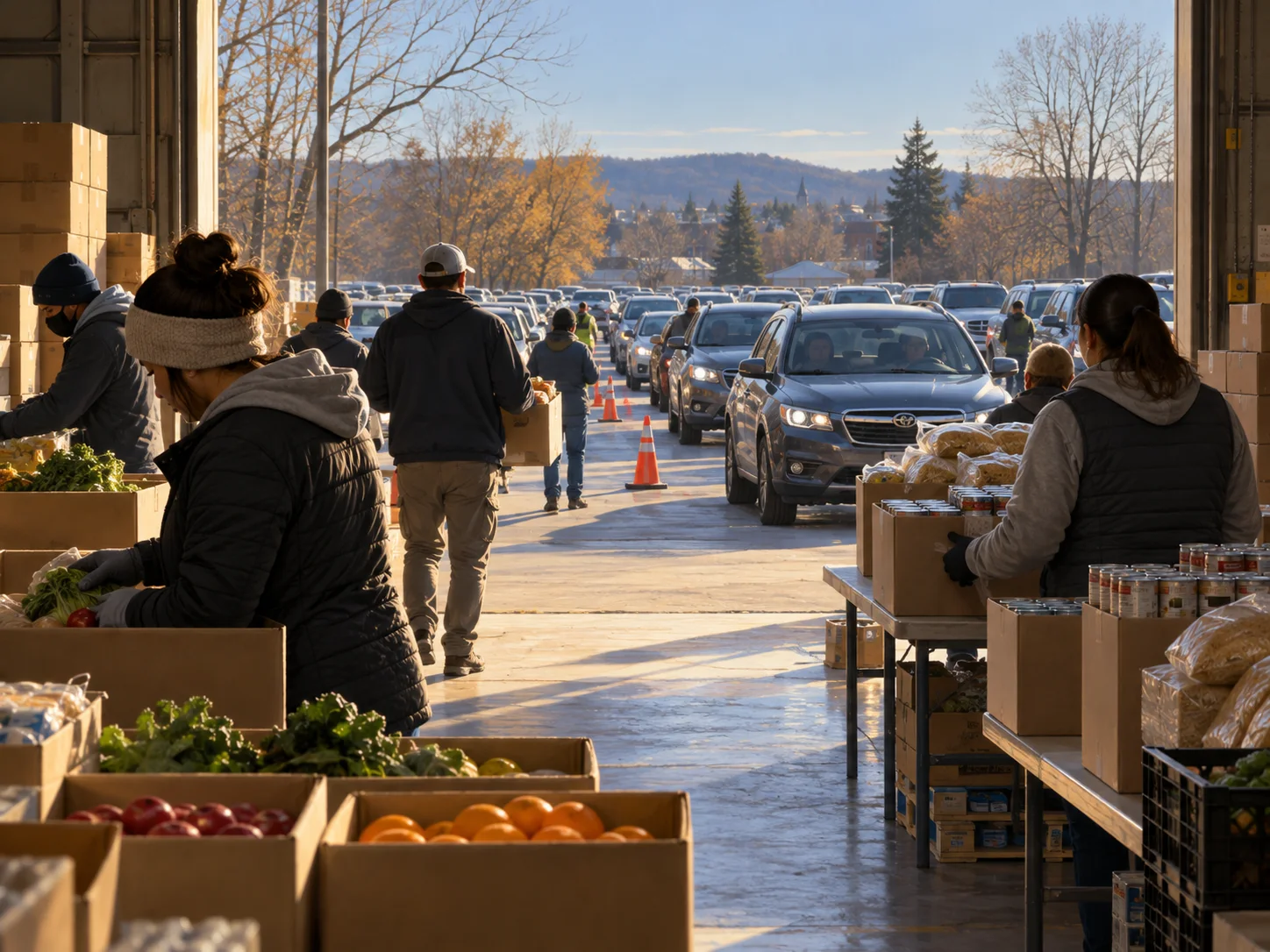
During 2020, lines of cars formed at food banks in parts of the United States. Food banks distribute donated and other available food to people who need it. Drive-through collection could help reduce crowding inside buildings, but it also made hardship startlingly visible on the road. From a distance, the vehicles might resemble ordinary traffic. Up close, the destination was not a concert or a commute: it was food for the next meals.
A drive-through food-bank line looks different from a queue on a pavement: much of the waiting happens behind windshields. Access to a car can also affect access to assistance. The length of a vehicle line is not a complete measure of hardship; provision for people arriving on foot or by transit matters too.
A line of cars at a food bank can resemble ordinary traffic, yet the destination is neither work nor entertainment. Waiting in vehicles may reduce close contact, while raising a separate question about access for people without cars. Scenes reported in the United States in 2020 should not be reduced to a vehicle count as a measure of hardship. Place, date, and local distribution arrangements are essential context.
Reuters directly documented vehicle queues at U.S. food banks as demand surged in 2020.