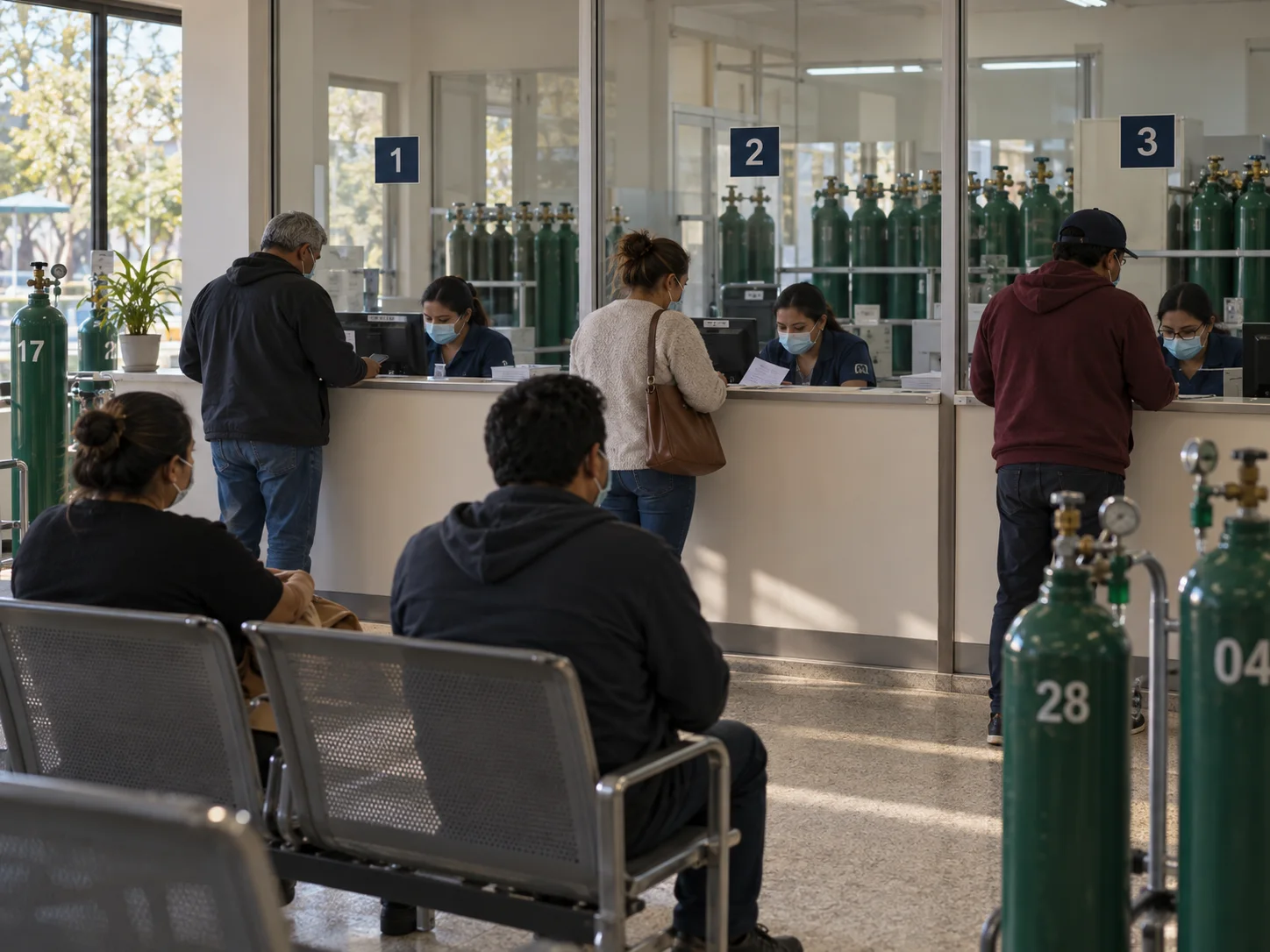
In Paraguay, families with empty cylinders waited on the capacity of filling plants.
A cylinder contains a finite number of hours, determined by its size and the patient's flow rate. The moment one was obtained, the countdown to the next refill began. Each person waiting was connected to someone struggling to breathe at home or in a ward. Delay consumed not only patience but a portion of treatable time.
Beds alone could not provide treatment when production, containers and transport lagged.
During Paraguay's severe COVID-19 wave in 2021, relatives searched among distributors and hospitals for medical oxygen. On 6 April, Hoy reported that one home-oxygen supplier had 150 customers on its waiting list. In May, ABC Color recorded families outside a hospital in Asunción warning that the supply was failing to meet the needs of patients inside.
This should not be reduced to a story of admirable family devotion. It was work transferred from an overloaded health and supply system to private households. A queue can distribute scarcity in an orderly way, but respiratory distress does not advance according to numbered tickets. The very need for a line was evidence of the system's limit.
The oxygen queue revealed the narrowest point in the health system.
Quality check: Hoy Paraguay records families seeking medical oxygen, a thirteen-hour wait, and a waiting list of about 150 people at the same supply point.