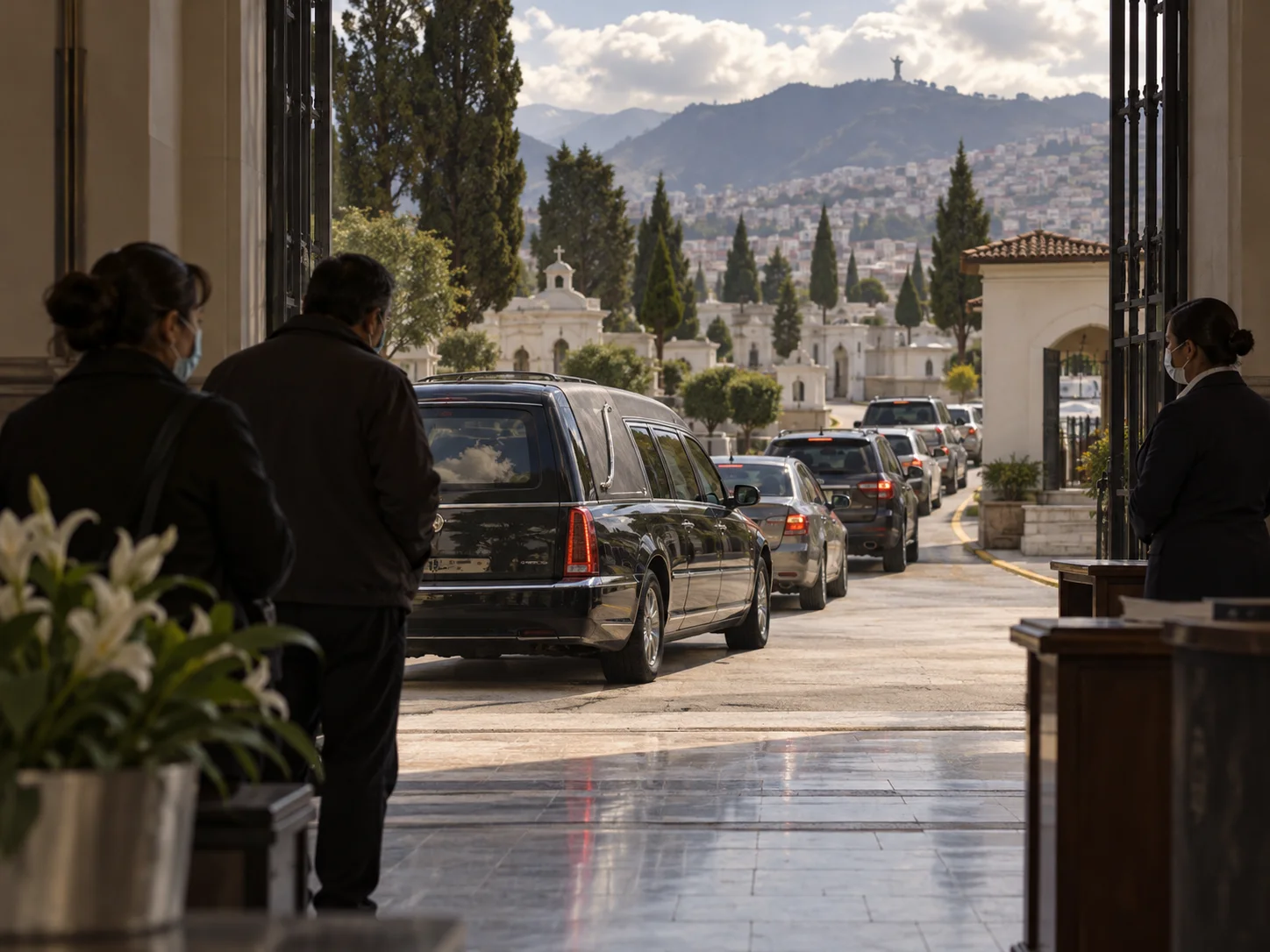
In pandemic Guayaquil, hearses waited not for traffic but for receiving capacity.
Ordinarily, the interval between a death and burial is experienced within a family. In Guayaquil it became visible on public roads. Every vehicle ahead and behind carried a person with a name and a life. The queue cannot be understood only as a logistical measure of throughput.
Death certification, coffins and burial or cremation slots failed at the same time.
In April 2020, cars carrying coffins formed long lines outside private cemeteries in Guayaquil, Ecuador. Reuters reported that families waited for hours because burial capacity could not keep pace with the city's COVID-19 deaths. Wooden coffins were also scarce, leading local organisations to provide cardboard alternatives.
There is no need to search this scene for uplift. Families were required to grieve and secure the mechanics of burial at the same time. The convoy showed more than the number of deaths. It revealed what happens when the institutions needed to say farewell with dignity are exceeded: even the final act of care becomes something for which the living must wait their turn.
The convoy marked a blockage in the system meant to move the dead with dignity.
Quality check: Contemporary reporting dated 3 April 2020 supports the Guayaquil burial crisis and ordered access to cemetery services with city and period fixed.