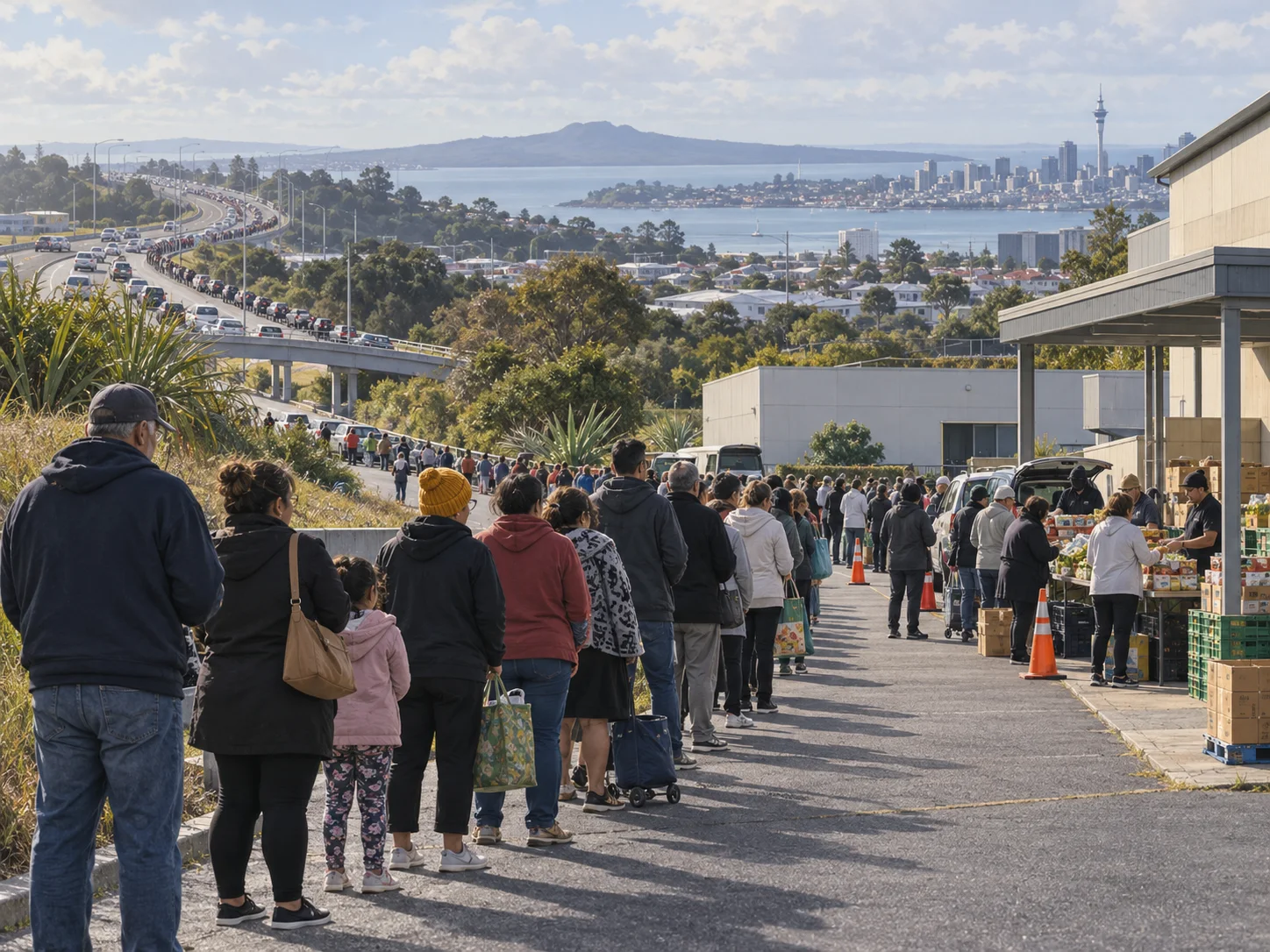
In June 2020, a queue of cars waiting for the Brown Buttabean Motivation food bank in Manukau, South Auckland, sometimes stretched back toward the motorway. Its founder, Dave Letele, said the operation was not large enough to keep pace with growing demand.
New Zealand's coronavirus lockdown affected household finances as well as public health. Those seeking help were not only families who had struggled before the pandemic. Job and income losses brought people who had never previously needed food assistance into the queue. Cars offered a way to wait with some separation, while making the scale of need visible along the road.
What distinguishes this queue is that the place in line was marked not by chairs in a welfare office but by one vehicle after another. Even in a major food-producing country, an economic shock can reach household cupboards quickly. The line approaching the motorway became an early local measure of hardship, visible before it could be fully expressed in statistics.