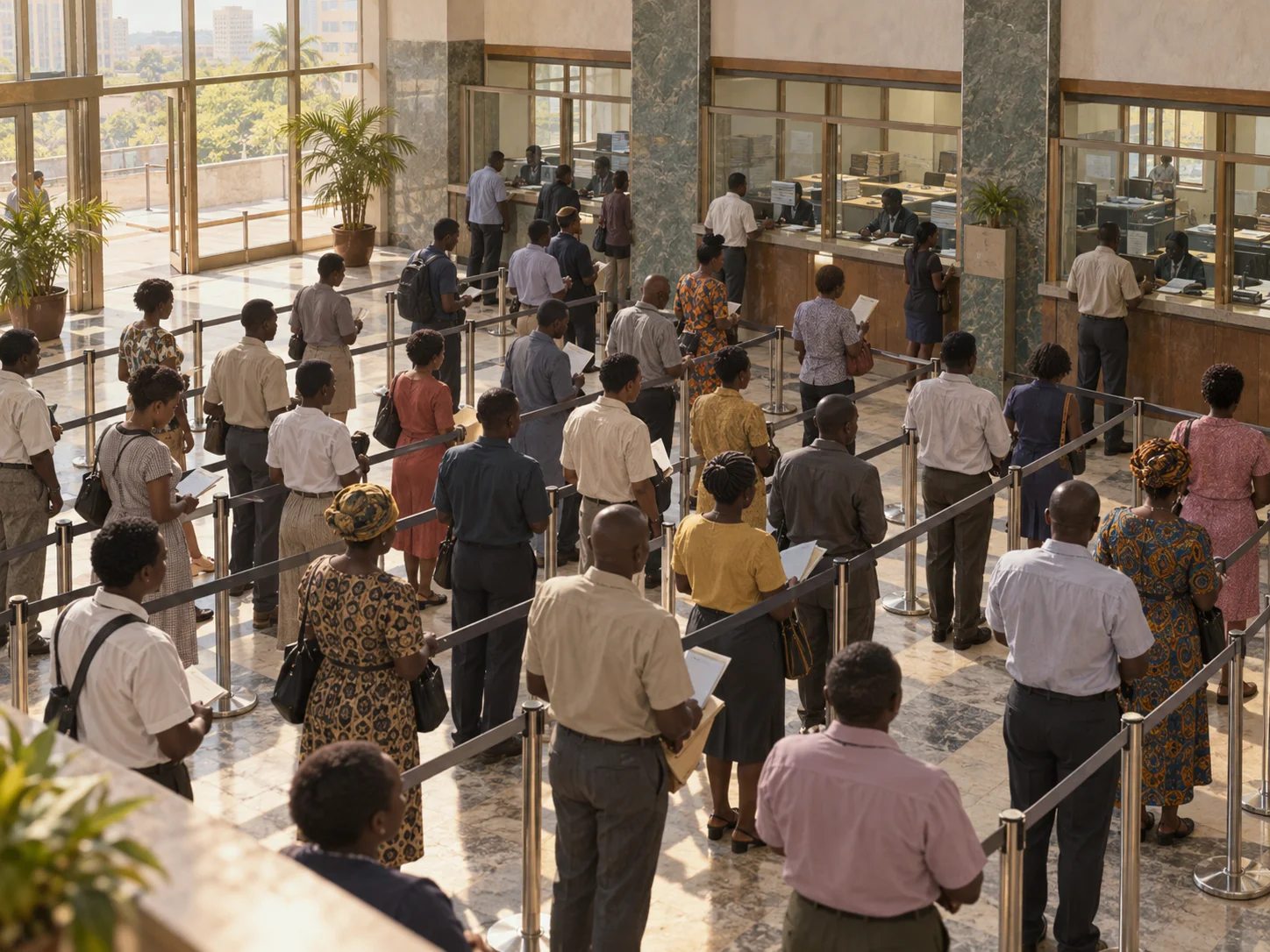
In December 2023, passport applicants in Harare began queuing before dawn. A man arriving at 5 a.m. found more than 100 people ahead of him, while others had slept outside overnight. An ordinary passport then cost $120 and was due to rise to $150 in January after the government revised an initially higher proposal. The passport office extended its hours into the night.
The queue created its own informal market: touts sold places for $5 to applicants seeking to bypass the wait. The pressure reflected more than a fee increase. British figures showed 21,130 Zimbabweans had received health and care work visas in the year to September, making passports potential gateways to employment abroad. Because the document had become a possible route out of economic hardship, even a position in line acquired a price.