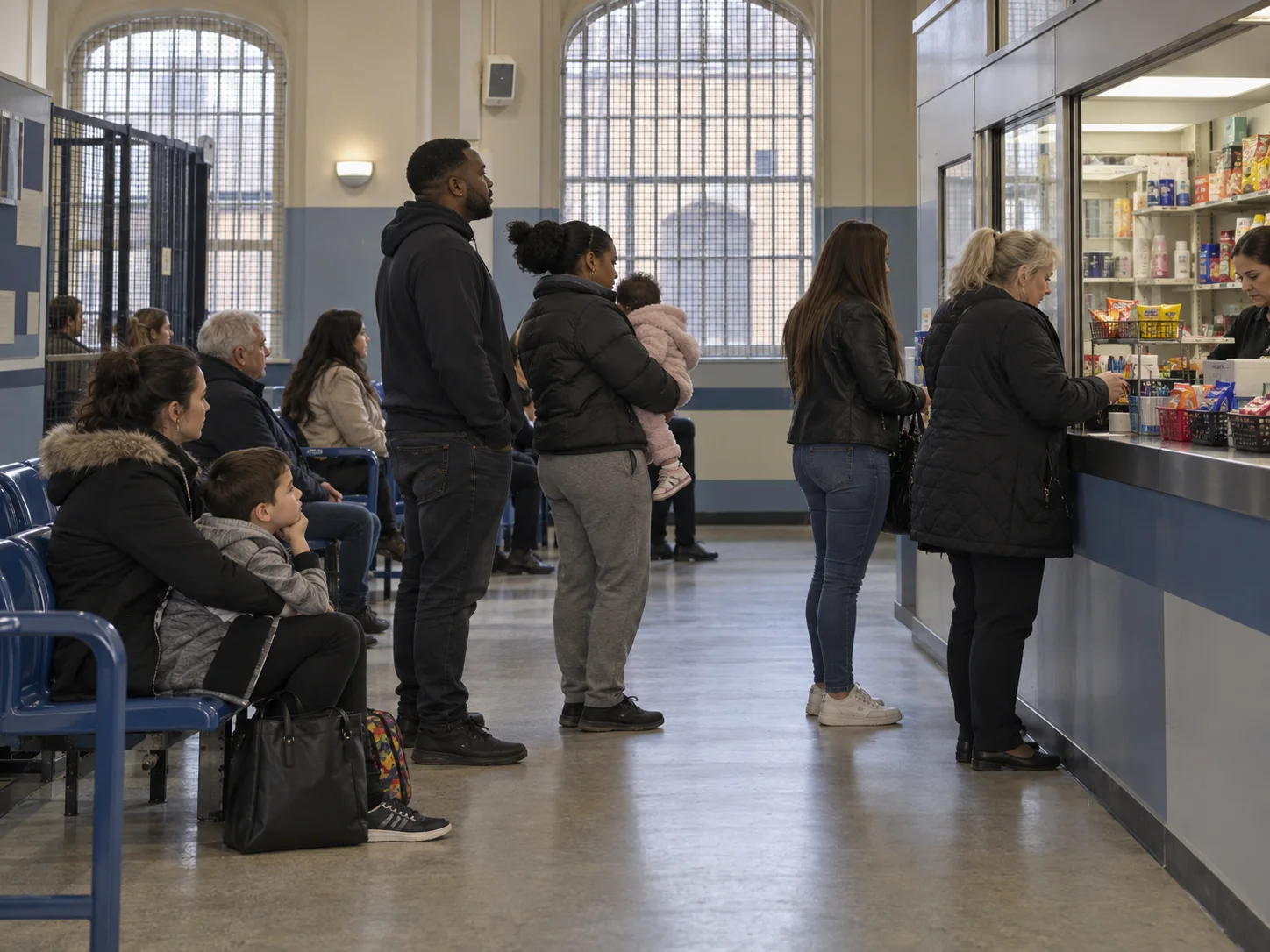
For families visiting a British prison, identification checks, security screening, and locked holding areas precede arrival in the visits hall. A grandmother's detailed account records that the café queue for treats to share can be so long that families spend half of a visit—often less than one hour—waiting in line. The prisoner must remain at an assigned table while relatives queue. The writer offered to take orders for other families so they could sit with the person they had come to see, but people intimidated by the system declined. What distinguishes this queue is that slow purchasing is not merely inconvenient: it directly consumes a scarce allocation of family contact. Children and relatives who have not been sentenced nevertheless bear part of the institution's waiting burden.
United Kingdom · 2016–2019 (approx.)
A British Prison Visit | The Café Queue Can Consume Half an Hour Together