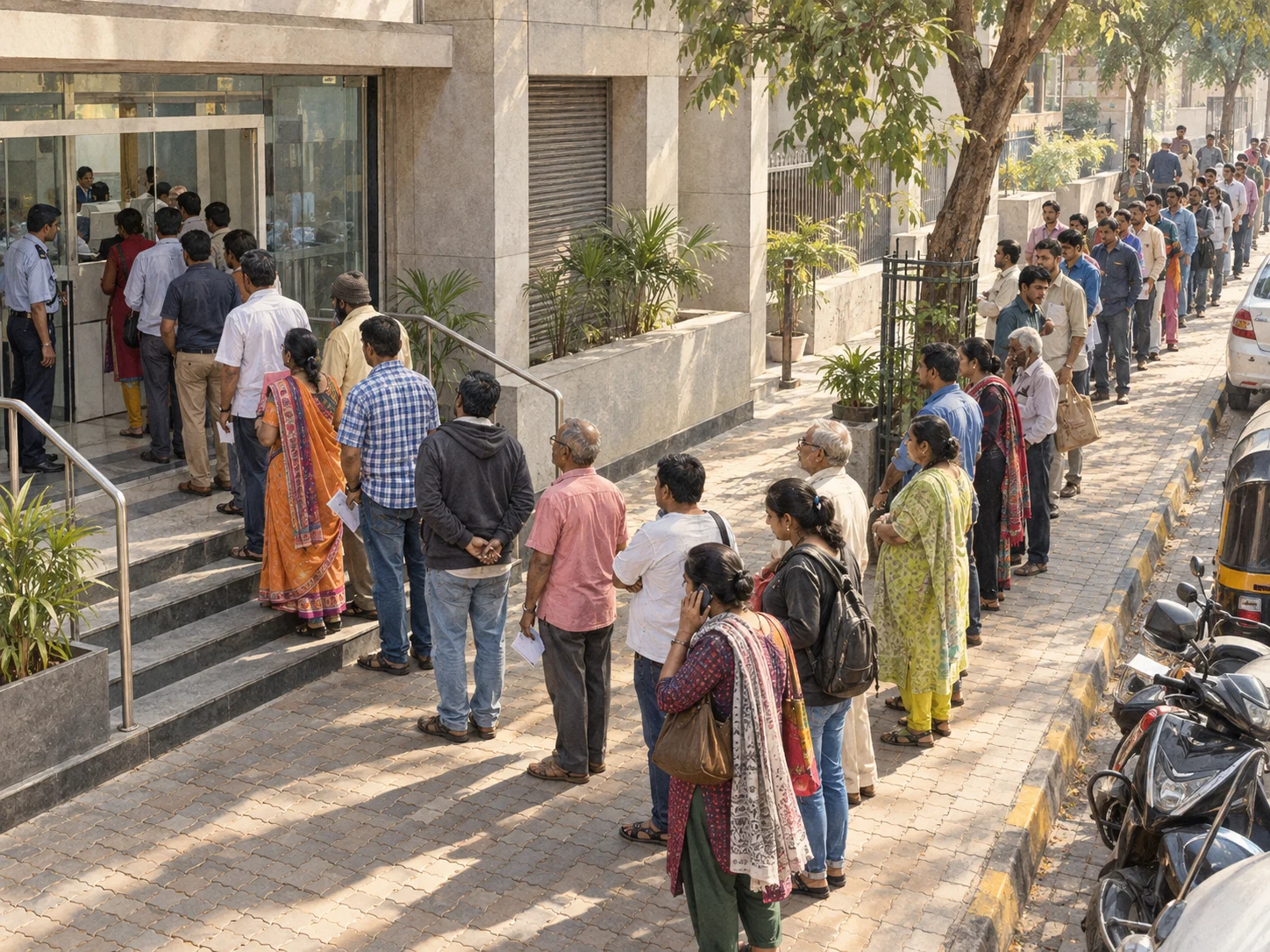
On 10 November 2016, banks reopened in India to find lines waiting outside. Two nights earlier, the government had abruptly announced that existing 500- and 1,000-rupee notes would cease to be valid for ordinary transactions. Banks were closed on 9 November to prepare, making the next day the first opportunity for many people to exchange the notes. At a Canara Bank branch in New Delhi, Reuters reported arguments as a queue ran through the building and out onto the street. The manager sought police assistance. At a nearby Reserve Bank of India outlet, officers admitted customers a few at a time.
Nobody was queuing to buy a new product. A note that still displayed the same number had suddenly become difficult to spend. For people whose wages, transport and shopping depended on cash, the trip to the bank displaced other parts of daily life. The government presented the withdrawal as a measure against undeclared wealth, counterfeiting and related abuses. Those objectives were debated. Outside the branches, an immediate question took precedence: would people be able to obtain money that a shopkeeper could accept today?
Reporting from Chennai captured the unequal cost of waiting. Domestic worker V Prerna reached an Indian Bank branch at 6 a.m. She later stepped away to find food; by the time she returned, she was assigned token number 113, according to Scroll's contemporary reporting. Time in this queue could mean hours before opening, time away from paid work, a meal postponed, and the possibility of losing one's place. First-come, first-served sounds neutral until people have very different amounts of time they can afford to surrender.
The story is not simply that new notes eventually replaced old ones. The queue revealed an ordinarily invisible part of what makes money work. A banknote needs more than a printed denomination: someone nearby must be willing and able to accept it, and a person must be able to reach the mechanism that makes it usable. Those outside the bank were waiting for cash, but also for the return of something less tangible—the ordinary ability to pay for everyday life.
Demonetisation sent people to banks even when they possessed plenty of cash. The question was whether their notes could be deposited or exchanged before restrictions took effect. Overnight, policy separated money into currency that worked and paper that no longer worked on its own.
In November 2016, lines formed before banks reopened, and at one New Delhi branch they wound through the building and onto the street. Because the withdrawn 500- and 1,000-rupee notes represented an estimated 86 percent of cash in circulation, exchange order also became the order in which people recovered everyday spending power.