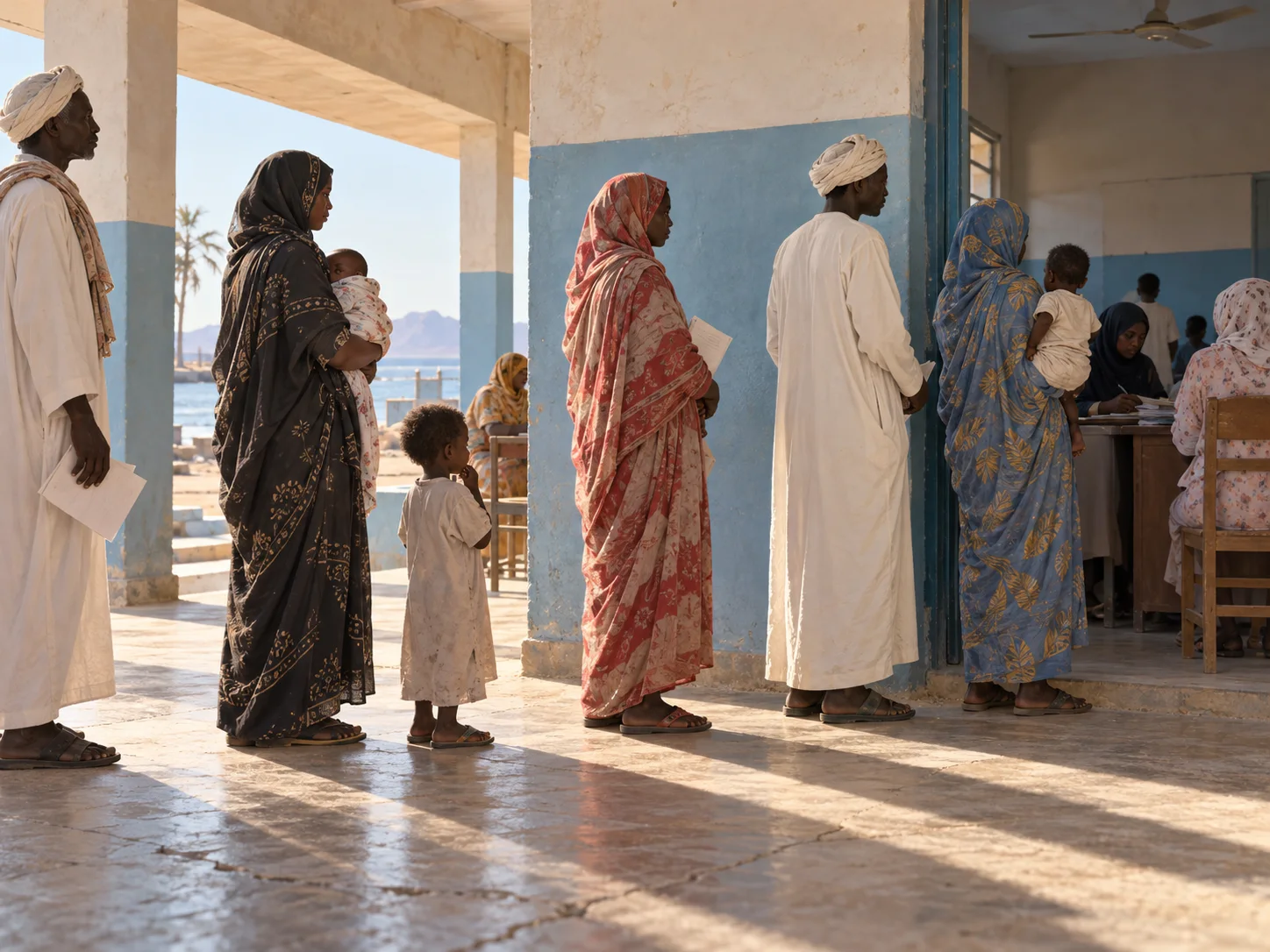
In 2024, a birth-registration catch-up campaign began in Sudan's Red Sea State, where war had displaced many families. At the registration centre in Ibrahim Balal School, parents and caregivers lined up early to obtain certificates for their children. Displaced mother Rasha came with her two daughters after an older process—costly court visits requiring family witnesses—had prevented her from completing registration.
Under the campaign, a team including a judge travelled to the site and reduced the process to three to five days. More than one hundred children were registered each day at the school alone. A certificate could unlock education, health care and food relief, and preserve information needed to trace identity through displacement or family separation.
The object awaited was a sheet of paper, but that paper legally represented the child. For families who had lost homes and possessions in war, the school queue was both a return to administration and a way to keep open the possibility of return itself.