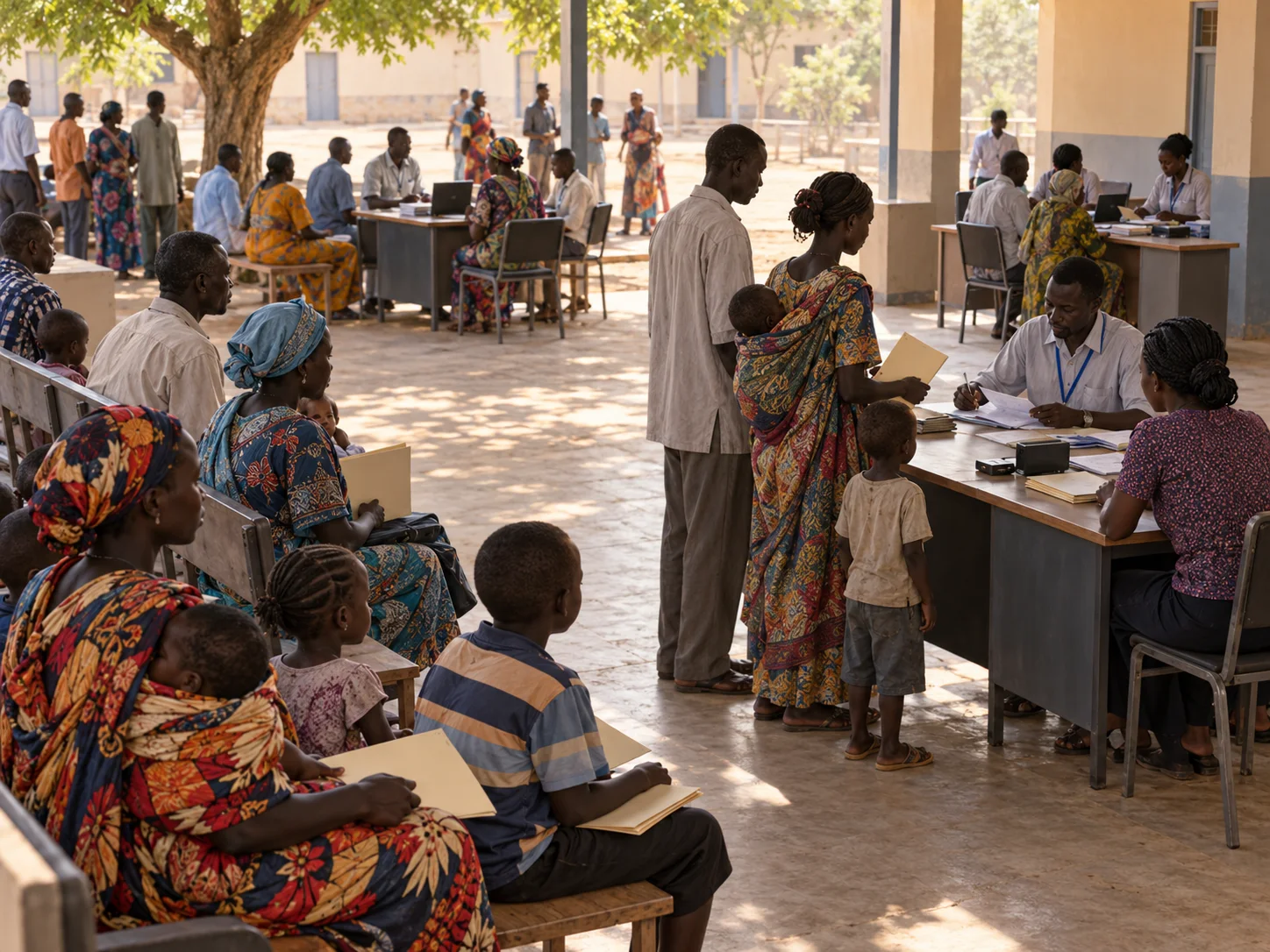
In 2015, Sudan began registering South Sudanese residents and issuing identity cards to those aged over five. A UNHCR photograph records people queuing for registration. Within about a month, more than 54,000 had been registered and roughly 37,000 cards produced.
The cards supported rights to work, buy property, move and access basic services. Twelve registration centres in Khartoum State processed a large exercise in legal identification.
The queue was waiting for more than plastic. It was the administrative entrance through which people displaced across a border became recognised by the system in which they were living and connected to everyday rights.