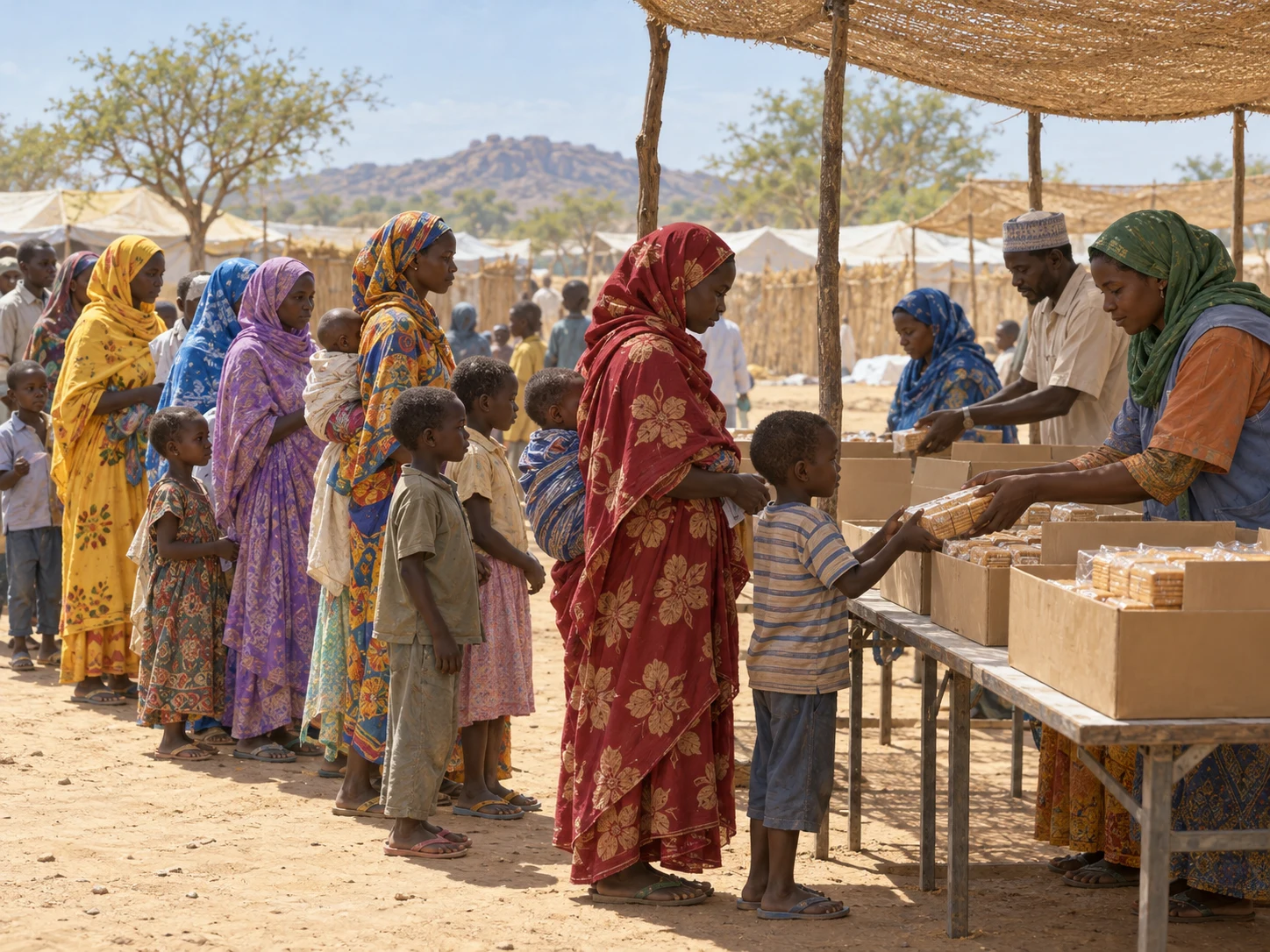
At Minawao refugee camp in northern Cameroon, women queued to receive high-protein biscuits. A photograph caption in UNHCR’s 2015 regional response report directly records the distribution line. The biscuits were not a treat. They were ready-to-eat nutrition for people displaced by violence in north-eastern Nigeria, many of whom lacked secure access to food, cooking equipment and ordinary household routines.
At the time, governments, UN agencies, international organizations and NGOs were coordinating assistance across Cameroon, Chad and Niger. Registration and protection monitoring were used to identify people with particular needs, including unaccompanied children, women heading households and older refugees. Food and basic relief items had to be delivered in forms that could move quickly through a camp and reach identifiable recipients.
This queue cannot be understood merely as an efficient distribution device. It imposed an order through which agencies could hand out a limited commodity and account for who had received it, but the people waiting were there because conflict had disrupted the conditions of an ordinary meal. The source offers a small but precise insight: a packet of fortified food became the unit connecting a regional emergency to one person’s immediate nutritional need. The line is evidence that assistance arrived. It is also evidence that the familiar structures of cooking, shopping and eating had been taken away.