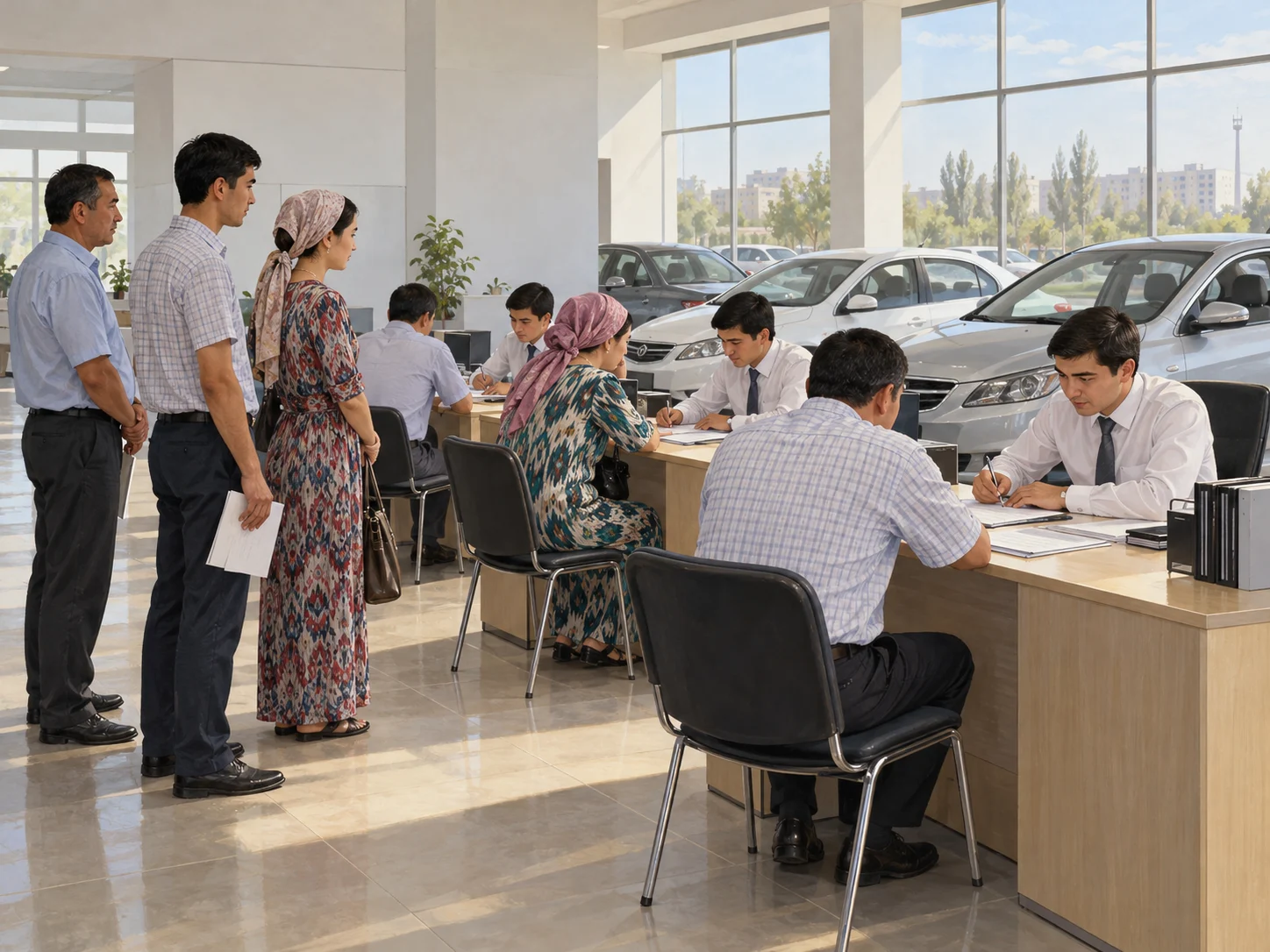
In Uzbekistan in 2013, buying a domestically produced car was not a matter of choosing a model at a dealership and driving it home. Contemporary reporting said buyers had to queue, pay an 85 percent deposit and enter a waiting list. At one dealership outside Tashkent, customers signing contracts in August said their cars were expected the following March.
The wait grew out of a shortage economy. GM Uzbekistan, controlled through the state-owned UzAvtosanoat group, dominated the domestic market, while supply failed to meet demand. A new car at the official price required patience; a lightly used car available immediately could cost more. Reports also described connections and extra payments used to move around the formal order, making the list both a device for fairness and a gate to a scarce commodity.
What distinguishes this queue is that waiting did not end when the line at the dealership moved. Only after signing a contract and surrendering most of the price did a buyer join the months-long order for delivery. That delay could postpone a family's plans for work and travel. The universal scene of people lining up for something desirable became, in this case, a waiting list that lasted long after everyone had left the showroom.