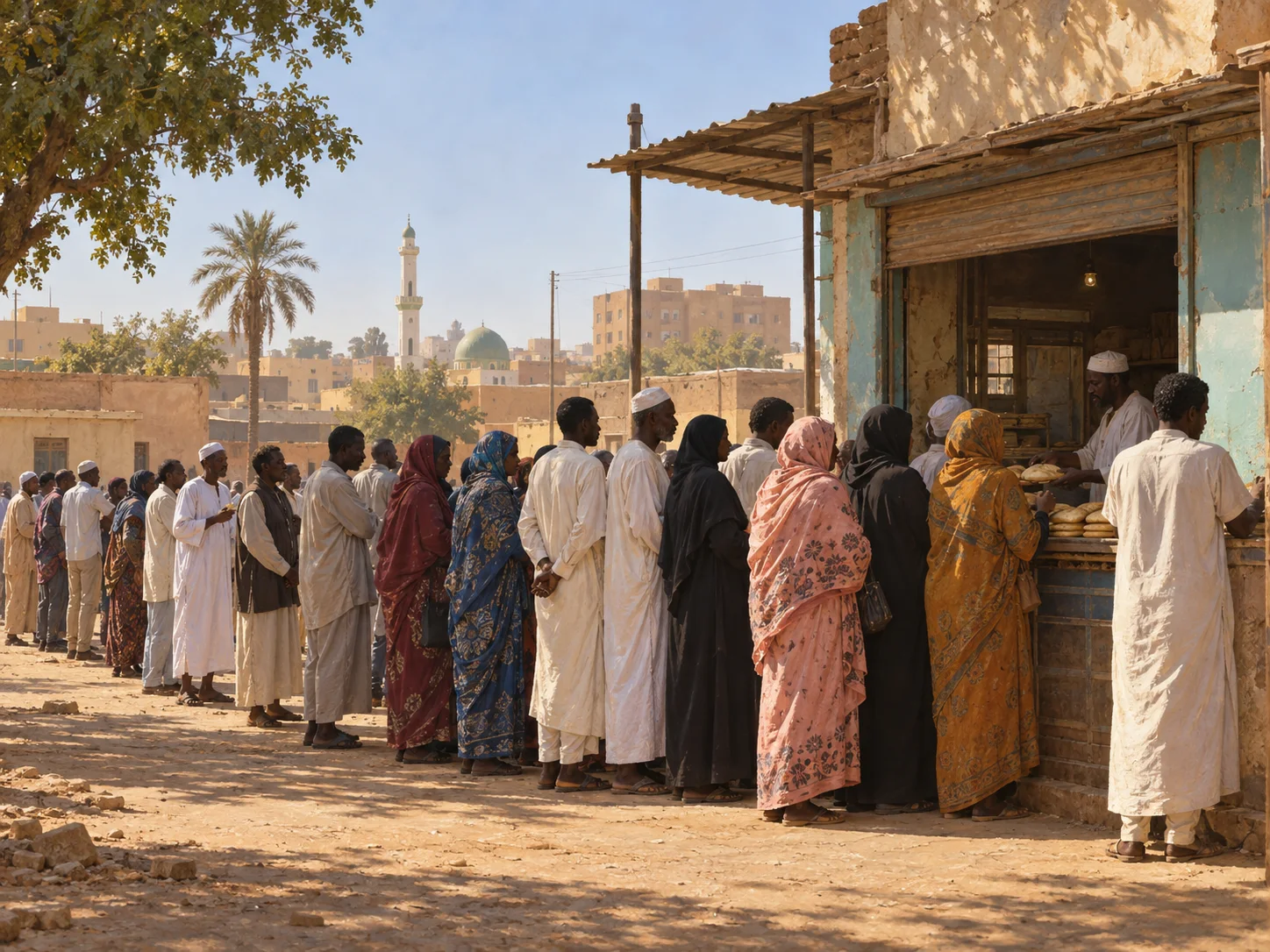
In January 2018, bread prices in Khartoum doubled overnight. Residents queued outside bakeries and waited nearly an hour to buy a loaf after flour producers raised the price of a 50-kilogram sack from 167 Sudanese pounds to 450.
Bakers said they might have to stop when their existing flour ran out. A change that left wheat imports to private companies, combined with the shortage of foreign currency, constrained supply. One private-sector employee said his family's daily bread cost had risen from 20 pounds to 40; against a monthly salary of 3,050 pounds, bread alone could cost 1,200.
The hour in line was not the delay attached to a fashionable product. It was the point at which import policy, currency pressure, and the price of flour reached the daily order for a staple food.