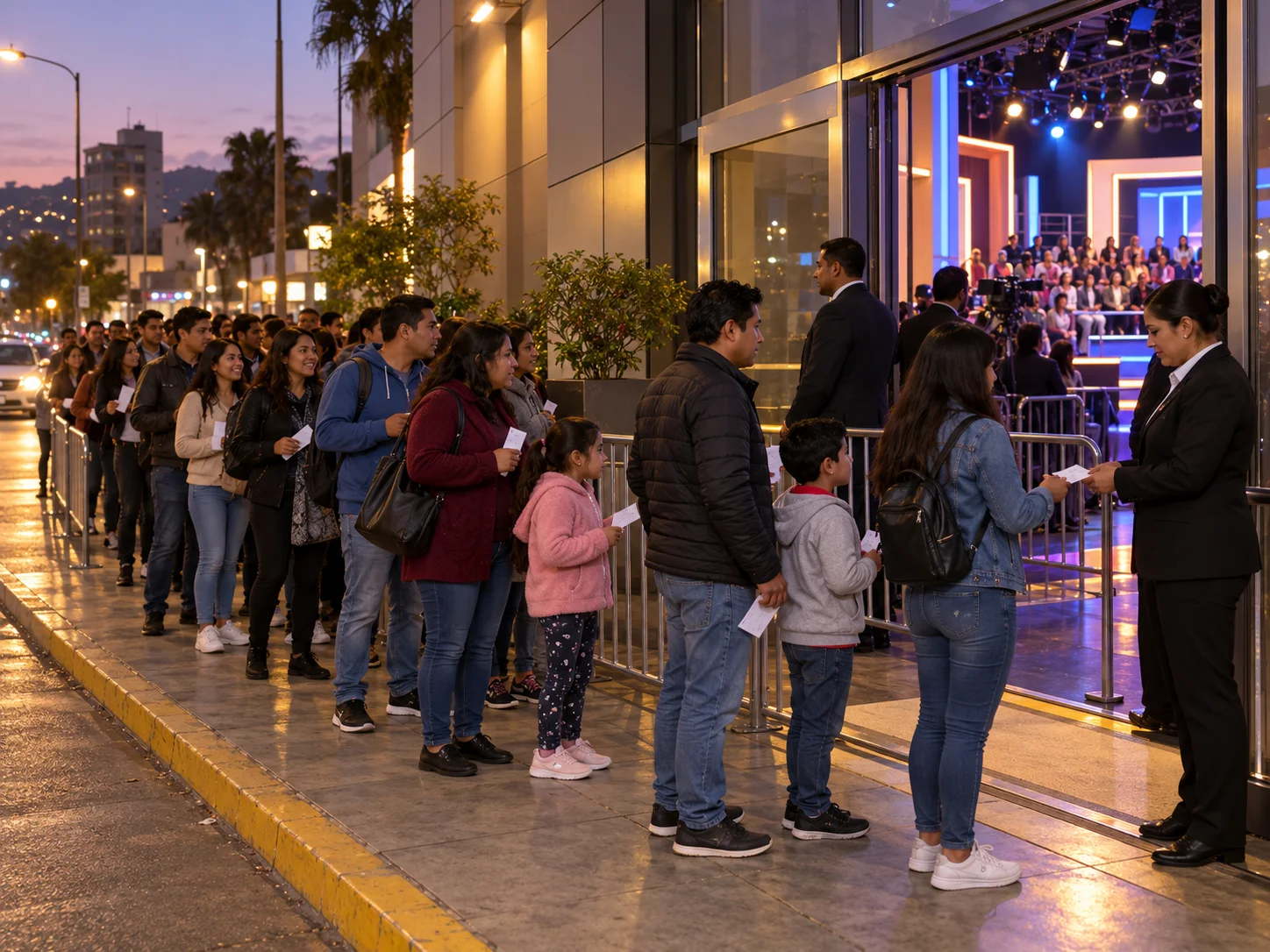
People hoping to enter Peru’s long-running television programme Trampolín a la fama waited overnight outside its Lima studio. In a 2018 recollection, anthropologist Alexander Huerta-Mercado describes separate lines for men and women. As dawn approached, experienced participants distributed pencil-numbered tickets; another organiser stamped arms, and television security staff later wrote yet another number in marker.
One person could reach the door carrying three proofs of position: a ticket, a stamp and a number on the skin. The system still bent when friends joined the line near the entrance, sometimes causing pushing. While waiting, people knitted, cooked and sold sweets. This queue was governed neither wholly by the broadcaster nor wholly by the audience. Participants invented an order overnight, and the institution subsequently layered its own controls on top.