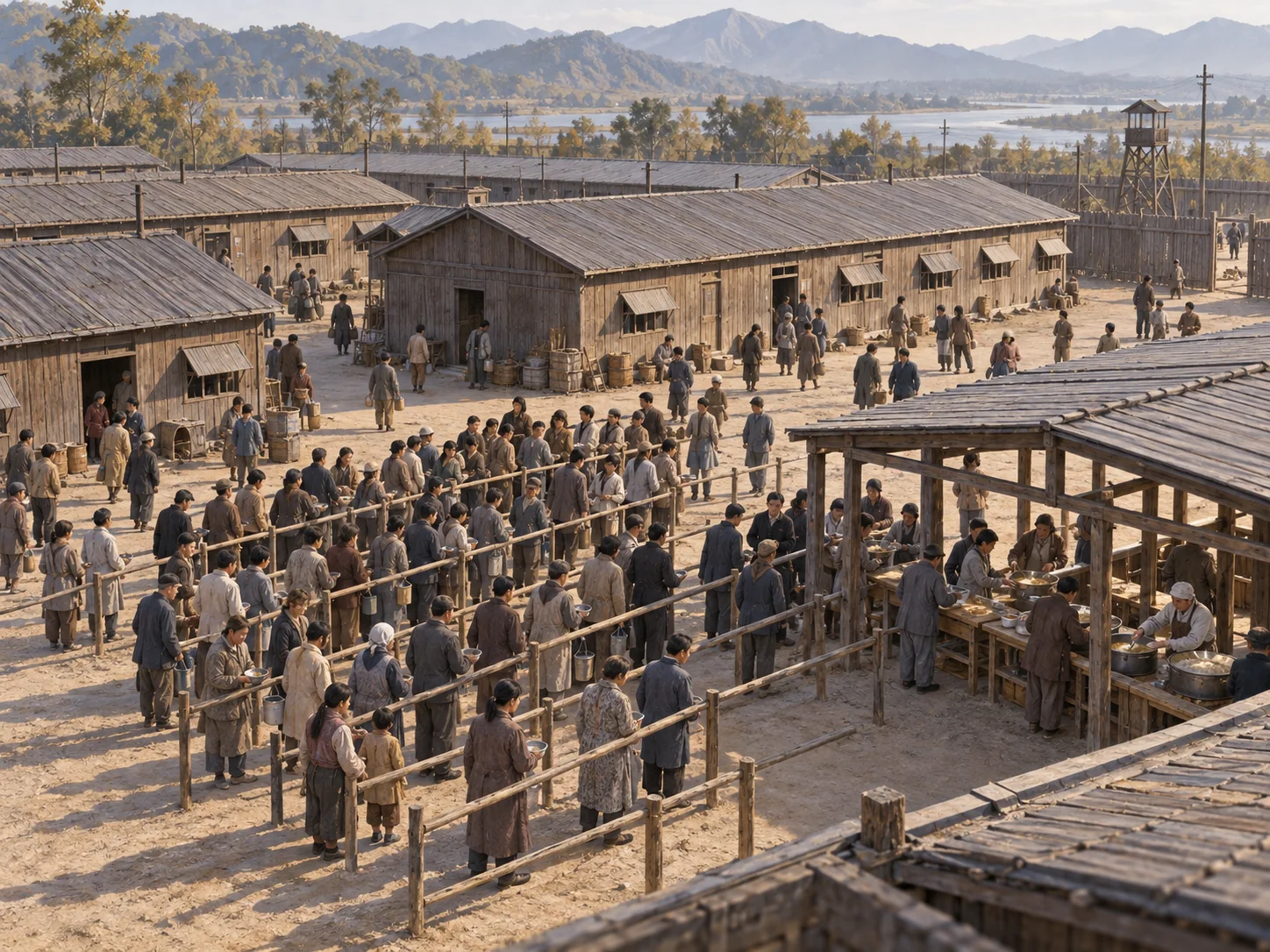
In September 1945, civilian internees queued for a meal at Yangchow Internment Camp C in China. The Australian War Memorial catalogue identifies the gabled building with a circular window in the background as the dining room and explicitly describes the people as waiting for food.
Camp C held about 750 civilians, including children, transferred from places including Shanghai, Nanking and Yangchow. Although the camp had been liberated in August, feeding hundreds of people still required an order of service. This is not a cheerful story about good queueing. Internment was confinement imposed on civilians, and the meal line belonged to those conditions. The photograph therefore sharpens a central distinction in the atlas: the bodily act of waiting may look familiar everywhere, but a line entered by choice and one formed inside enforced captivity do not carry the same human weight.