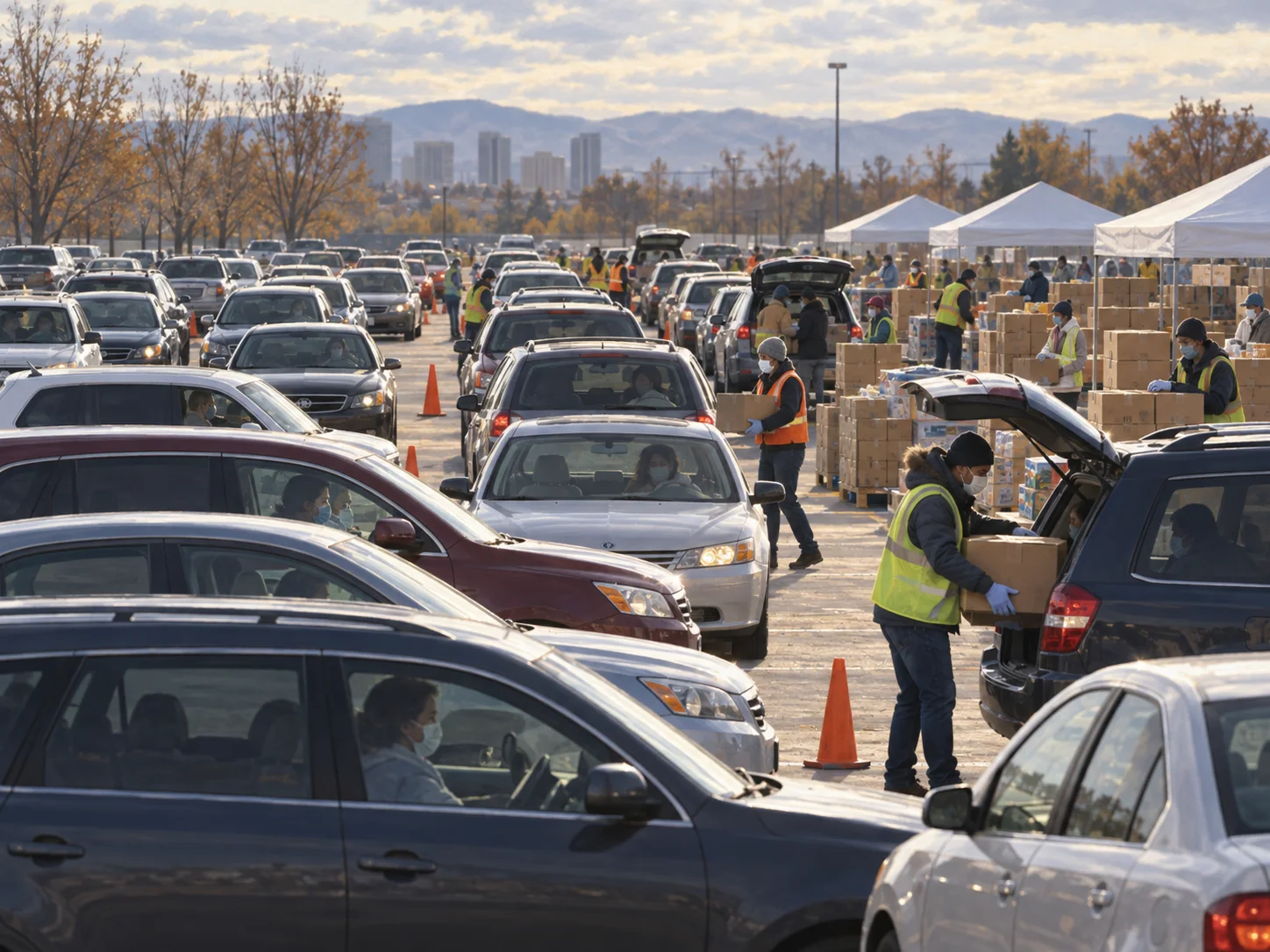
In 2020, Americans who had lost work and income during the COVID-19 pandemic waited for food distributions without leaving their cars. The Associated Press documented first-time users, including a Louisiana couple who spent the night in their vehicle at a distribution site, and reported long lines of people and traffic around the country. In Houston, car queues could extend about half a mile while the food bank handled roughly one million pounds of food a day.
Drive-through distribution reduced contact and allowed heavy boxes to be loaded directly into vehicles, but a system organised around cars could itself become a barrier for people without one. What appeared from outside as a line of vehicles represented many more diners: unemployed workers, children and older relatives shared the food carried in each boot. New users also had to learn an assistance system they had never expected to need. The scene resembled ordinary traffic, yet the destination was neither a workplace nor a holiday. It was a box intended to keep a refrigerator from becoming empty. The pandemic's economic shock became visible not only in unemployment charts but in the speed at which volunteers could open and fill one car after another.
Earlier food distributions often relied on walk-up lines or indoor intake. Infection control combined reception, waiting room and transport in the car. The method was efficient, but hundreds of arrivals turned traffic management on surrounding roads into part of relief work. Capacity depended not only on warehouse stock but on physical space to unwind the vehicle queue safely.