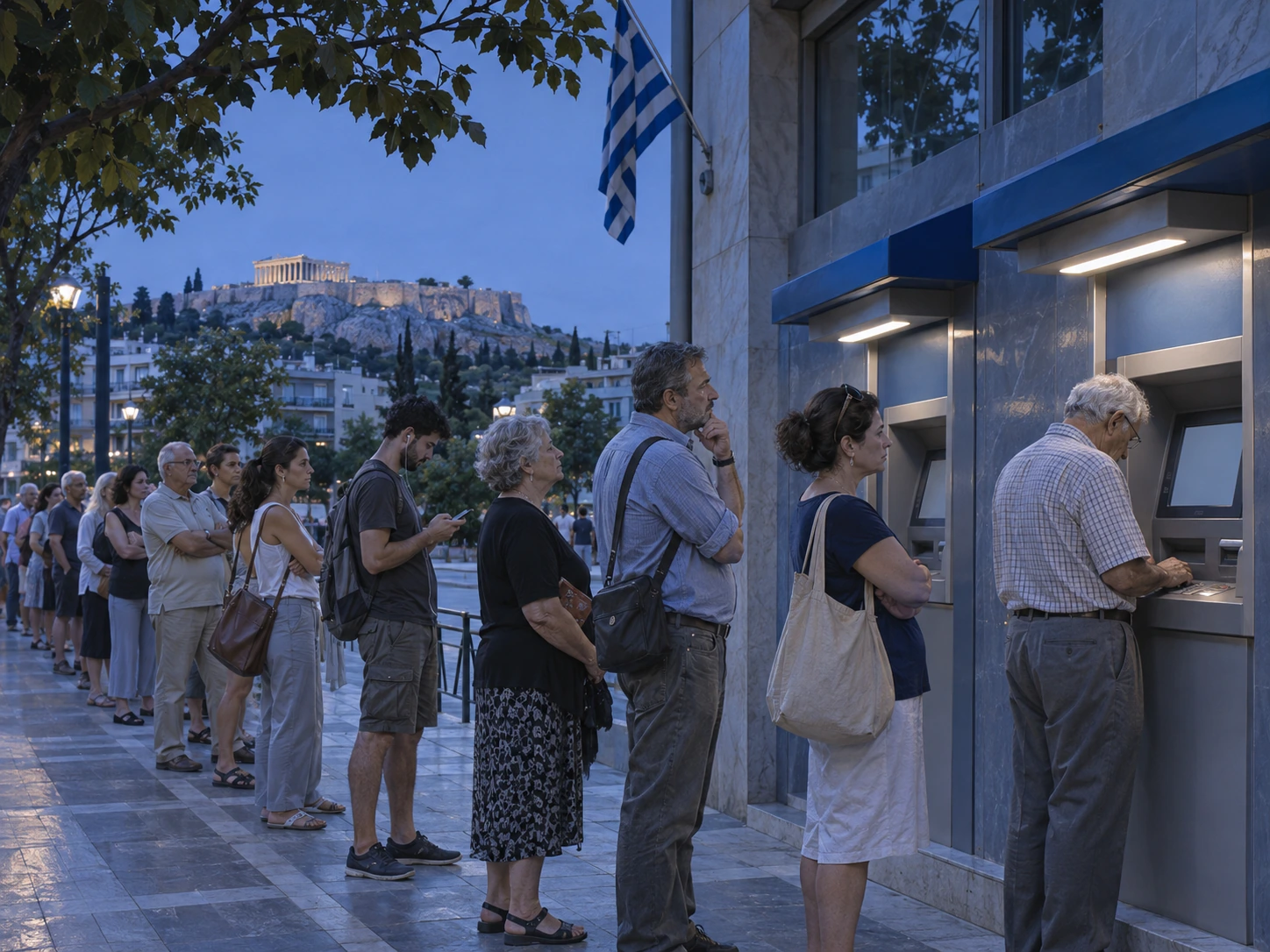
In 2015 Greece introduced bank closures and capital controls amid a financial crisis, and people queued at ATMs for cash. A balance in an account did not guarantee access to the same amount in banknotes that day. Abstract financial policy became an immediate question about shopping and bills.
The people in a single line did not all have the same needs: a pensioner, a shopkeeper and a visitor faced different pressures. Time outside a cash machine made the distance between recorded savings and spendable cash visible.
Capital controls may be introduced to protect a financial system, but for pensioners, shopkeepers and travellers they also determine how to pay that day. An ATM queue makes visible the difference between having a bank balance and having cash available now. People in the same line may need different amounts and have very different alternatives; their fears should not be treated as identical.
The defining feature of Cash in Hand, Money in the Bank is the way a specific procedure turned 資本規制下のATM into ordered waiting. The line was not background scenery: it determined access, timing and the burden placed on the people involved. The revised account keeps those mechanics visible and separates the documented scene from assumptions that the source does not support.
Reuters reporting from the 2015 Greek capital controls directly documents ATM and bank queues.