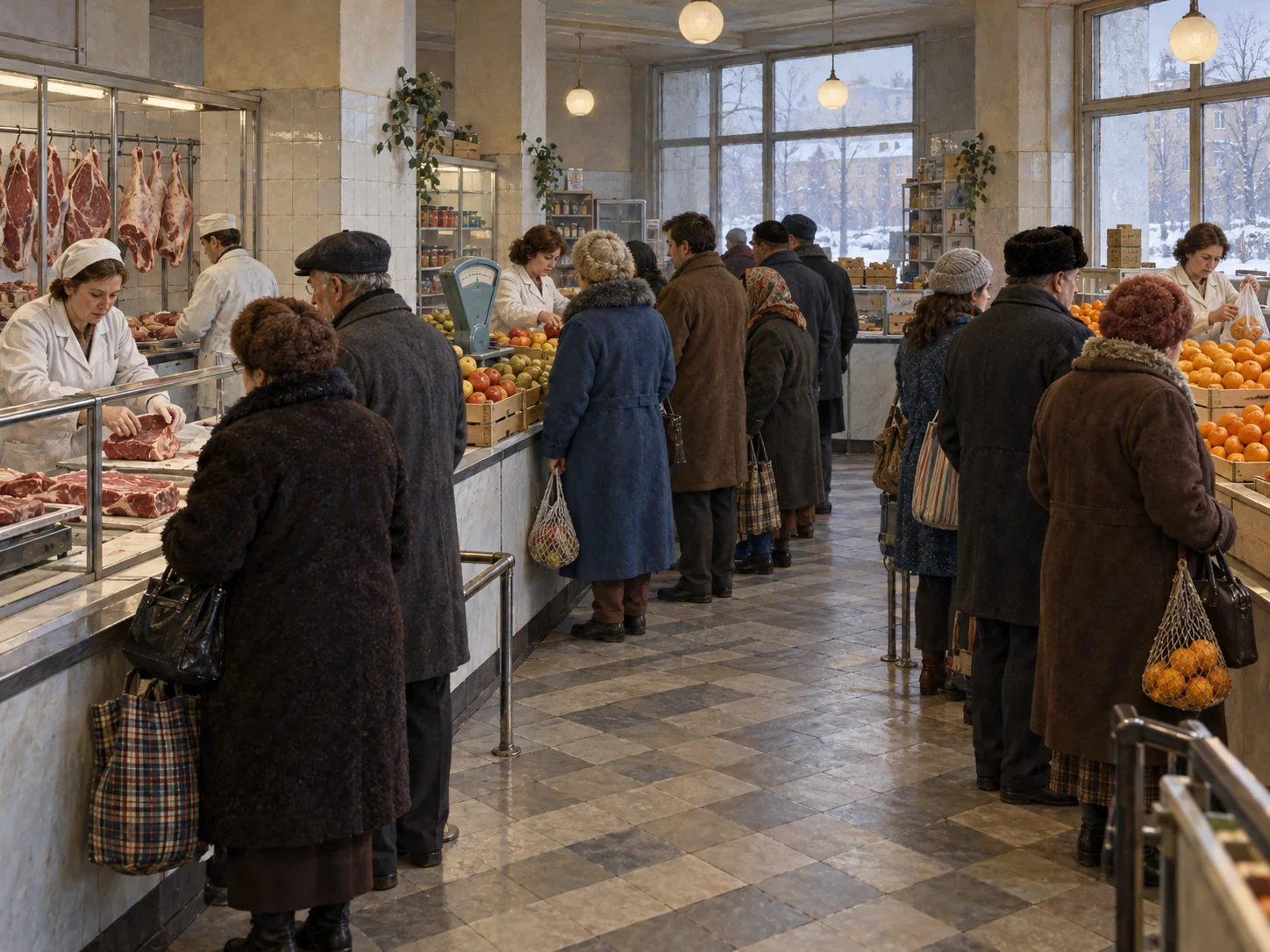
On 28 December 1989, five days after Romania’s revolution ended Nicolae Ceaușescu’s rule, hundreds lined up in Bucharest to buy meat and fruit. Warehouses had begun sending food to retail shops, and some children tasted oranges and bananas for the first time. One university student said she herself had not eaten an orange for three years.
The former regime had exported agricultural produce to repay foreign debt, while imported fruit and real coffee rarely reached ordinary consumers. The post-revolution line still reflected scarcity, but the white food cartons entering shops showed distribution reversing toward the public. That the object of the queue could be a child’s first orange measured political change at the scale of a kitchen table.