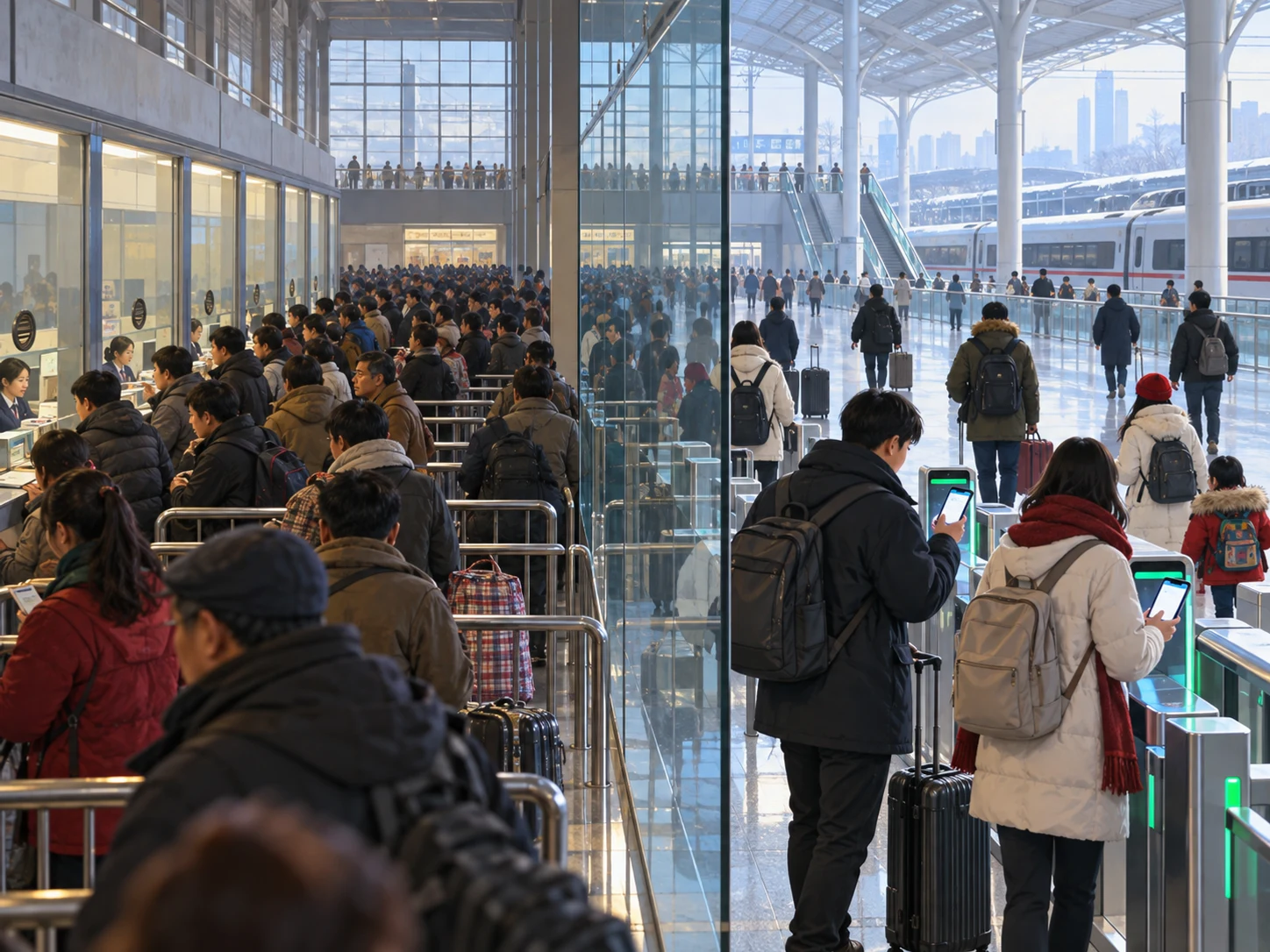
China’s Spring Festival travel rush once made obtaining a ticket a journey of its own. Wang Zhenghua, founder of Spring Airlines, recalled a queue about one kilometre long outside the ticket office at Shanghai railway station, formed by people hoping to secure a journey home. Even when he founded his airline in 2004, relatively few travellers could afford to fly.
For the 2019 travel rush, nearly three billion trips were expected between 21 January and 1 March. Some stations on the Guangzhou–Shenzhen intercity railway introduced ticketless travel: passengers scanned a smartphone QR code and paid afterward. A process of buying or collecting a ticket and entering the station that had taken 20 to 30 minutes could be reduced to a few minutes.
The kilometre-long line and the QR code were two gateways to the same desire to return home. The queue changed not because demand disappeared, but because entitlement to board moved from a counter to personal digital authentication.