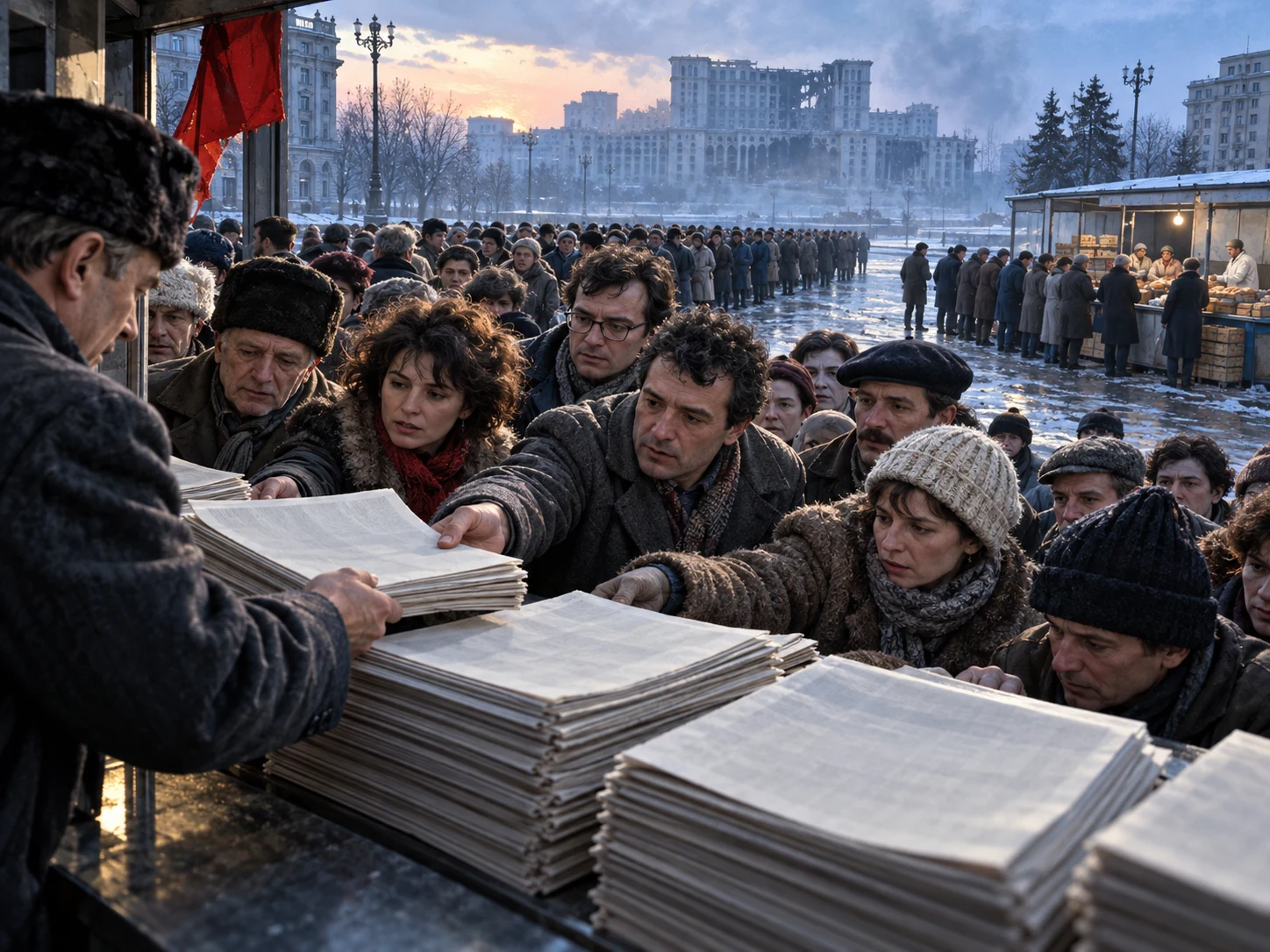
In December 1989, soon after the fall of Romania’s Ceaușescu regime, fresh meat, oranges and coffee appeared in Bucharest shops after years of scarcity. Lines of people in heavy coats and hats still waited for food in driving snow, but the reported wait for meat had fallen from as much as twelve hours in extreme cases a month earlier to generally less than one hour.
The former government had exported much of Romania’s produce to repay foreign debt, leaving little for domestic consumers. The provisional authorities stopped food exports and removed restrictions on farmers selling their own produce. Shortages nevertheless remained, and some shoppers were still turned away after meat ran out.
The striking change was that lines for newspapers, newly freed from censorship, had become longer than food lines. The revolution did not immediately abolish queuing. It changed the object for which Bucharest residents were prepared to wait longest—from meat to news.