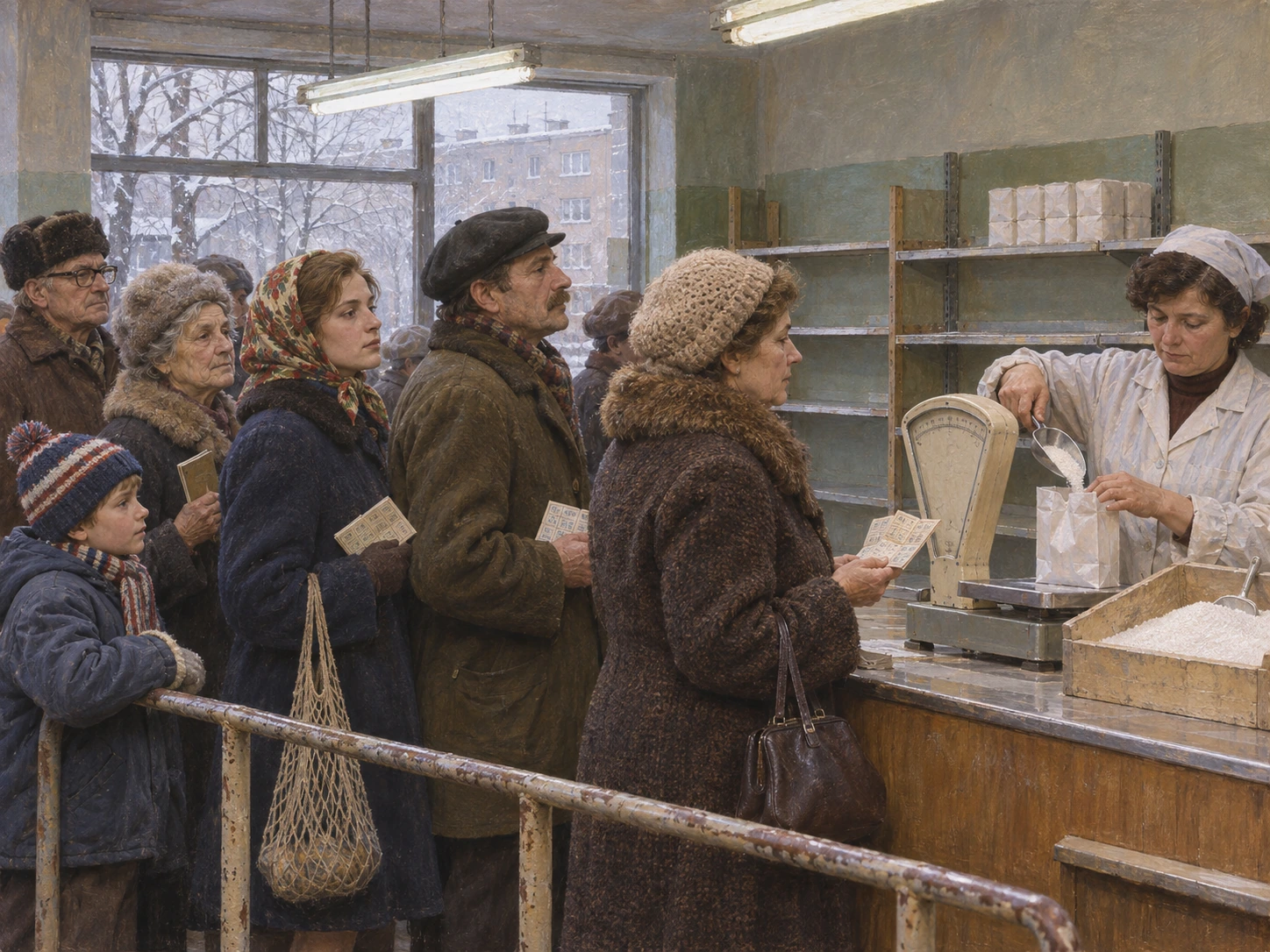
Poland introduced commodity coupons in 1976 allowing two kilograms of sugar per person each month. Yet an official educational history explains that holders still faced long queues and could fail to obtain the product. During the 1980s rationing expanded to meat, butter, cleaning products, petrol, sweets, cigarettes and alcohol.
A coupon defined eligibility and a limit; it did not create stock on a shop shelf. People followed information about deliveries and queued from the night before, waiting to convert a paper entitlement into goods.
The essential discovery is that coupon and queue managed the same shortage in different ways. The coupon decided who possessed a right; the line decided who received something before the inventory disappeared.