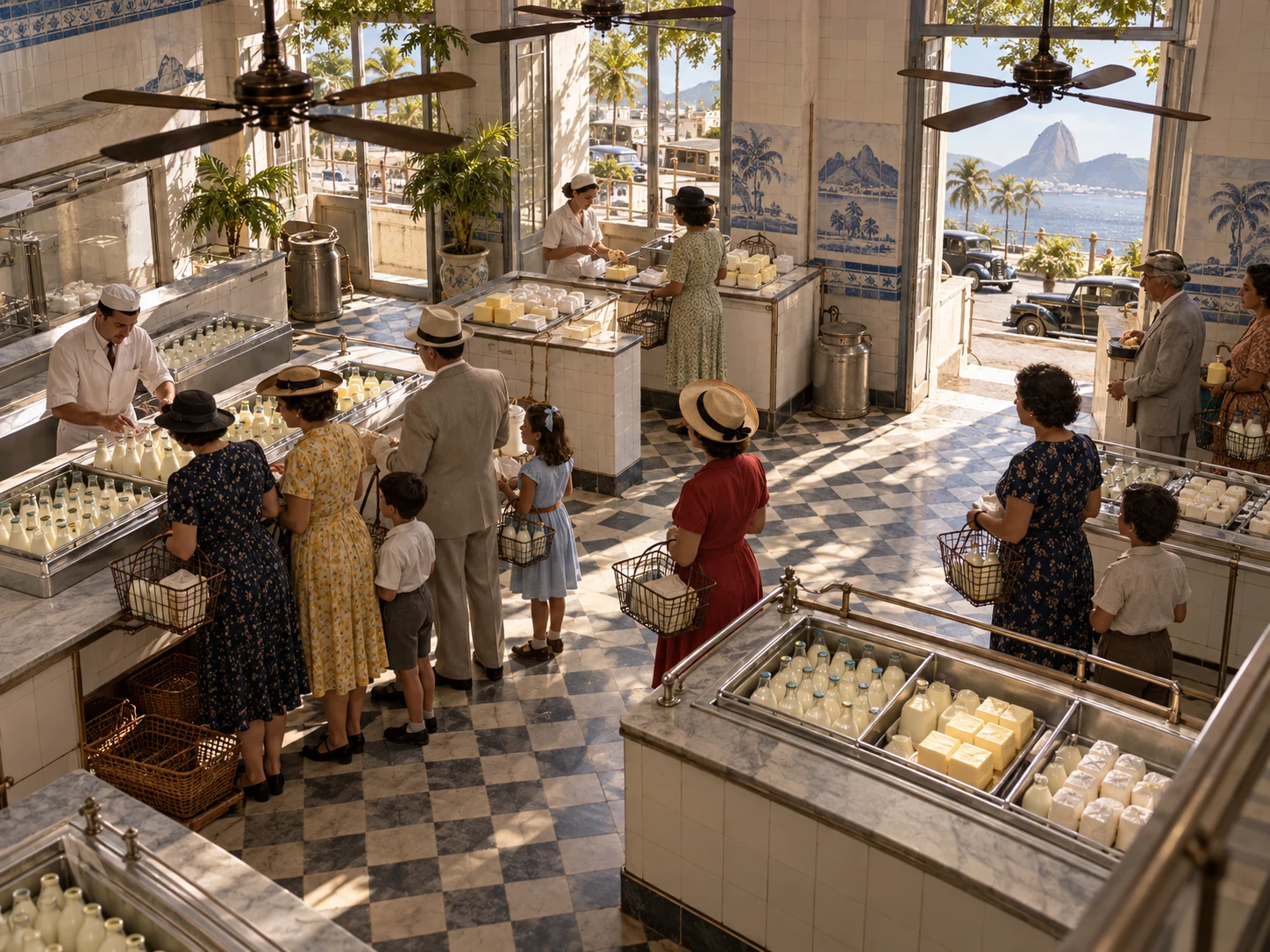
During the Second World War, buying dairy products in Rio de Janeiro became part of the city’s daily struggle over scarce supplies. Rio’s municipal history archive records rationing of meat and milk, notes that butter was extremely difficult to obtain, and says residents faced long queues for essential goods. Fuel was rationed as well, while blackout regulations lasted from 1 September 1942 until 17 May 1944. The dairy line was therefore not an isolated shortage: shipping, imports, fuel controls, and wartime administration had all entered the household food economy.
A study of Brazil’s Serviço de Alimentação da Previdência Social (SAPS) at the Federal Fluminense University includes a photographic record captioned “Queue for the purchase of dairy products: Second World War rationing.” SAPS operated workers’ restaurants and food-distribution programs, making its outlets a point where national nutrition policy met the domestic kitchen.
What distinguishes this queue is that it was not formed by shoppers choosing among abundant goods. It was formed by citizens trying to secure a share of what had been made available. Scarcity of milk and butter changed more than menus: it imposed a timetable—when to go, where to wait, and whether anything would remain. The photographed line turns a global conflict into a local sequence of bodies, showing one of the routes by which a distant war reached breakfast tables in Rio.