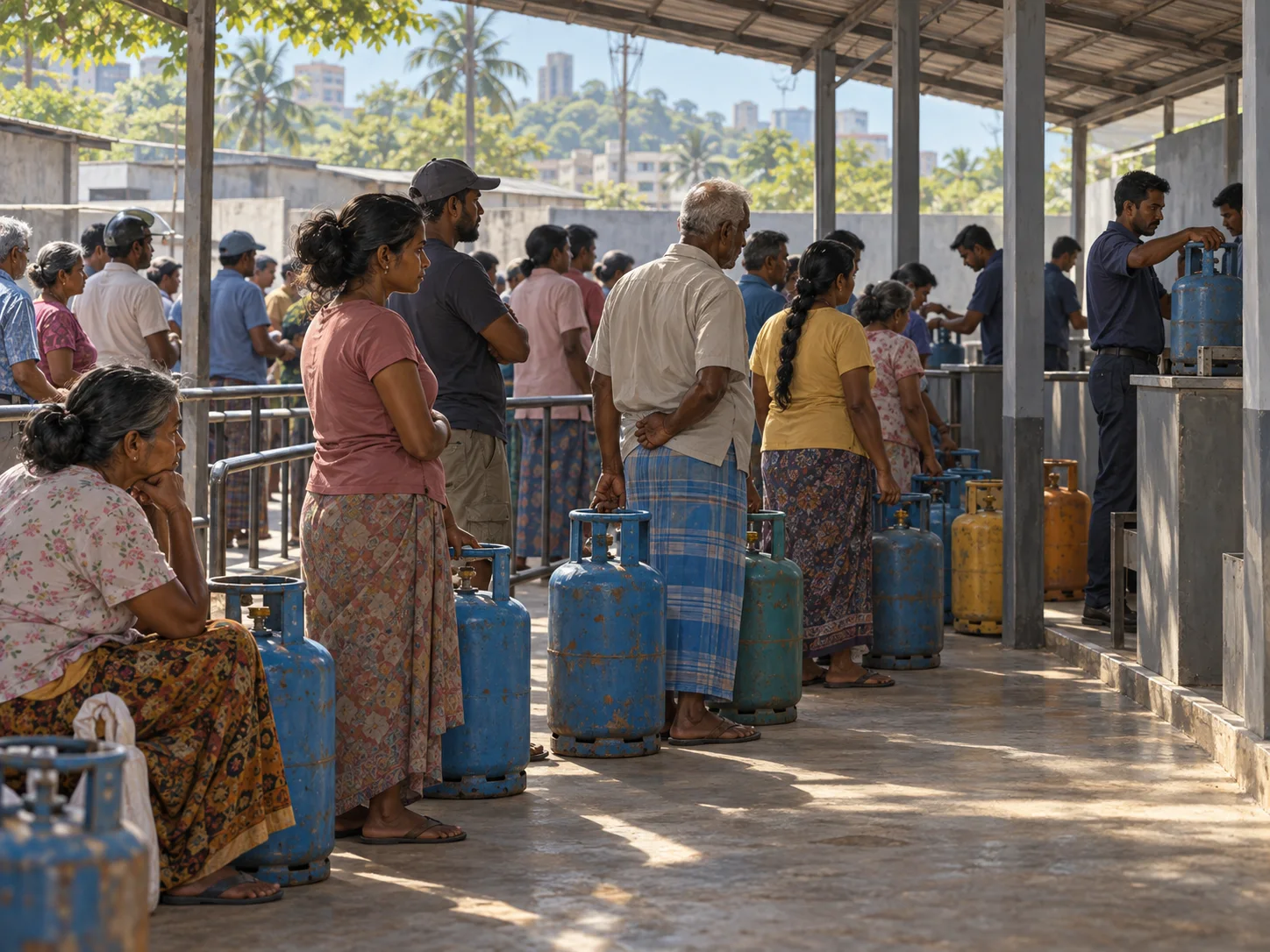
On 20 May 2022, thousands of people queued for cooking gas and petrol in Colombo, Sri Lanka's commercial capital. Reuters reported that part-time driver Mohammad Shazly was in a line for a third day, an empty cylinder beside him, hoping to obtain gas for his family of five. About 500 people were waiting where only roughly 200 cylinders had been delivered.
A severe shortage of foreign currency had restricted imports of fuel, while public transport was depleted. When a supply truck reached a gas-distribution centre, soldiers carrying automatic rifles guarded it and people in the queue applauded. The state supplier aimed to distribute 80,000 cylinders a day, but the market shortage was estimated at 3.5 million. The price of a 12.5-kilogram cylinder had risen from 2,675 rupees in April to nearly 5,000.
A position in this queue did not guarantee a purchase. If 300 people stood ahead, the day's 200 cylinders could not reach you. A national foreign-exchange crisis had become measurable at household level in empty cylinders and the capacity of a single delivery truck.