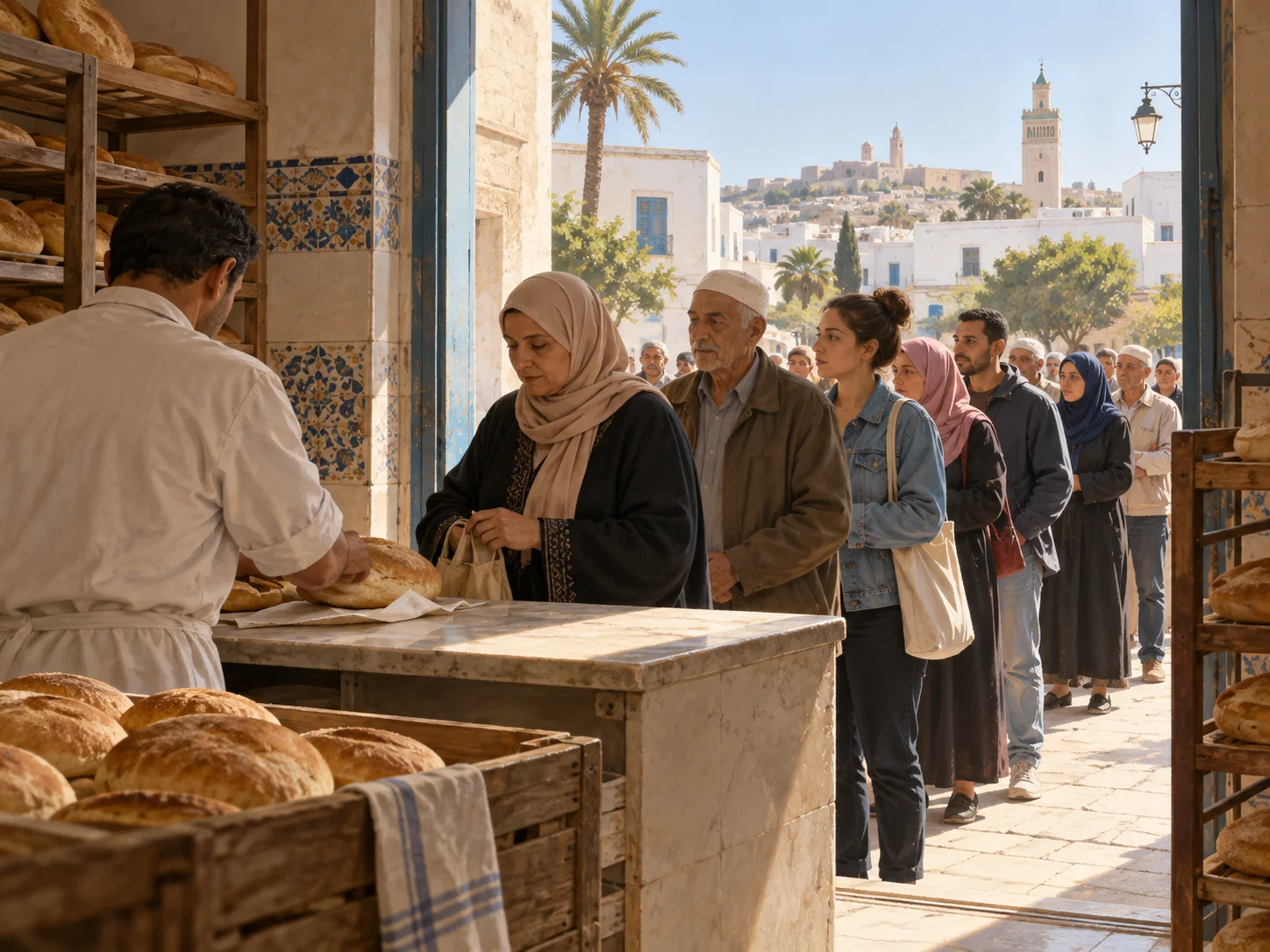
On 22 August 2023, a woman reached a bakery in Bab Souika, Tunis, and told the waiting customers that it was her sixth bakery of the day. If this shop had no bread, she would go home empty-handed. Elsewhere in the city, about forty people were outside a bakery at 11 a.m.; many had waited roughly an hour in 98°F heat. When the baker announced that the flour was gone, the customers dispersed to search for another shop.
The shortage exposed Tunisia's highly centralised grain system. The state controls wheat imports and distribution, but scarce foreign currency left cargoes waiting offshore for payment. Licensed bakeries were receiving only 10 to 20 percent of their normal flour allocation. Drought and record heat had also cut the domestic wheat harvest by 60 percent, to about 250,000 tonnes.
A subsidy could keep bread cheap only when flour actually arrived. Customers planned their days around finding a bakery that could still bake, and learned that when a queue vanished, the bread often had too.