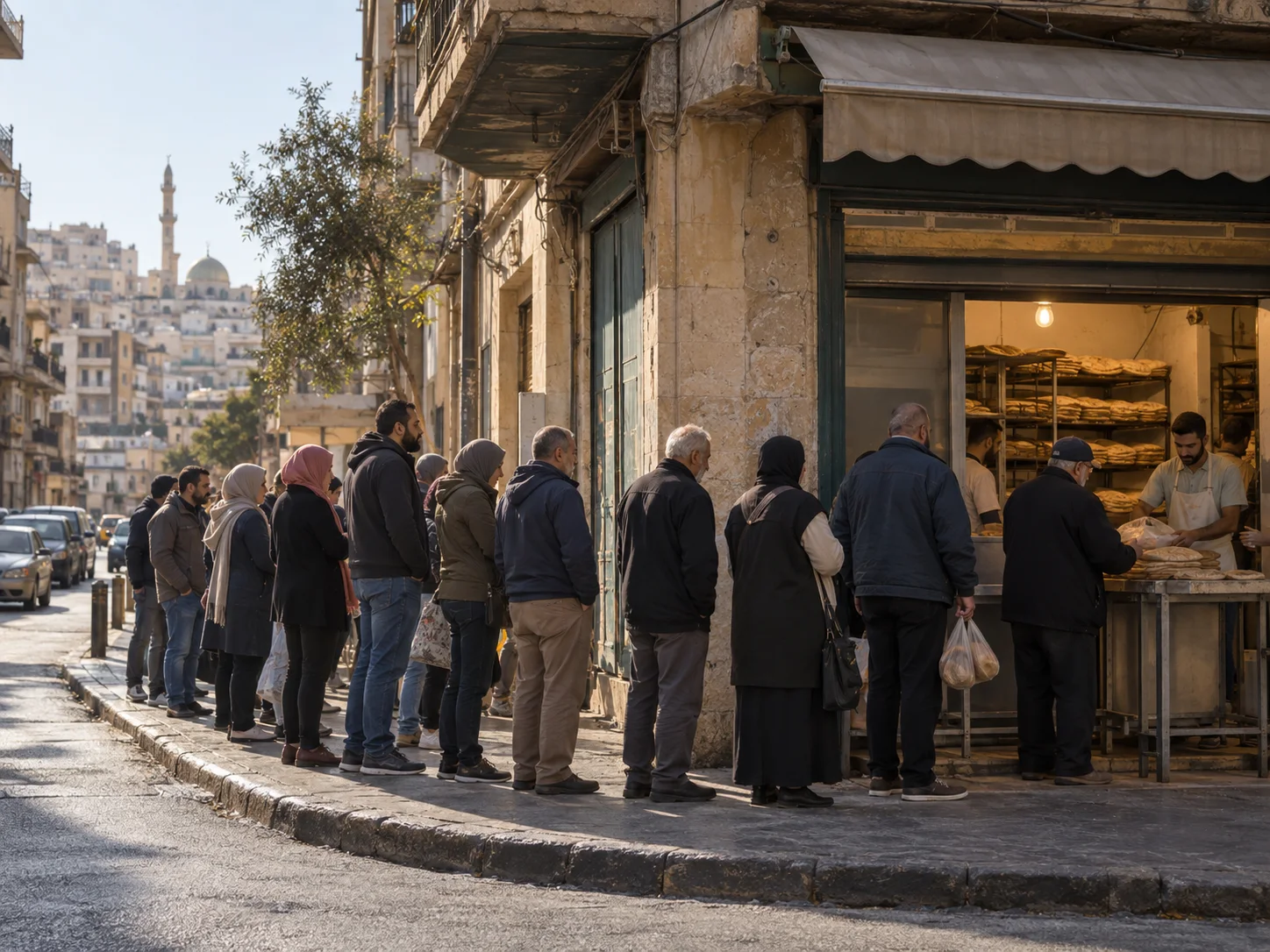
On 13 July 2022, long queues formed outside bakeries in northern and southern Lebanon. L'Orient Today reported lines in Tripoli, Minieh, and Akkar. In the south, queues concentrated at bakeries selling the same bundle of bread for 12,000 to 15,000 Lebanese pounds, while relatively few customers appeared at shops charging 20,000. The same bread produced different patterns of waiting according to price.
Queues had been visible around the country since the day before Eid al-Adha, amid a prolonged dispute between bakeries and the economy minister over Arabic bread. Lebanon's dependence on wheat from Ukraine and Russia made the shortage more acute after Russia's invasion of Ukraine. The expected arrival of about 35,000 tonnes of wheat was presented as temporary relief. In al-Beddawi, the report also recorded two people wounded in gunfire during a dispute over who would receive a bread bundle first.
This queue revealed more than whether bread was available. It showed what people could afford. Space remained at the higher-priced shops; at the cheaper ones, customers paid in time and, in the most extreme case, personal safety.