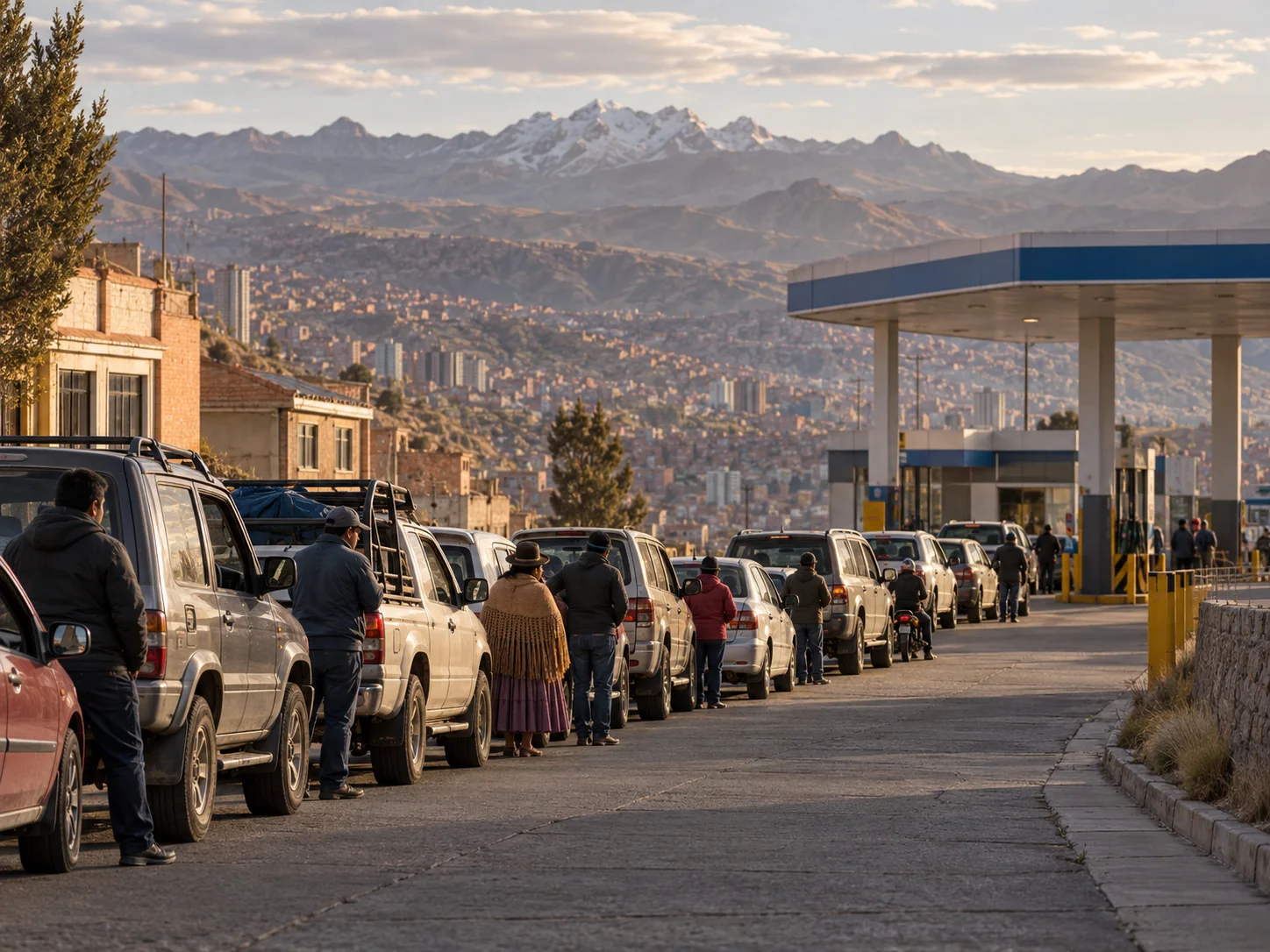
By late 2024, vehicle lines extended for kilometres outside filling stations across Bolivia. The Associated Press documented how a country once known as a major natural-gas producer lacked the foreign currency needed to import enough petrol and diesel. When trucks and buses cannot refuel, crops do not reach markets and public transport falters. A driver may be waiting for one tank, but behind that tank sit the next day's food prices and journeys to work.
Fuel subsidies kept retail prices low while the state absorbed the difference between those prices and the international cost of imports. As dollar reserves dwindled, a cheap official price could no longer guarantee physical supply. Filling stations therefore rationed scarcity through time rather than price. Vehicles edged forward, sometimes consuming the very fuel their occupants hoped to obtain. The line was not ordinary congestion. It translated national problems of exchange rates, subsidies and import capacity into the speed of individual cars whose drivers watched their gauges while waiting to reach a pump.
Agricultural groups warned that diesel scarcity could damage the following year's harvest and food supply. The back of the filling-station line represented more than inconvenience that day. Delays to planting, harvesting and transport would reach city markets later. The vehicle queue was a future shortage appearing early on the present road.