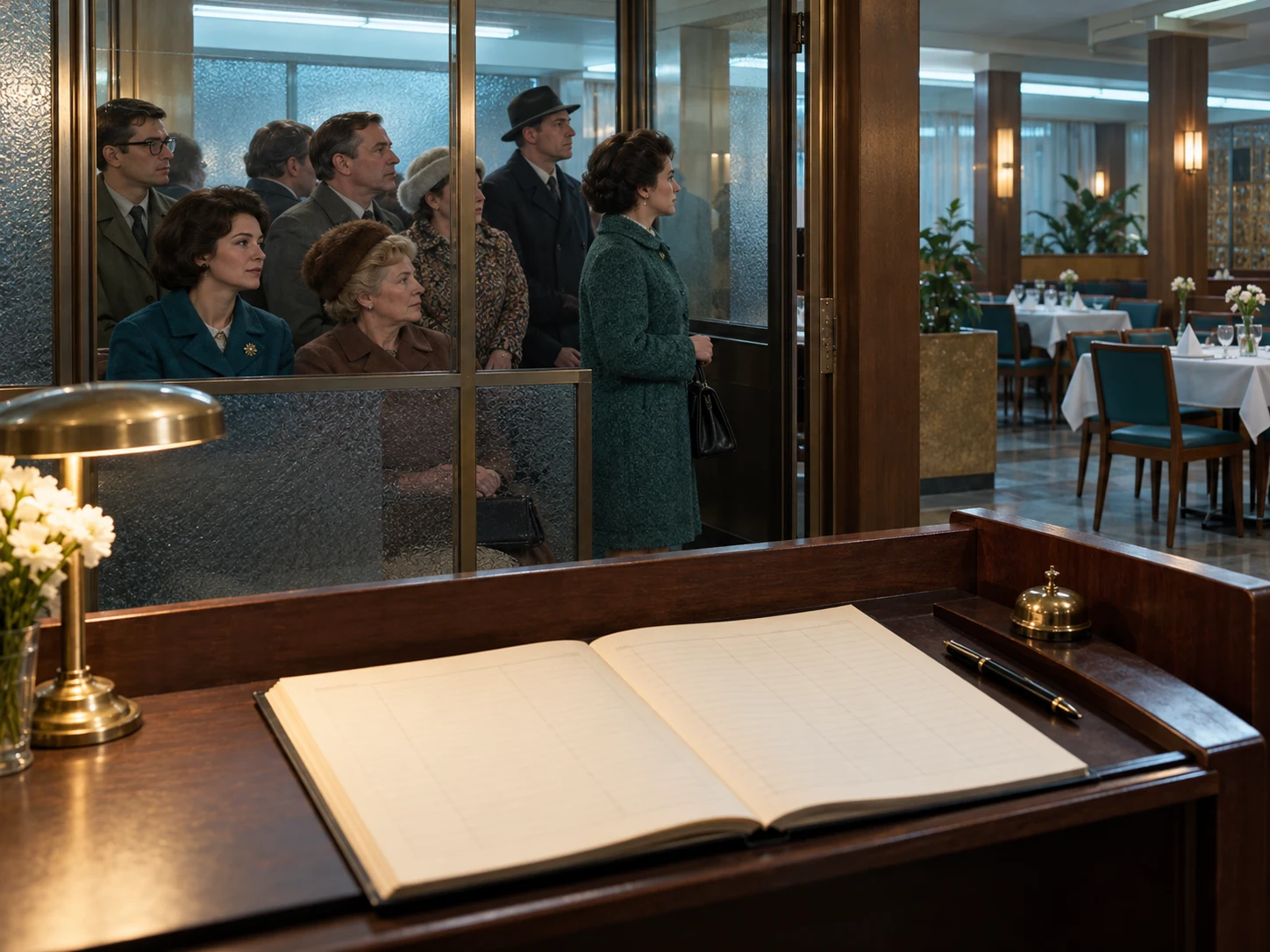
In East German restaurants, a meal often began in a line beneath a sign meaning “You will be seated.” MDR's historical account says chronic shortages of restaurant places lay behind the practice. Even when empty tables were visible, they might be marked reserved, and admission could take hours.
In 1990 Berlin had about 6,000 restaurants, but only 1,400 were in the East, compared with 4,600 in the West. In a system where prices and supply were state-controlled, the queue was less about cooking time than about scarce seats and the staff's power to allocate them. The distinctive frustration was simple: a table could be visibly empty without being available.