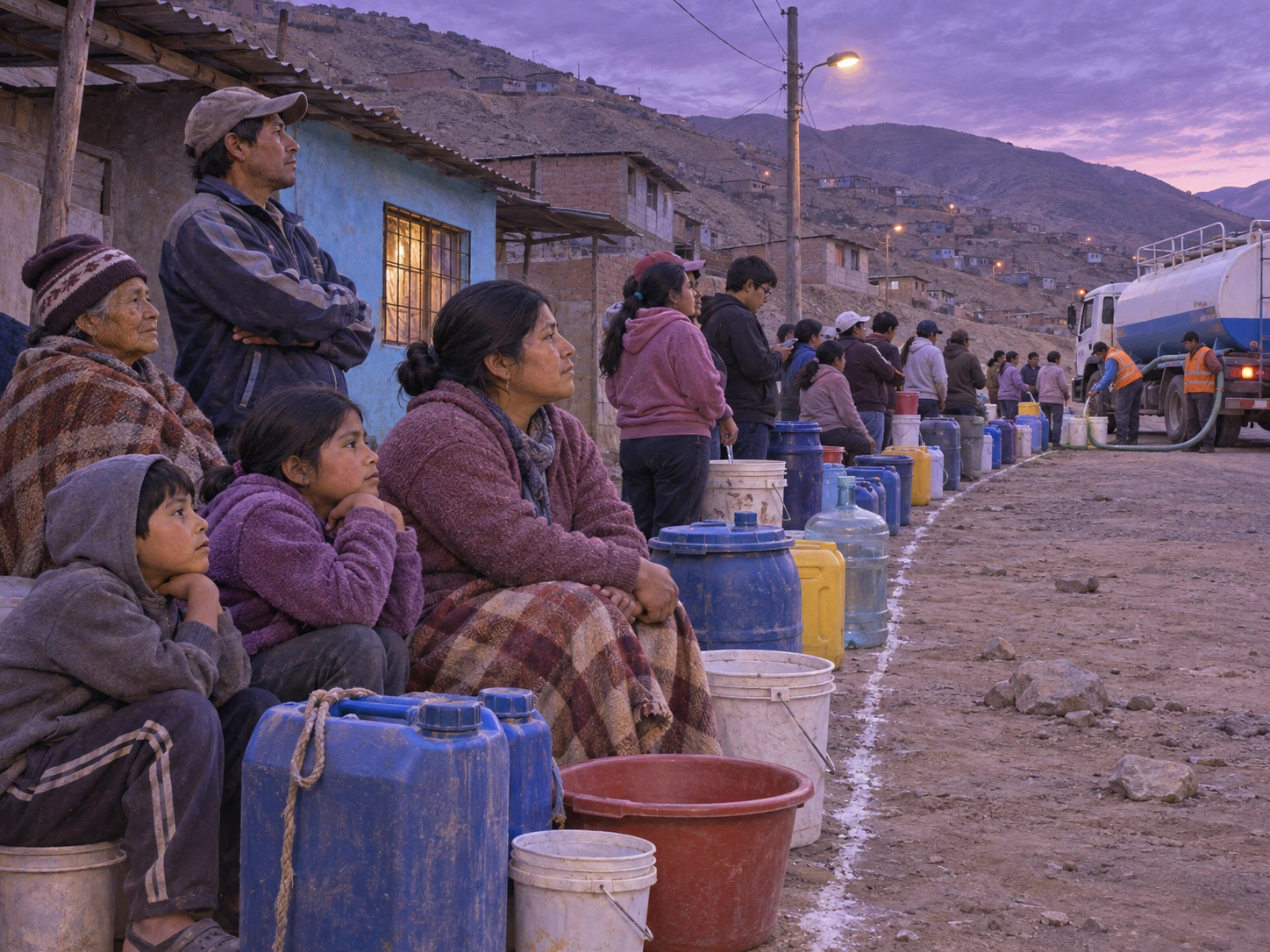
In Jicamarca on Lima's eastern edge, households without a domestic water connection form a line from 3 a.m. for free deliveries by the public utility SEDAPAL. A 2022 qualitative study by Action Against Hunger, including Venezuelan migrant households, recorded waits of four to five hours at established distribution points. Water delivery and paid work follow different clocks. Adults cannot always hold the family's place, so relatives take turns and children may guard the queue while their parents work.
A place in this line serves a household rather than a single errand. The water collected must cover drinking, cooking, washing and sanitation. Missing the free delivery can mean buying expensive water from private tankers. Participants said that one cubic metre lasted a family of four or five only two or three days, while private prices had risen sharply from pre-pandemic levels.
The 3 a.m. queue reveals more than the absence of pipes. The distribution system rearranges who works, who sleeps and who preserves the family's turn. The report's description of children being sent to 'guard the queue' conveys a burden of waiting that cannot be measured by the volume of water finally carried home.