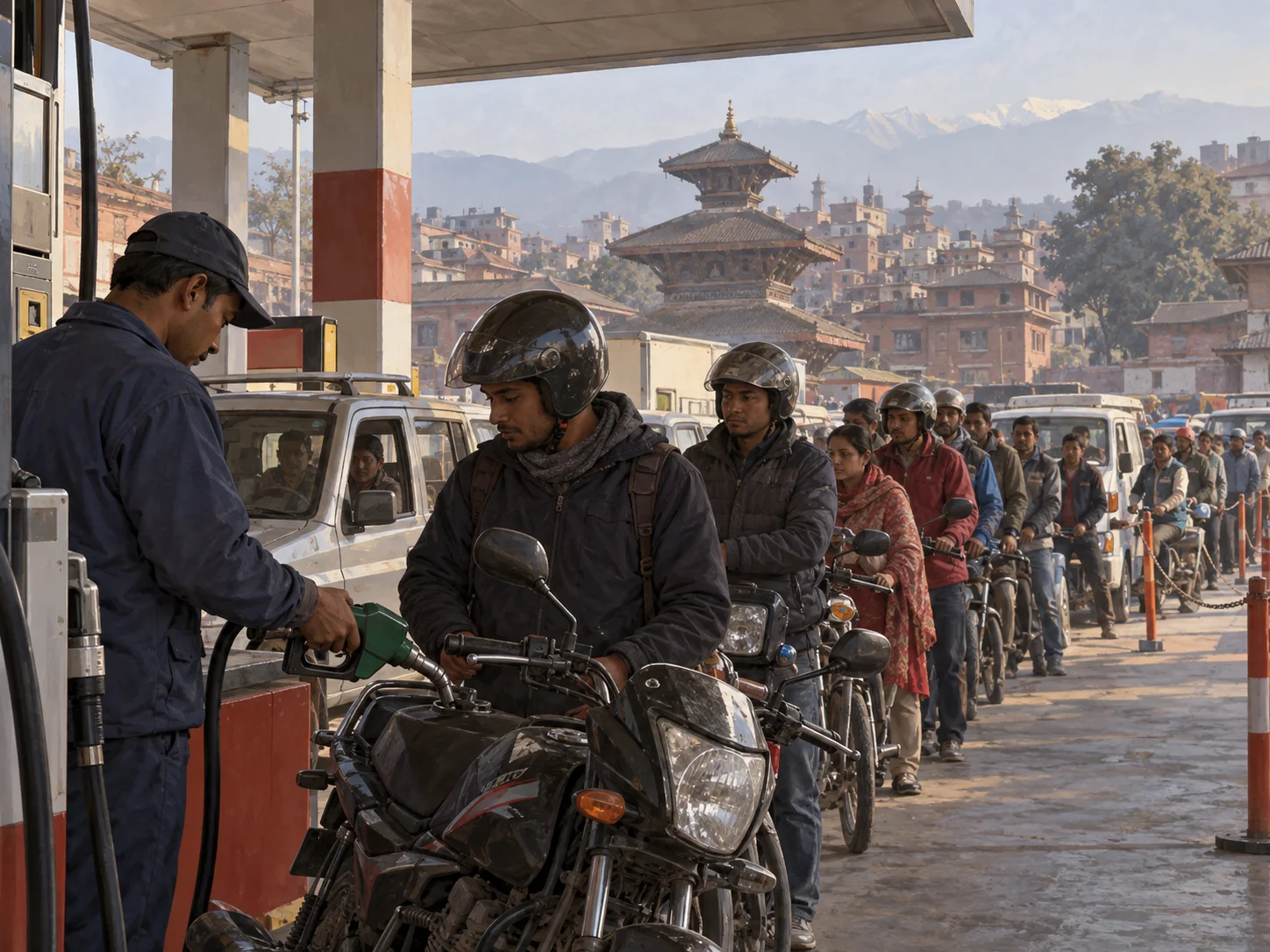
On 28 September 2015, photographs from Kathmandu recorded lines of vehicles stretching away from petrol stations. At the Bhadrakali pump, the Kathmandu Post reported, one queue reached as far as Babarmahal. The waiting did not end at the forecourt. The city’s streets had become an extension of the petrol station, occupied by vehicles whose immediate purpose was not to travel but to hold their place.
Fuel supplies from India were disrupted amid protests near the border and fierce disagreements surrounding Nepal’s new constitution. Nepali officials characterised the situation as an unofficial blockade by India, an interpretation bound up with a wider political dispute. As shortages deepened, Nepal Oil Corporation introduced rationing. Under the limits reported that day, a motorcycle was allowed three litres of petrol a week and a private four-wheeled vehicle ten litres. The distance a person might have to wait seemed out of all proportion to the small quantity at the end.
Yet those litres could still matter: for reaching work, taking family members somewhere or transporting goods. When fuel for moving through a city becomes scarce, the roads themselves can fill with people waiting to move. A disagreement over a constitution and a border had reached everyday life in a remarkably physical form. The queue made that connection visible, one vehicle at a time.
The three-litre limit meant that even the end of a city-spanning queue did not deliver a full tank. The reward was not restored mobility, only enough distance to begin searching for fuel again.