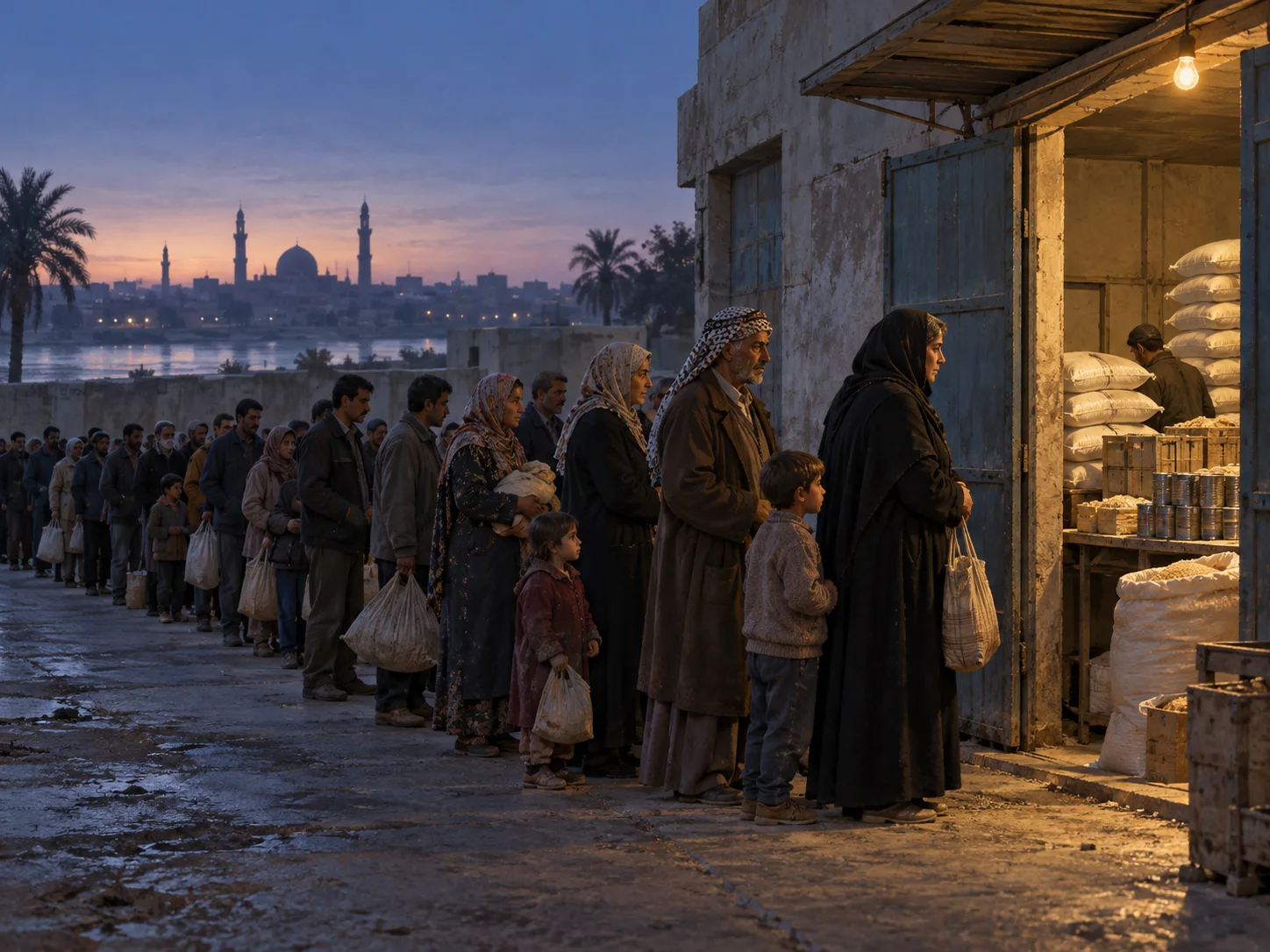
In 1990s Baghdad, the public ration system became part of the infrastructure of daily survival. Reuters reporting from September 1990 recorded residents waiting as long as three hours for bread in the heat. A Reuters photograph dated 20 September shows people in a long bakery line and an older woman leaving with bread after waiting for hours. Another dated image, from 15 September 1999, records Iraqi women receiving food rations in Baghdad.
These were not lines for a novelty. People were securing bread for the day and rations for their households. Sanctions, import constraints and inflation sound like the language of international policy; at street level, they became time spent waiting one person after another. The queue imposed an order on distribution, but it also made visible a society in which obtaining basic food demanded time and physical endurance.