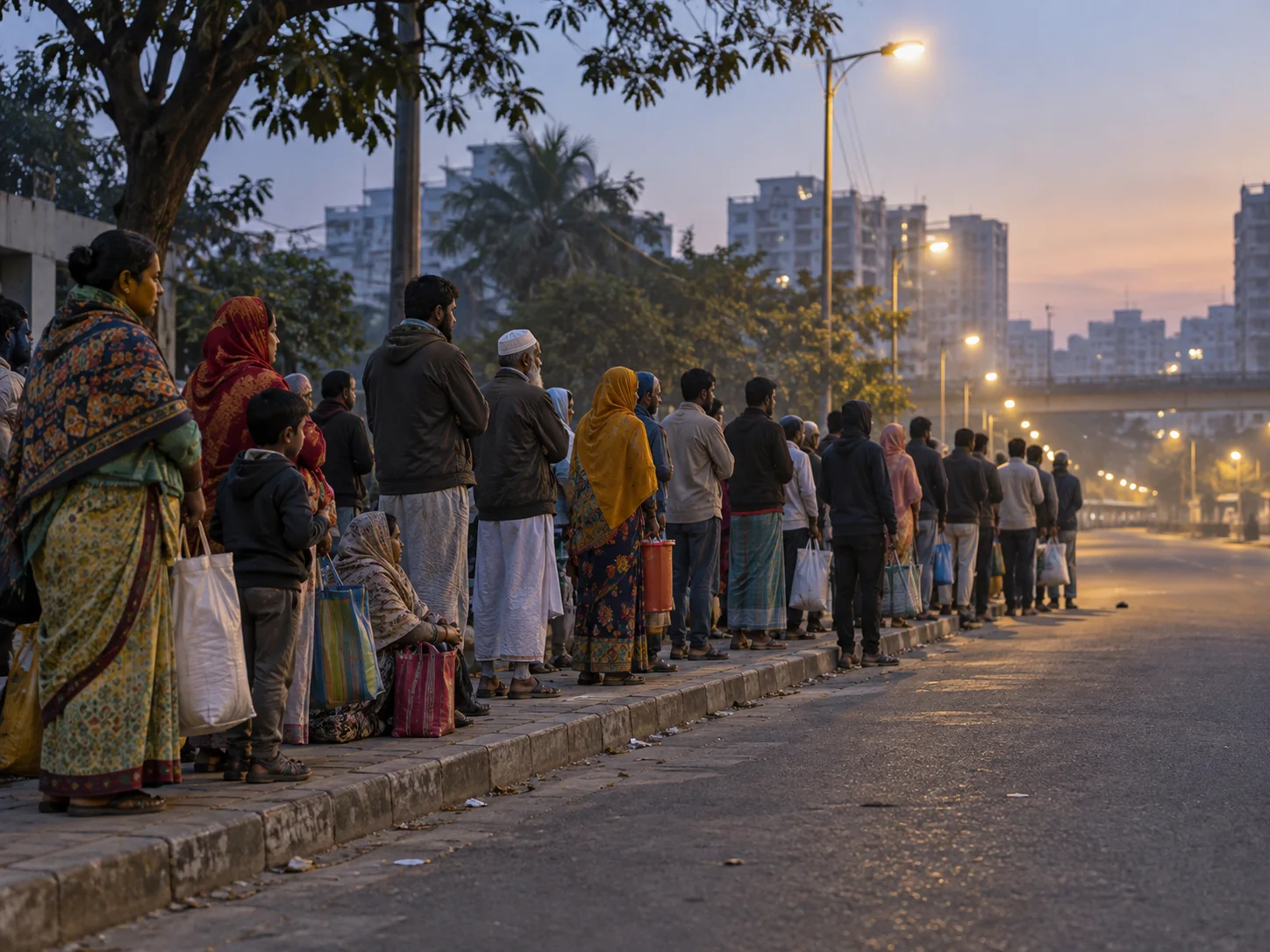
In March 2022, long lines formed across Dhaka, Bangladesh, for trucks operated by the state-owned Trading Corporation of Bangladesh. The trucks sold cooking oil, lentils, sugar, onions and other essentials below open-market prices. As prices rose, the mobile sales became a way for not only low-income households but also parts of the middle class to protect their food budgets.
At Mohammedpur, one woman waited four hours and reached a point with only seven people ahead of her when the stock ran out. At Rayer Bazar, a mother carrying her nine-month-old child spent several hours in line. The arrival time and available stock were uncertain, and waiting carried no guarantee of a purchase.
The shop in this queue was not a building but a truck moving through the city. Household schedules bent around the place and hour at which affordable food might appear. When supplies vanished within sight of the front, the moment showed that the price difference was not a minor saving: it could decide what reached the table that day.