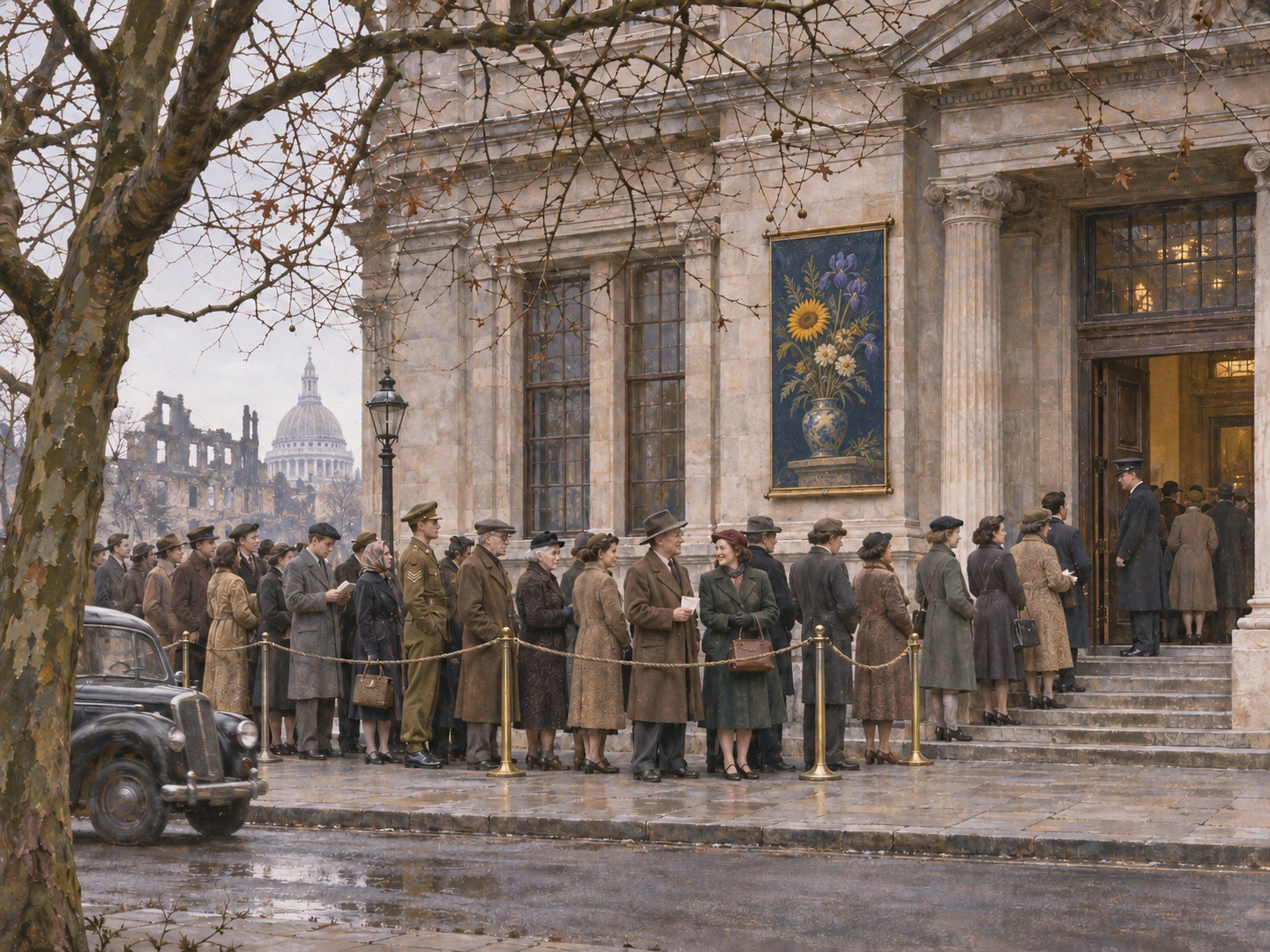
In 1947, people queued in cold and rain for a five-week Van Gogh exhibition at the Tate in London. More than 157,000 visited. Admission cost one shilling on weekdays, while weekends were free and attracted roughly half the total audience. Newspapers compared the scene with queues outside ration shops: now, they observed, people were lining up for paintings, perhaps because austerity had left them “colour-starved.” The popularity also left physical evidence. Tate’s archive contains a request to the Arts Council for reimbursement after five weeks of visitors caused what was described as three years’ worth of floor damage. At a time when queues for necessities structured everyday life, the same bodily act of waiting was redirected toward art. The line did not cancel post-war scarcity, but it showed that colour and cultural experience could also feel scarce enough to wait for.
United Kingdom · 1947
From Ration Queues to a Queue for Van Gogh