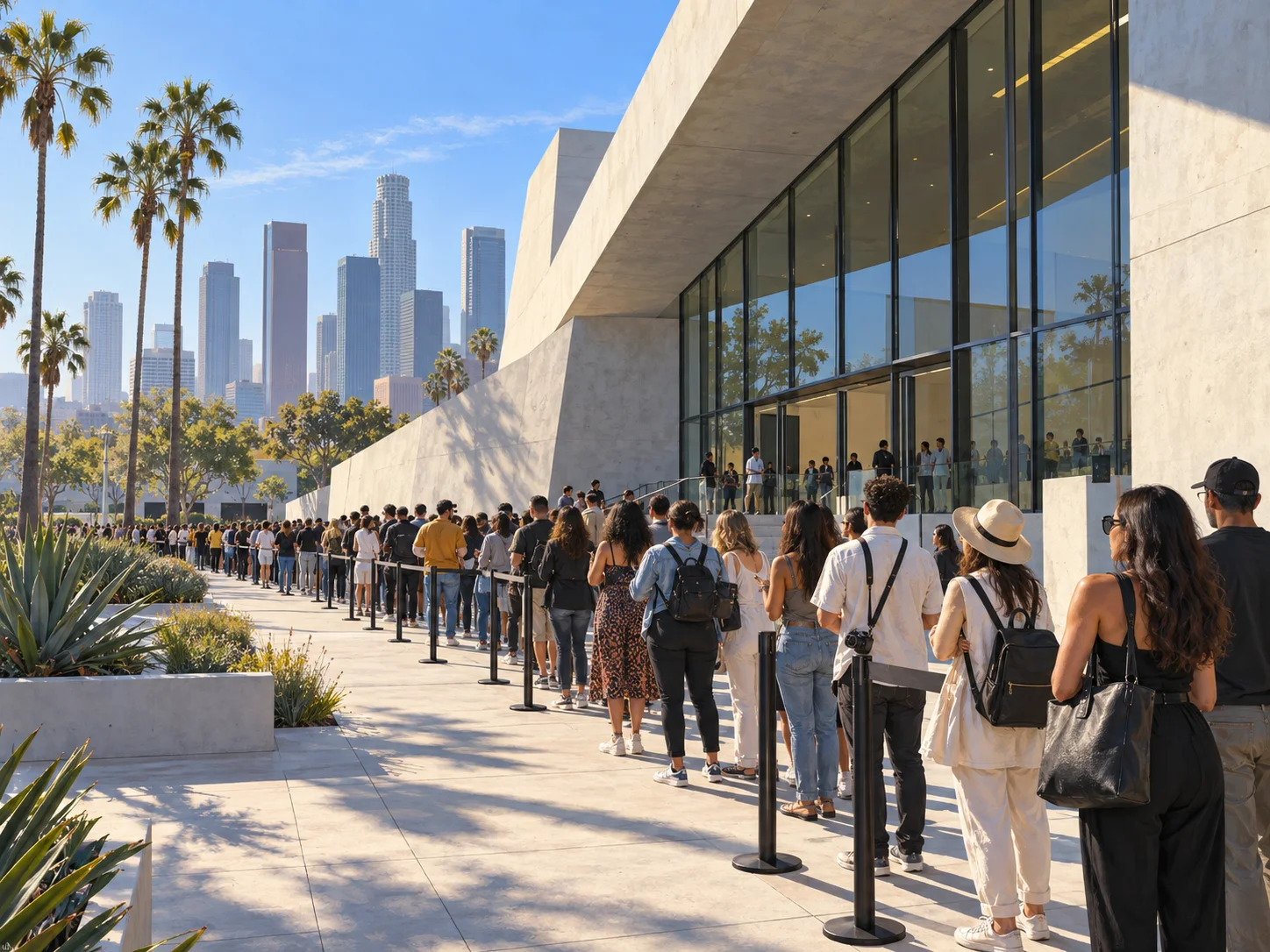
In 2017, Yayoi Kusama’s Infinity Mirrors opened at the Broad in Los Angeles. All 50,000 advance tickets sold in the first hour. A second route remained: each morning, a queue formed outside for the chance to buy a $30 standby ticket. The reward at the front was not extended viewing. A ticket guaranteed only a 30-second slot inside each of six infinity rooms.
The mirrored chambers used LEDs, glowing pumpkins and floating spheres to multiply light and reflections. Their physical design admitted only a small number of visitors at once. The artwork itself therefore imposed a capacity limit, and the museum had to divide access into tightly measured intervals. Smartphones and social media added another form of demand: visitors wanted to preserve and circulate an image of an experience that vanished almost as soon as it began.
The Guardian article does not give a daily queue length or an average wait, so neither is estimated here. The documented mechanics are already unusual: 50,000 tickets disappeared in one hour, a standby line formed every morning, and each room allowed a guaranteed visit measured in seconds.
The exhibition placed finite time around an artistic idea of infinity. Reflections could appear endless once a visitor entered, but the doorway remained governed by a clock and by the next person waiting outside. After 30 seconds, the visitor left and the seemingly boundless room passed to someone else. The queue was the mechanism that made the same private illusion available repeatedly. A standby place was not a guaranteed ticket. It converted uncertain spare capacity into an ordered chance, keeping a narrow route open after advance admission had sold out.