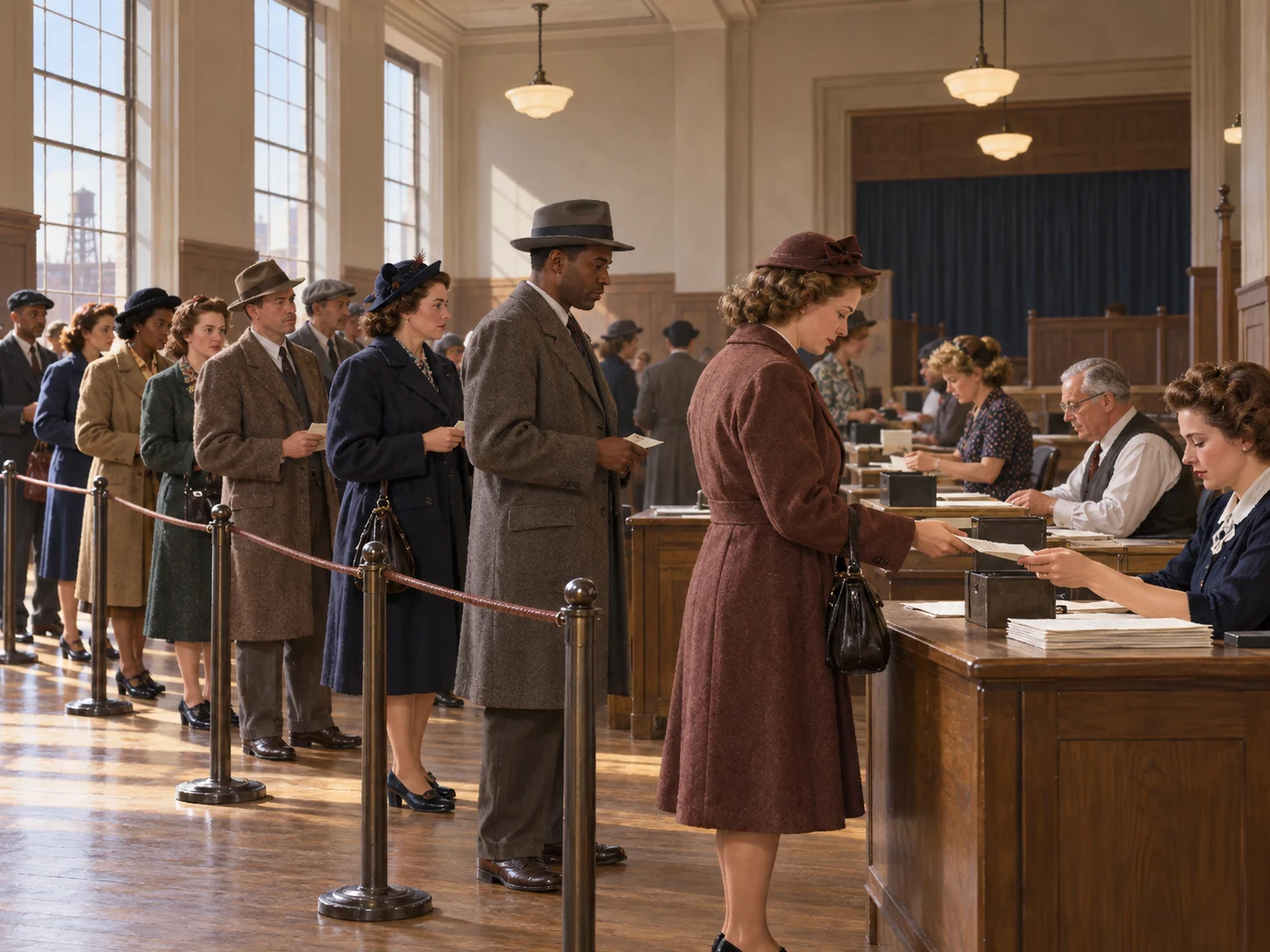
Sugar rationing began in the United States in 1942 during World War II. Rationing meant that the right to purchase a limited good was allocated by rules. Before finding sugar in a shop, households had to enter an administrative system. The relevant queue might therefore have formed at registration rather than checkout. A particular registration line still needs local evidence, but the link between everyday sweetness and paperwork is the distinctive story.
A ration book was not sugar. The right to purchase an item and the item’s presence on a shop shelf were separate matters. That two-stage uncertainty is central to understanding wartime shopping.
A ration book was not a bag of sugar. The right to purchase a commodity could exist even when the commodity was absent from the shelf. In 1942, American kitchens became connected to national supply policy through registration. A line for enrollment and a line at a shop are different scenes; identifying which one the evidence records is essential to telling the history of wartime domestic life.