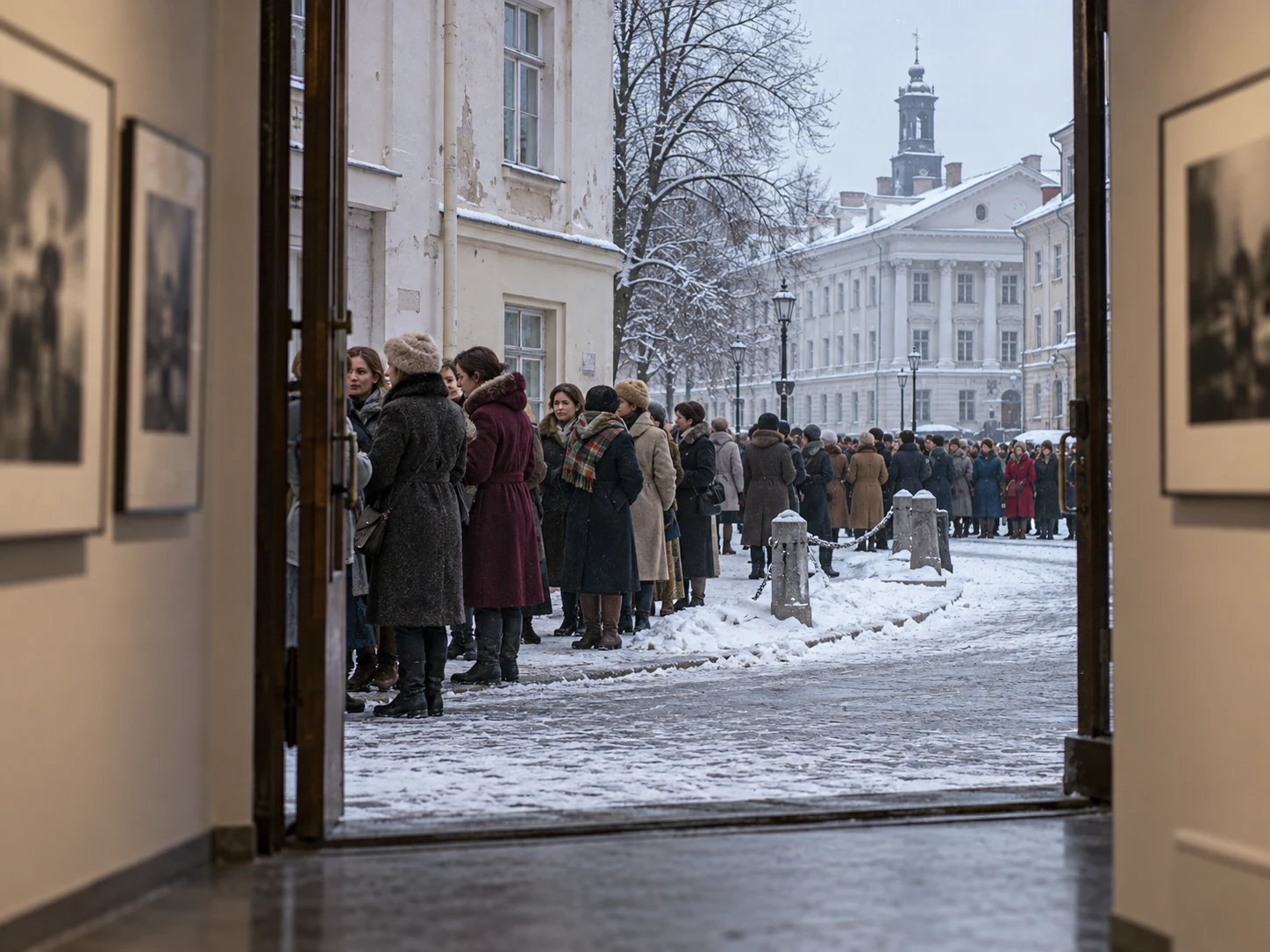
In 1989, the exhibition Woman in Photographic Art opened in Tartu, Estonia, then part of the Soviet Union. A Visual History article about a later research exhibition at the Tartu Art Museum cites co-organizer Helju Kommer’s recollection: attendance was enormous, and the queue to enter was said to have stretched across half of the city centre.
The attraction was more than ordinary entertainment. Photographs treating women—and especially the female body—as social and aesthetic subjects were rarely visible in the Soviet public sphere. At a time of growing protest and tentative political freedom, visitors waited to see unfamiliar forms of expression and to share that curiosity with others. It was a cultural queue formed not by a shortage of goods, but by a shortage of opportunities to look differently.