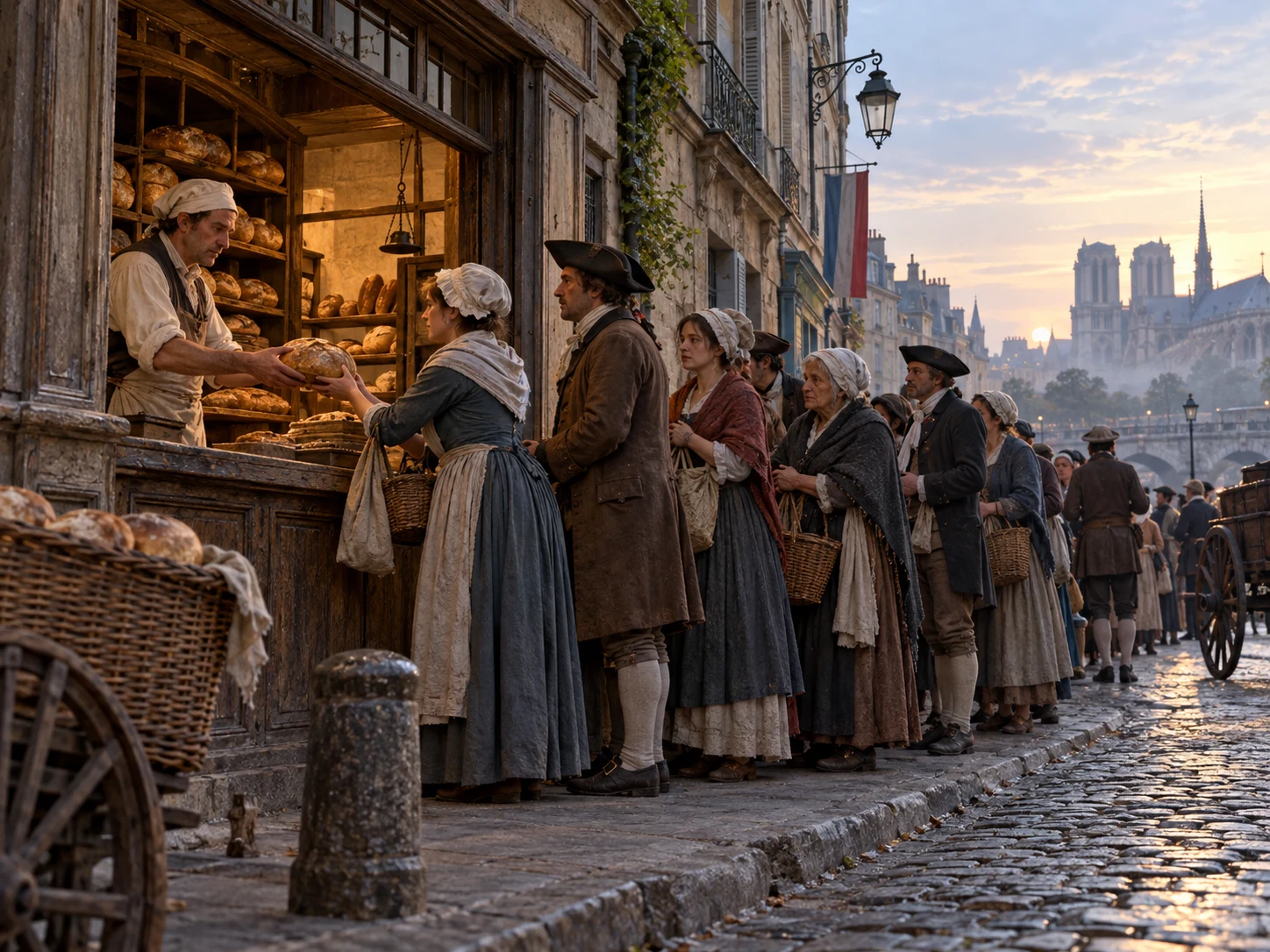
In Paris in 1793, morning queues formed at bakery doors and lengthened through spring into early summer. A historical account drawing on contemporary evidence says that lines were already present in February, grew in April and became enormous by June. Bread was not a discretionary purchase but a principal source of calories, so its price and supply were political questions.
Revolutionary authorities tried to impose a “just” price through controls and distribution, yet grain transport, fear of hoarding and declining paper currency destabilised supply. People at the back faced a greater risk that bread would sell out. The sick and physically weak could be excluded by the wait itself.