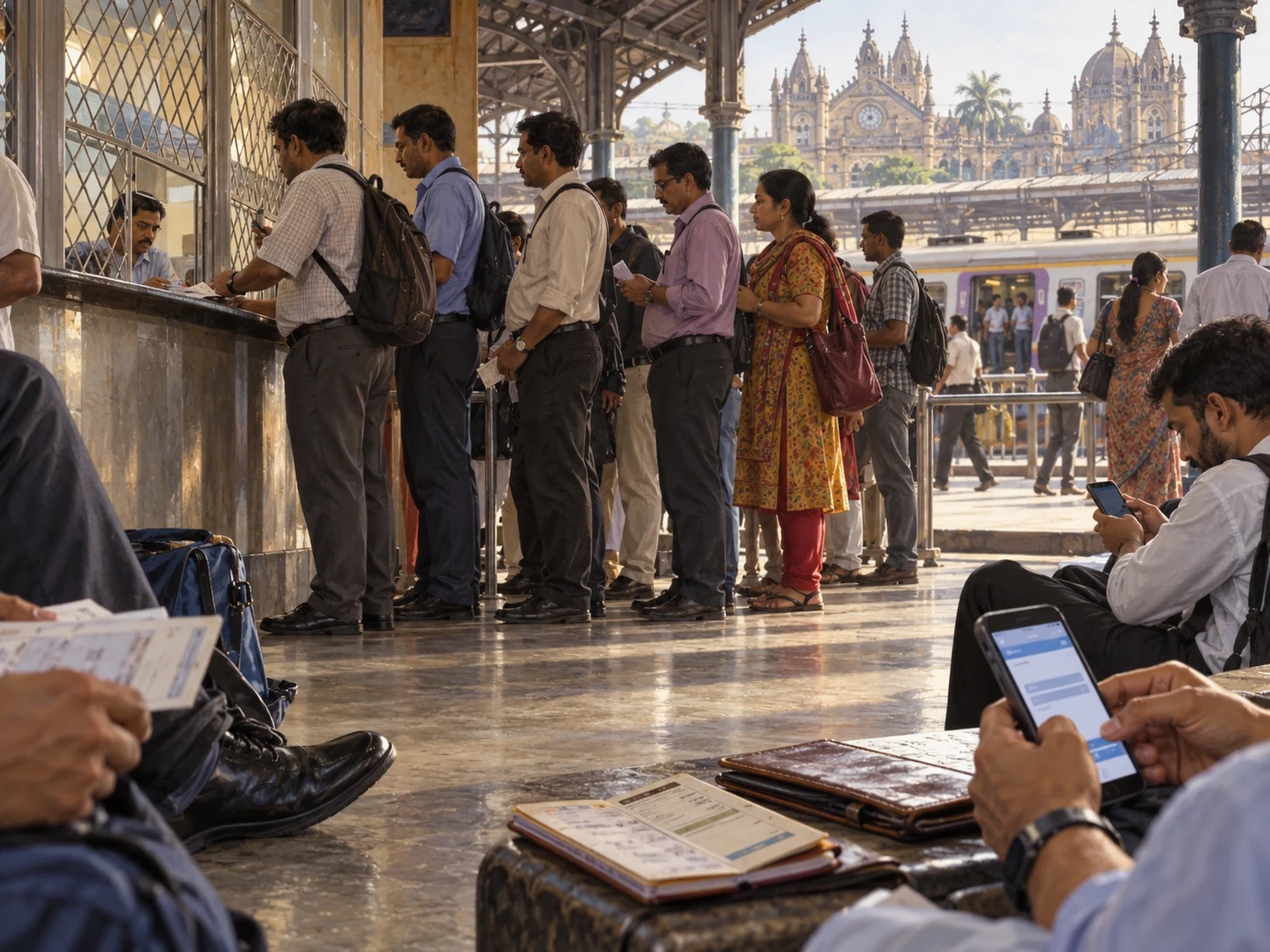
In India’s large metropolitan rail systems, buying or renewing commuter season tickets contributed to routine station queues. The Railway Budget speech for 2008–09 presented automatic vending machines and mobile ticketing as ways to reduce long lines at counters. Even passengers making the same journey every day had to return when a pass expired and join the same infrastructure used for one-off transactions.
A season ticket bundles repeated travel, so a renewal process that repeatedly consumes time is an irony. Digital renewal separates payment and travel history from the staffed window, allowing the transaction to end before the commuter reaches the station.
Moving a process to a machine or phone does not benefit everyone equally. Cash users, people unfamiliar with the technology and places with weak connectivity still need counters. The value of the reform was therefore not necessarily to abolish every line. It was to divert simple renewals and return scarce human attention to passengers who genuinely needed face-to-face help.
Phone renewal detached the season-ticket queue from counter hours. A pass intended to save time on daily travel no longer had to consume part of that same commuting time merely to remain valid.