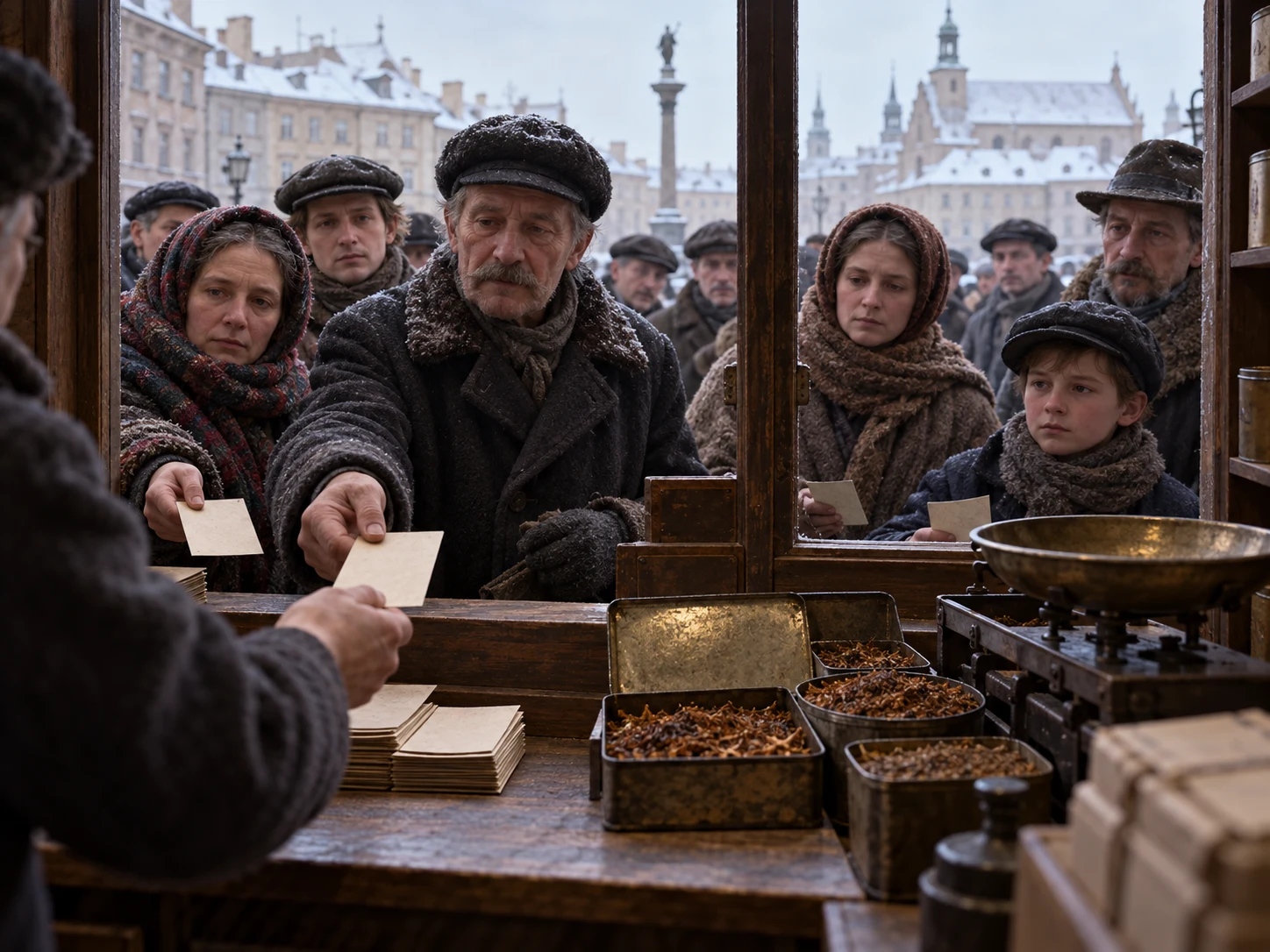
In Warsaw in 1920, tobacco could require an early-morning place in line. A photograph caption preserved by the Library of Congress and produced by the American Red Cross records a queue forming outside one of 420 tobacco shops rationing smoking supplies. The contemporary description says that queueing had become habitual for bread, clothing, tobacco and even drink.
War and its aftermath had left the city short of necessities and small comforts alike. The caption also describes thousands of refugees from devastated areas of White Russia reaching the capital and depending heavily on American relief. Particularly long lines formed at Red Cross stations, while the organisation supported orphanages and hospitals and distributed used clothing sent from the United States. The tobacco line was therefore not an isolated curiosity but one strand in a citywide network of scarcity and controlled distribution.
The record does not state how many people stood in this particular line or how long they waited. The figure of 420 shops nevertheless shows that rationing was not merely an improvised rule at one storefront. In streets already marked by lines for food and clothing, tobacco acquired a queue of its own. Scarcity turned the distinction between necessity and luxury into the same practical question: whose turn came next?