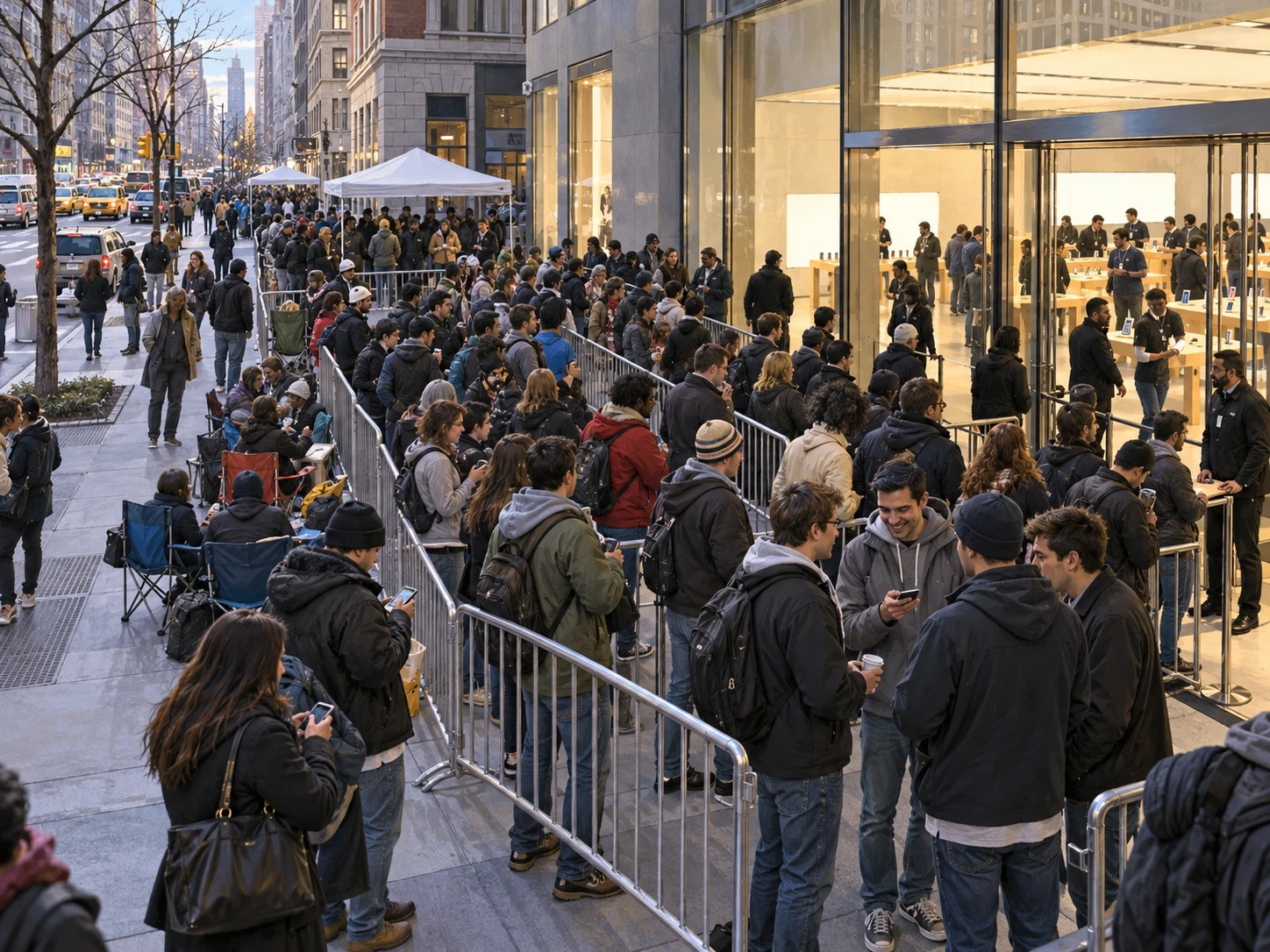
On 10 July 2008, people waited on the street outside an Apple Store in New York for the next day’s release of the iPhone 3G. Reuters video documented the line and interviewed participants. One man said he expected to remain there for roughly twenty-four hours. A year after the original iPhone, the new model promised faster data, GPS and third-party applications, pushing the phone further towards a pocket computer.
Buying one involved more than receiving a sealed box. Customers also needed a carrier contract and in-store activation, increasing the processing time for each transaction. Even after the doors opened, the line could not vanish at once. The device launched in twenty-two countries on the same day, yet each New York buyer remained subject to the capacity of one shop and its activation systems.
Launch queues also served as publicity for technological excitement, but the Reuters record captures a literal wait. Customers wanted a device defined by faster connection and greater mobility. To obtain it, they first had to remain unusually still. The era of the internet in a pocket began, for these buyers, with bodies fixed to a pavement.