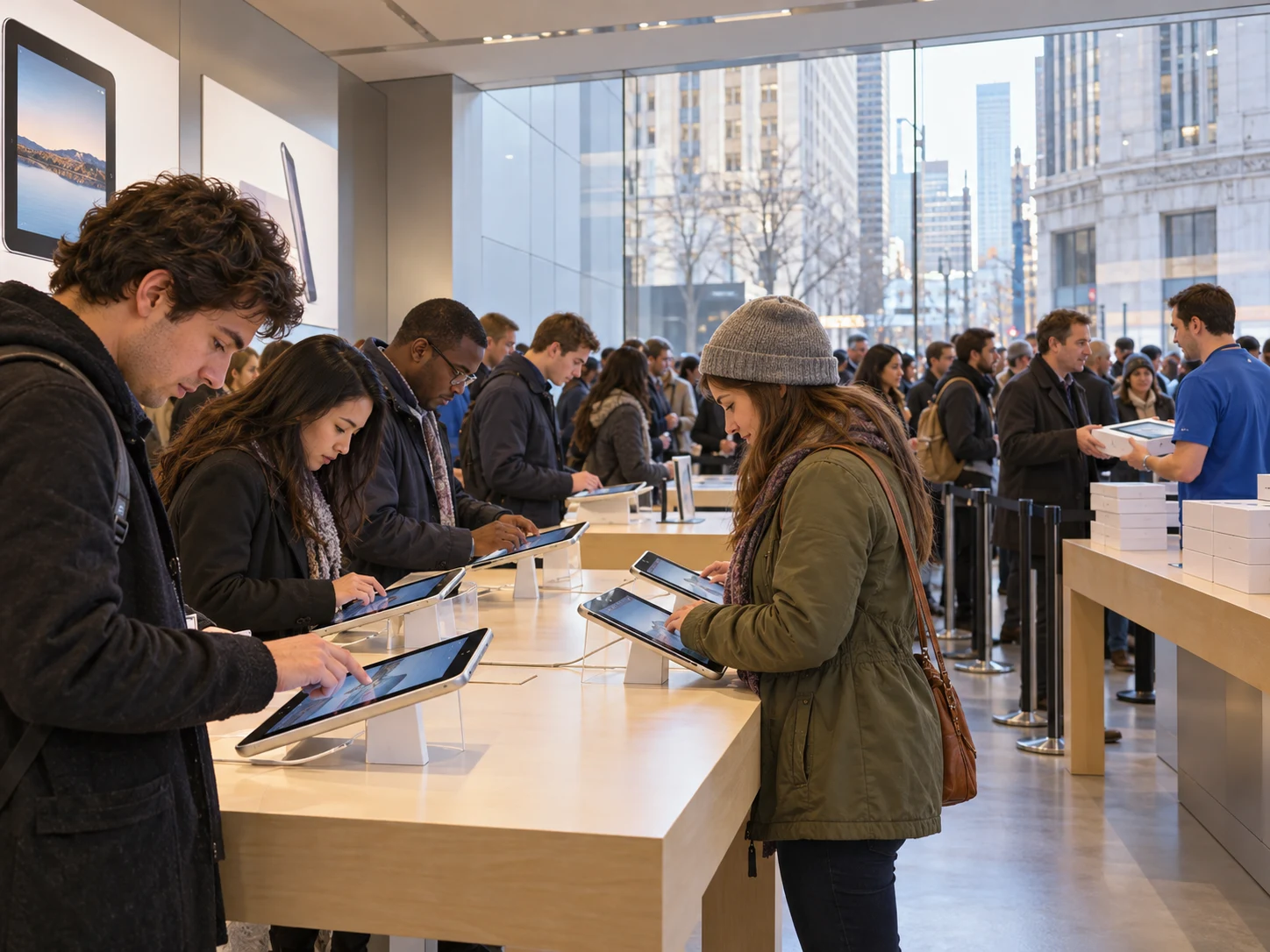
The first iPad went on sale in the United States on 3 April 2010. Apple had accepted pre-orders from 12 March, including home delivery and reservations for store collection, yet lines still formed outside Apple retail stores on launch morning. Two different kinds of waiting occupied the same sites: reserved customers collecting an allocated device and walk-in customers hoping for remaining stock. Because the iPad was neither a keyboard-equipped laptop nor a pocket-sized phone, the queue also became a public test of what this unfamiliar category might be for.
Reservations did not eliminate the line; they separated inventory risk from physical flow. For a reserved buyer, the destination was not the chance to purchase but the handover of an already promised unit. Walk-in customers faced a different uncertainty, tied to limited launch-day supply. Visually similar queues therefore carried different stakes. Before tablets became ordinary, early buyers were learning more than a new touchscreen. They were also rehearsing a form of digital-age waiting in which an online claim and a physical collection line worked together.
Launch-day stores attracted both committed buyers and people still trying to understand the device. For a new product category, a queue can be a channel for explanation as well as inventory allocation. The pace depended on handover, setup and the time customers spent touching a large tablet screen for the first time.