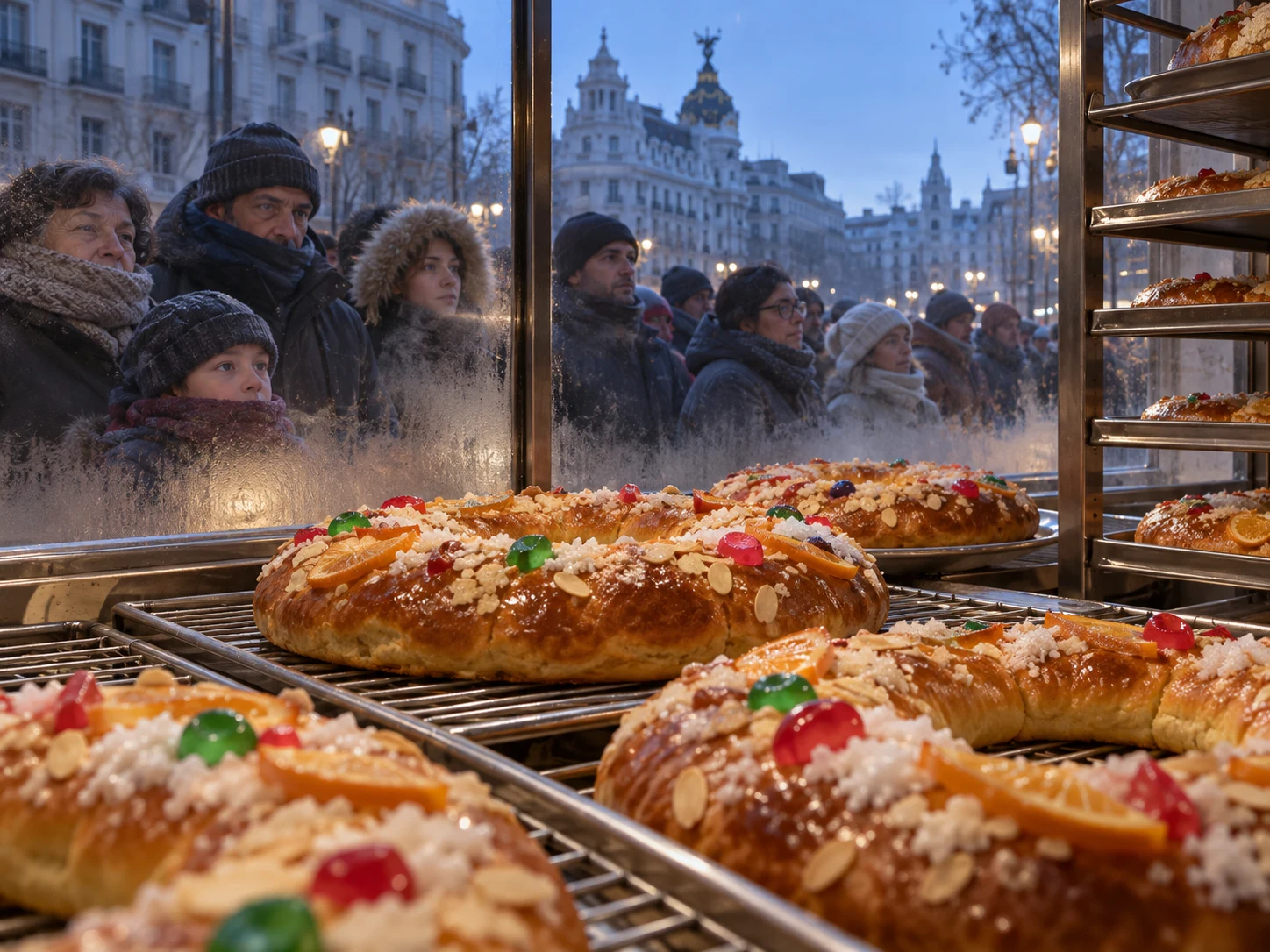
On 6 January 2006, customers at Horno San Onofre in Madrid had been waiting since 6:30 a.m. for roscón de Reyes despite cold rain. El País recorded a large early queue and reported that the bakery expected to sell about 4,000 rings on 5 and 6 January, and roughly 8,000 over the holiday season.
A shop normally staffed by seven employed about thirty people to meet the demand. Hidden inside each ring were a figurine and a bean: tradition promised a lucky year to the person who found the figure, while the bean assigned responsibility for paying. People in line were not buying an entirely predictable pastry. Each roscón carried a small dining-table lottery whose winner—and payer—would remain unknown until it was cut.