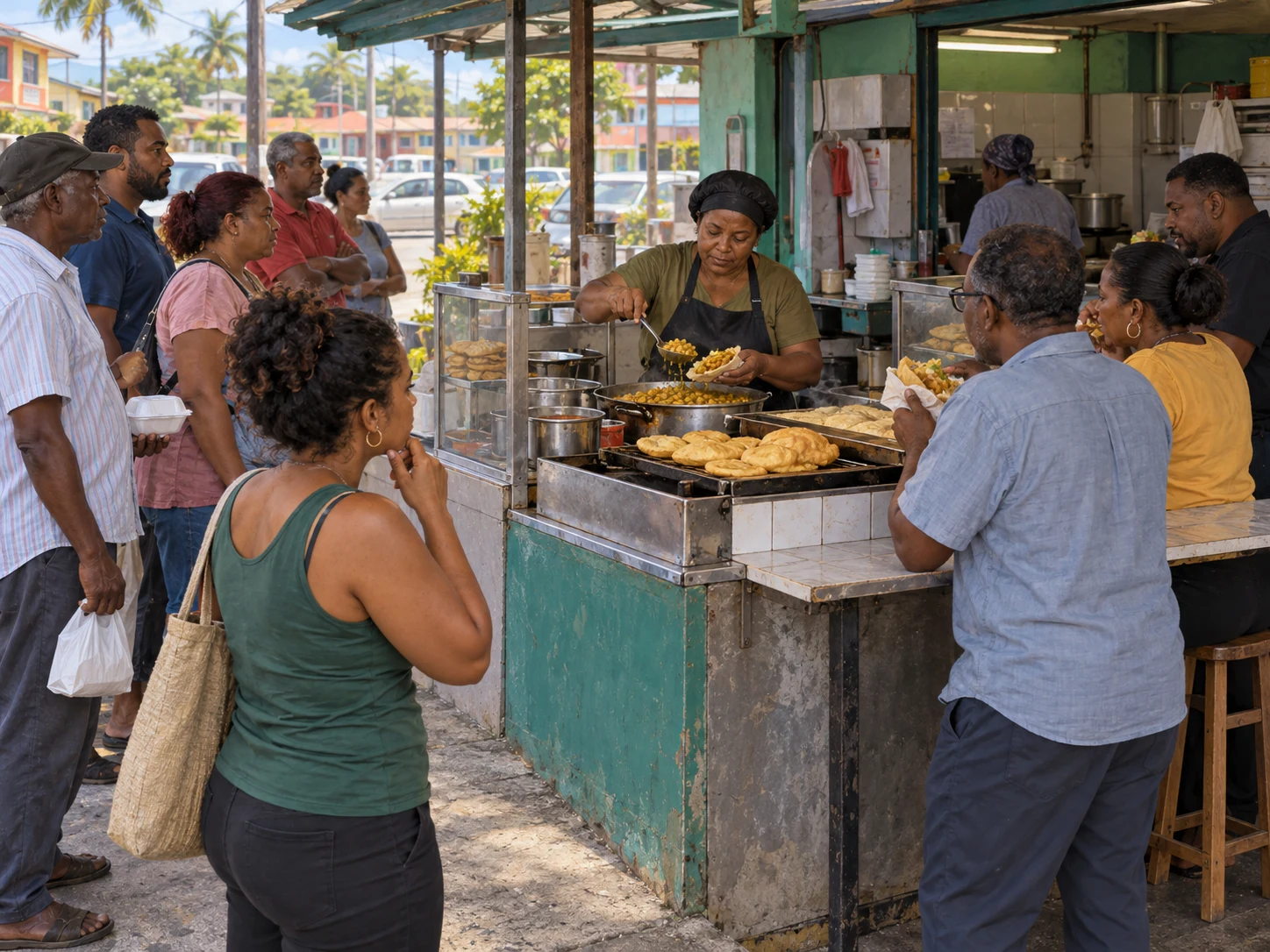
At a doubles vendor in Arima, Trinidad and Tobago, a customer joined a line in May 2024 and waited for a turn. People who arrived later were served first. Only after the customer questioned the staff was the system explained: there were two queues, one for takeaway orders and another for eating on site. There was no sign describing the split, and the customer left without buying anything.
What makes this wait distinctive is that the order did not simply break down; two different orders existed without being visible. Doubles—fried bara filled with curried chickpeas—is a familiar morning street food, but a service system that divides customers must communicate that division at the point of entry. This single critical user record shows that a queue is made not only by bodies in space, but by rules that everyone can understand.