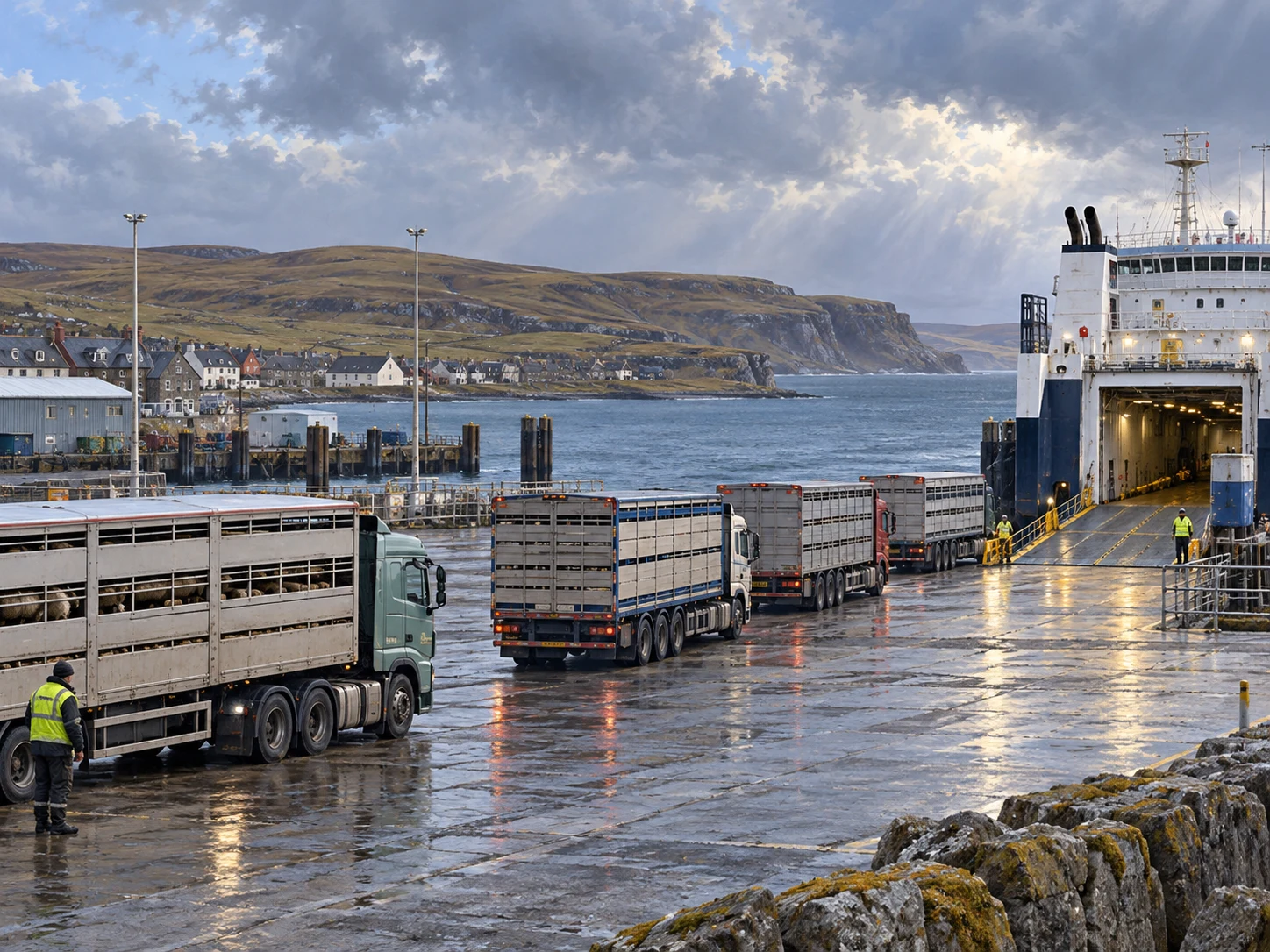
On Shetland's inter-island ferries, vehicles enter marked lanes at unmanned terminals and drivers wait with them until the crew gives instructions to board. Lanes distinguish booked and unbooked traffic, destinations and some commercial vehicles. Because deck space and vessel stability matter, vehicles are not always loaded strictly in arrival order.
Livestock vehicles are part of this traffic. Shetland Islands Council operating material explicitly identifies livestock freight trucks as vehicles that must be secured on board. Community council minutes also record that people travelling with livestock need ferry bookings and that, around livestock sales, sailings can already be full; animals cannot simply be left waiting indefinitely for space.
The queue is formed by drivers and vehicles responsible for the animals, not by sheep independently taking a turn. Its order is adjusted by booking status, vehicle size, weight, lashing requirements and the stability of the ferry.
Moving livestock from an island to market depends on a finite place on a sailing. The everyday ferry queue therefore connects more than passenger journeys: it is also waiting time in the chain that links island farming to mainland distribution.