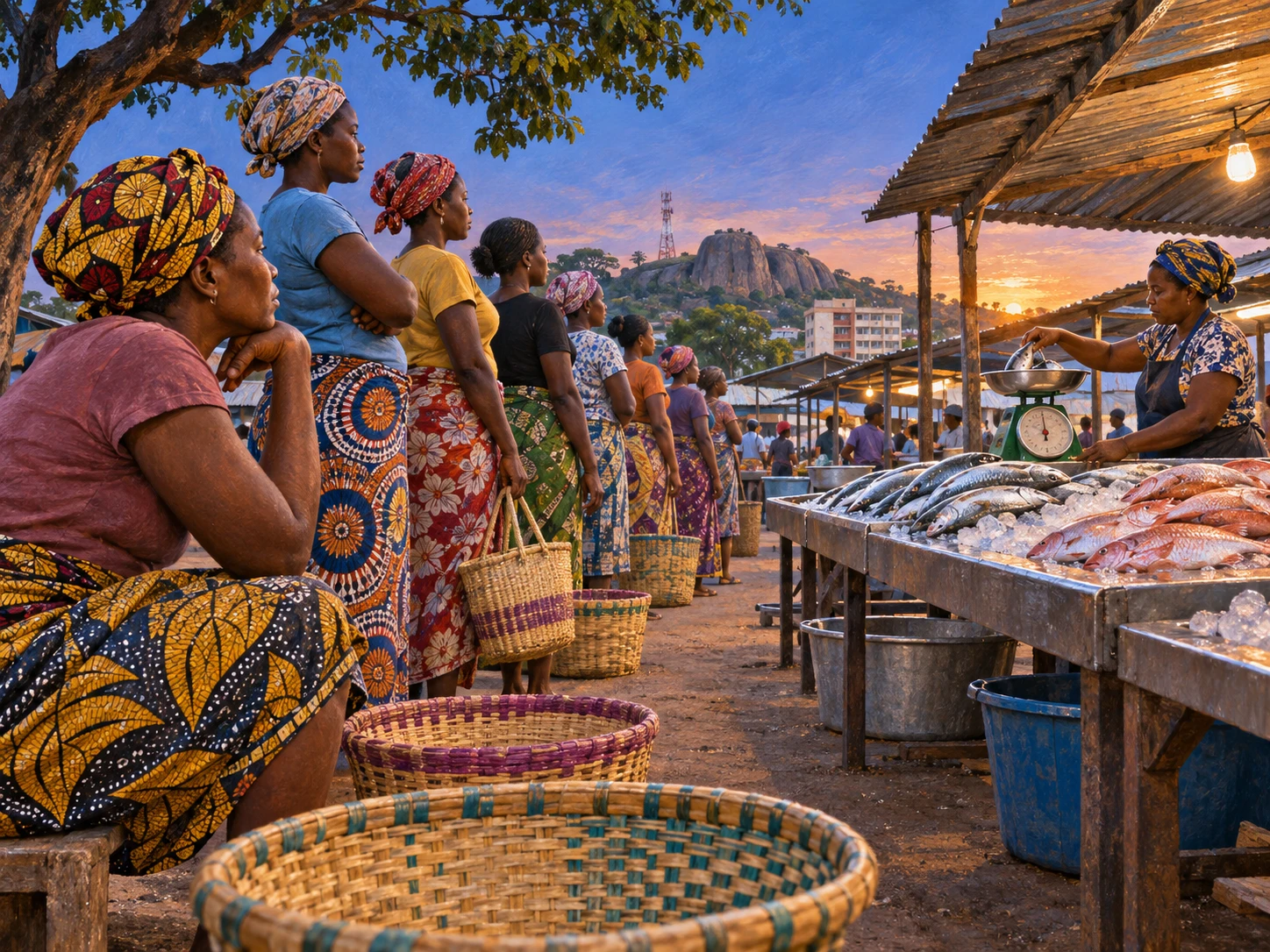
In Nampula city in northern Mozambique, women support their households by buying fresh fish early in the morning, frying it and reselling it in markets and on the street. Local reporting in 2022 recorded that sons sometimes helped mothers who could not rise early or endure the long queues. One vendor explained that she needed to be close to the fishmongers from 6 a.m.
Buying was not only an individual competition. Customers contributed money together to acquire a larger quantity of fish, then divided it equally without dispute—a scene observed every morning except Sunday. The fish at the front of the queue would become both household food and fried stock sold elsewhere to pay for necessities such as school fees.
The inherited record placed the scene in a coastal fishing village, but the direct evidence identifies inland Nampula city. The location has therefore been corrected while preserving the waiting target: intermediaries and resellers obtaining fish from the supply chain. The morning queue and pooled purchase show how small-scale fish commerce is organised.