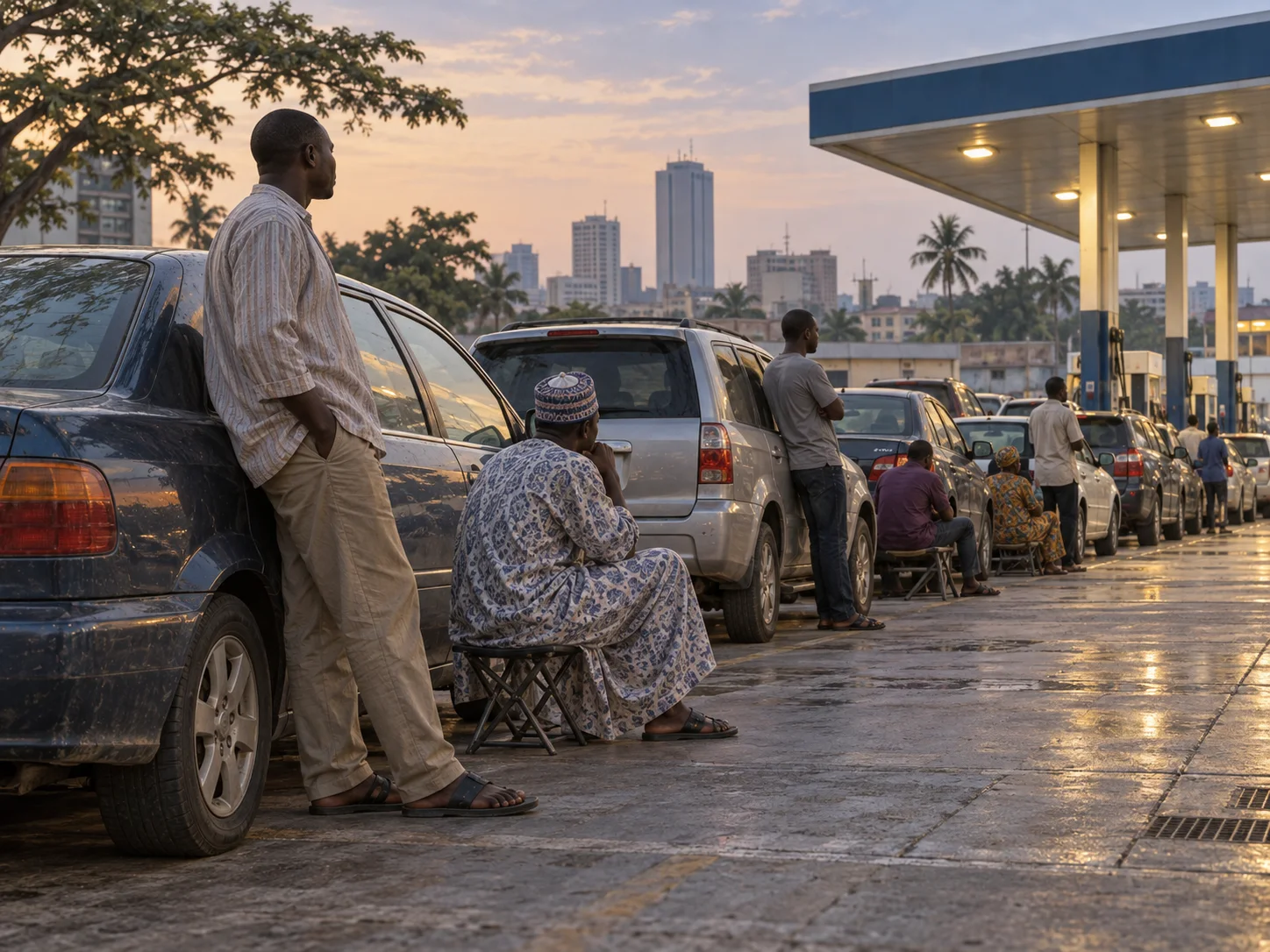
During fuel shortages in Nigeria, motorists can turn the vehicle itself into a place marker. In April 2024, the Associated Press documented people in Abuja and Lagos who parked near filling stations overnight to buy petrol early. Queues reached as far as about three kilometres in some cities and occupied half the road in some places.
Nigeria is a major oil producer, yet weak domestic refining capacity has made it dependent on imported petrol, while logistical disruptions trigger shortages. Fuel is needed not only for travel but also for generators and livelihoods. Even when a driver steps away, the car remains on the road as a proxy protecting the next day's work and household life.
In this queue, a machine rather than a person holds the place. Cars with empty tanks stand motionless until fuel allows them to recover their intended function. The paradox is that a line for the commodity that enables traffic becomes an additional obstruction to traffic itself.