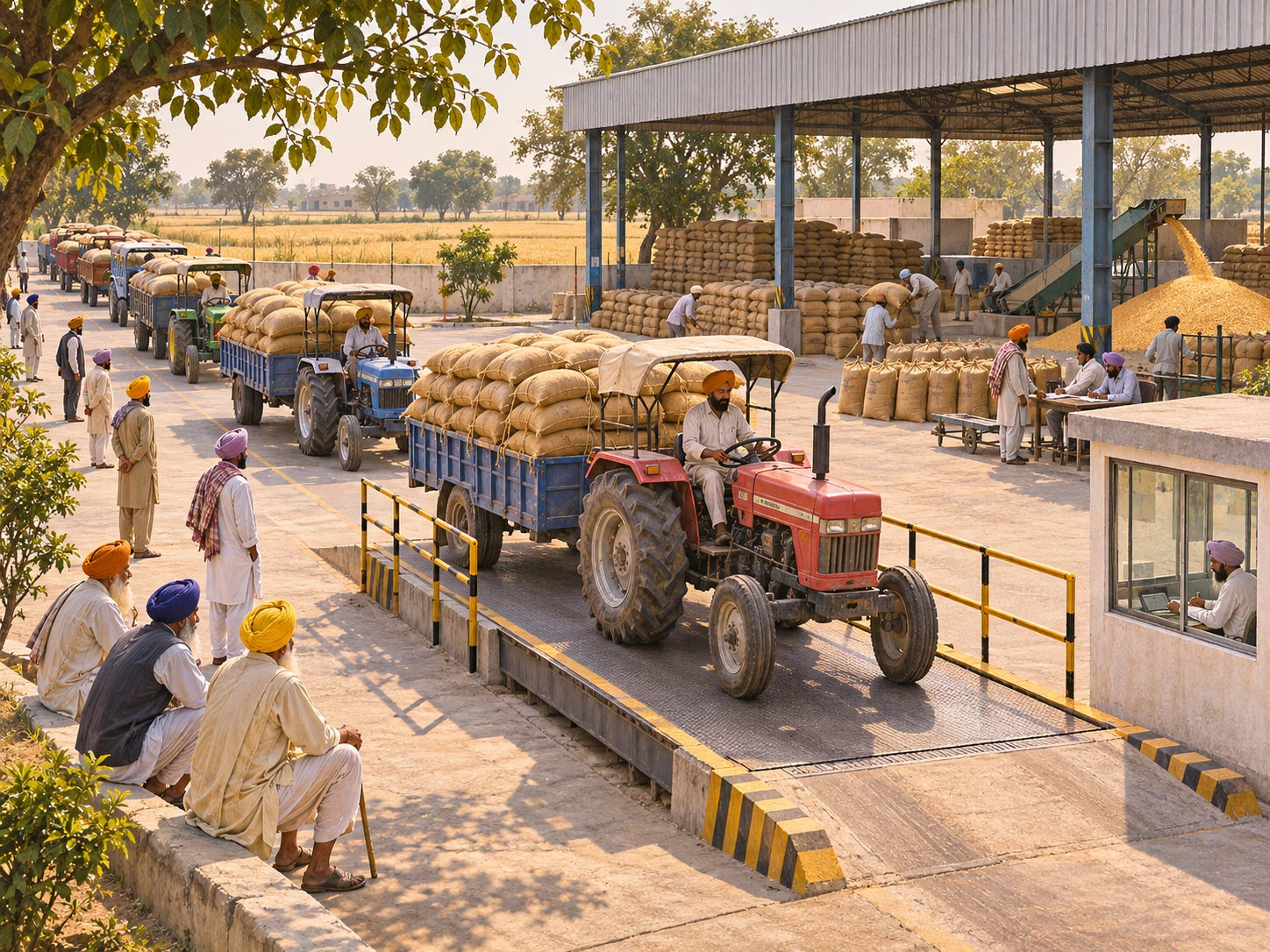
In April 2026, wheat procurement slowed across mandis in India's Punjab after rain- and heat-affected grain failed quality specifications. Farmer Satnam Singh told the Tribune that he had been waiting in a market for six days with fifteen trolleys of wheat harvested by him and his uncle. Another farmer's crop remained loaded in tractor-trailers for three days.
What distinguishes this wait is that it immobilizes people, vehicles and harvest together. Procurement does not proceed by arrival alone: moisture, grain size, colour and other standards determine whether a crop can be purchased at the minimum support price. When inspection and buying stall, the queue holds both a farmer's time and tonnes of perishable value in place.