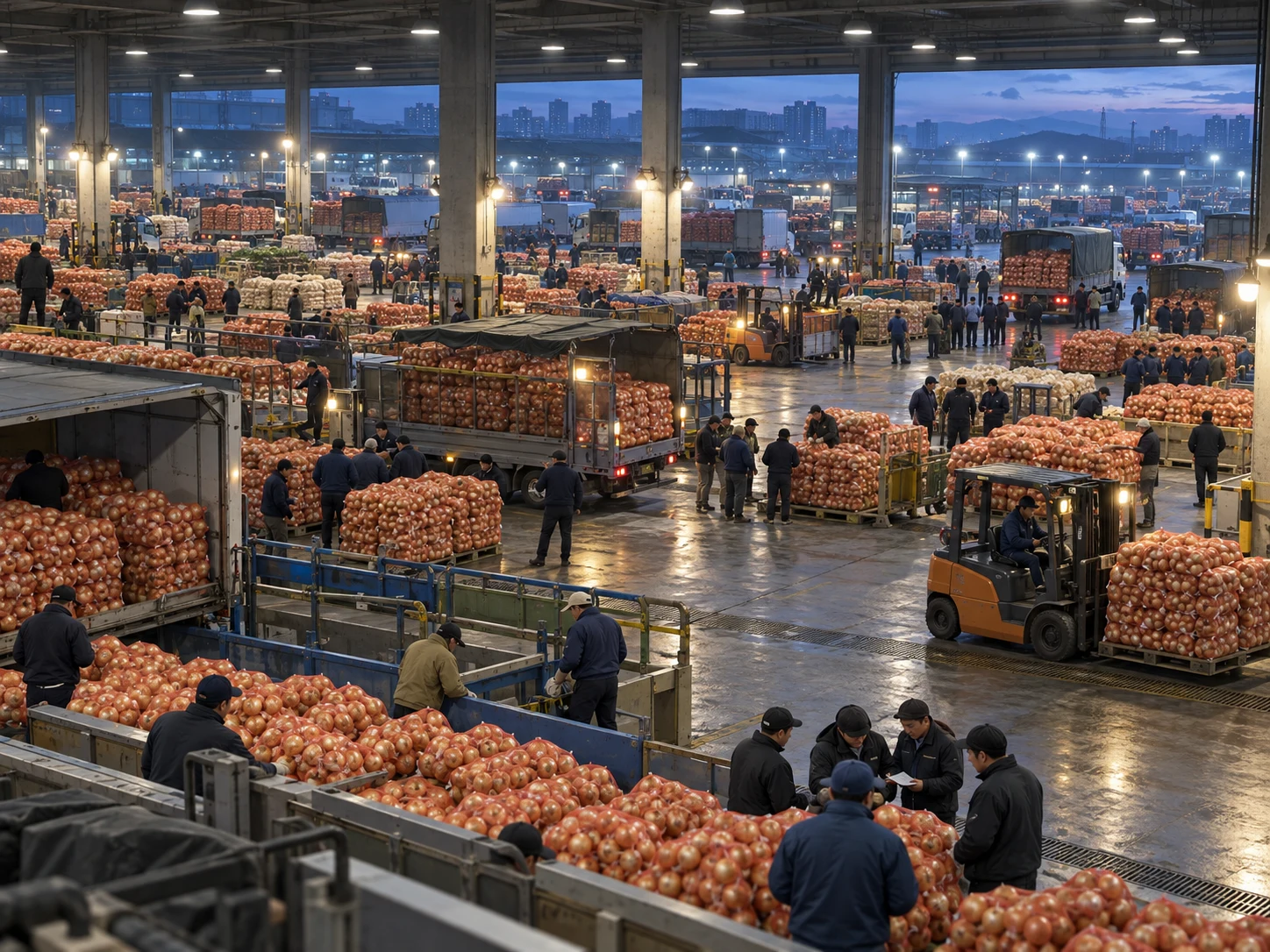
Onions arriving at Seoul’s Garak Market were traditionally packed in 15- to 20-kilogram mesh bags and loaded loose onto trucks. A study in the Korea Logistics Review found that under this truckload trading system, vehicles could remain at the market for long periods—until around noon on the following day, when sales finished. The result was congestion, too little unloading space, and deterioration in product quality. The people waiting were not retail shoppers. They were drivers and vehicles carrying part of the city’s fresh-produce supply.
In July 2017, the market shifted onion trading toward pallets. Bags could be unloaded by forklift and auctioned in palletized units instead of remaining on a truck through the transaction. The study calculated a reduction of 199 won in logistics cost per pallet, but it also found that truck loading efficiency fell by about nine percent and packaging costs increased. A reform aimed partly at removing waiting therefore created other costs.
This record expands the meaning of a market queue. It need not be a single-file line of visible bodies. When loaded trucks wait for selling order, space, and unloading equipment, the wholesale market itself becomes a large waiting system. Palletization changed the unit through which that order moved, making freight easier to handle mechanically. But the trade-off among waiting time, carrying capacity, packaging expense, and spoilage remained. The Garak Market case is distinctive because it makes delay measurable not only in hours but also in damaged produce, occupied roadway, and the redesigned shape of a load.