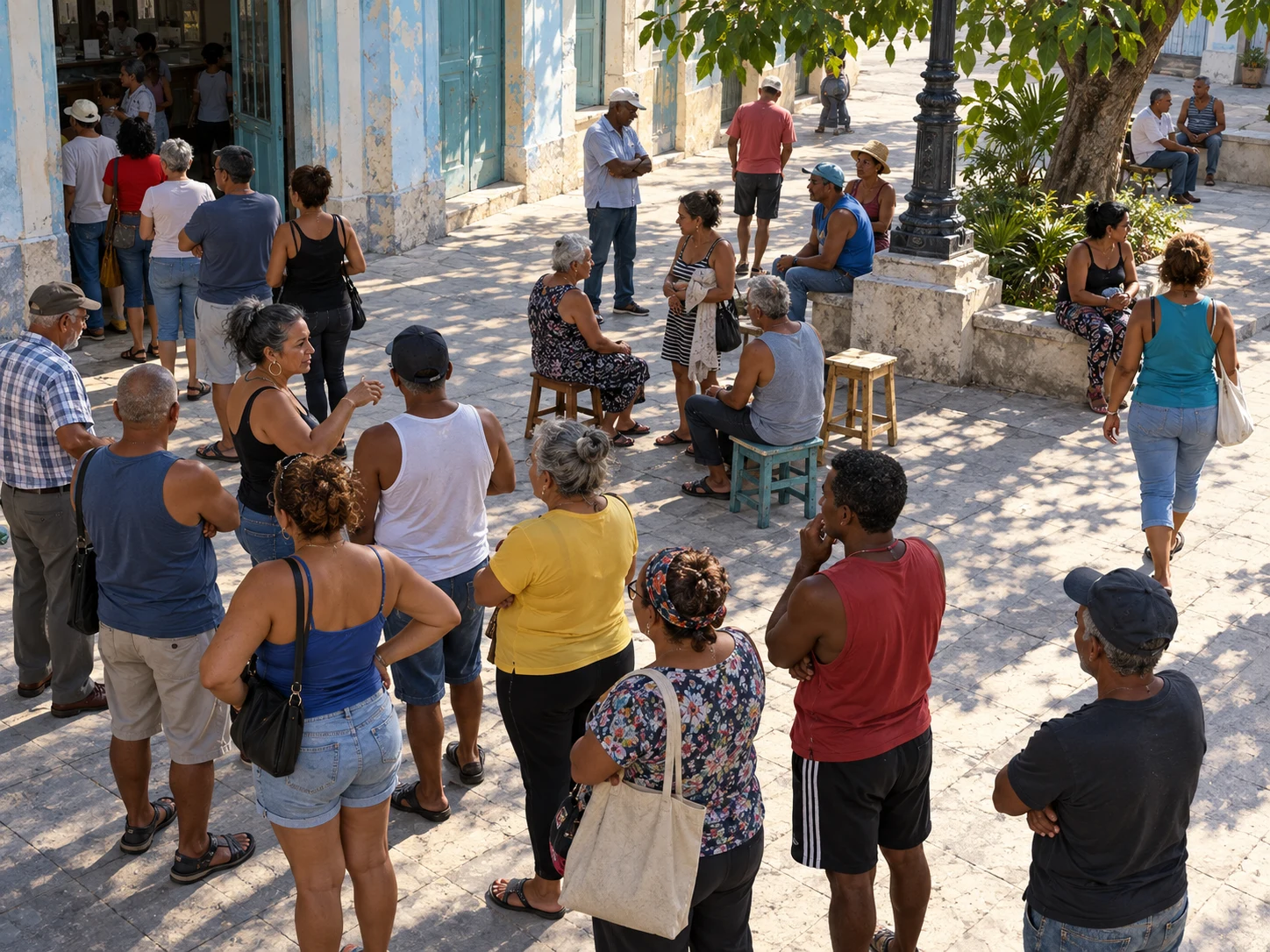
Joining a queue in Cuba does not always mean locating a visible tail. A newcomer may ask, “¿Quién es el último?”—“Who is last?”—and remember the person who answers. When someone else arrives, the newcomer becomes the one who responds. Order is maintained not only by ropes or numbered tickets, but by a chain of memories passed from person to person.
A 2013 report observing a queue at a CADECA currency-exchange office in Havana records people using the question to establish their places. A Sarah Lawrence College handbook for students in Cuba describes the same practice at bus stops, ETECSA telecommunications offices and cafeterias. The group may not look like a conventional line, yet its participants know the sequence.
The arrangement lets people move into the shade or sit down without giving up their places. In return, they must remember whom they follow and confirm the order aloud when necessary. Instead of a machine issuing numbers, strangers pass along a small promise: you are before me, and I am before the next person. Cuba's queue shows that waiting can be organized through shared memory as much as through physical space.