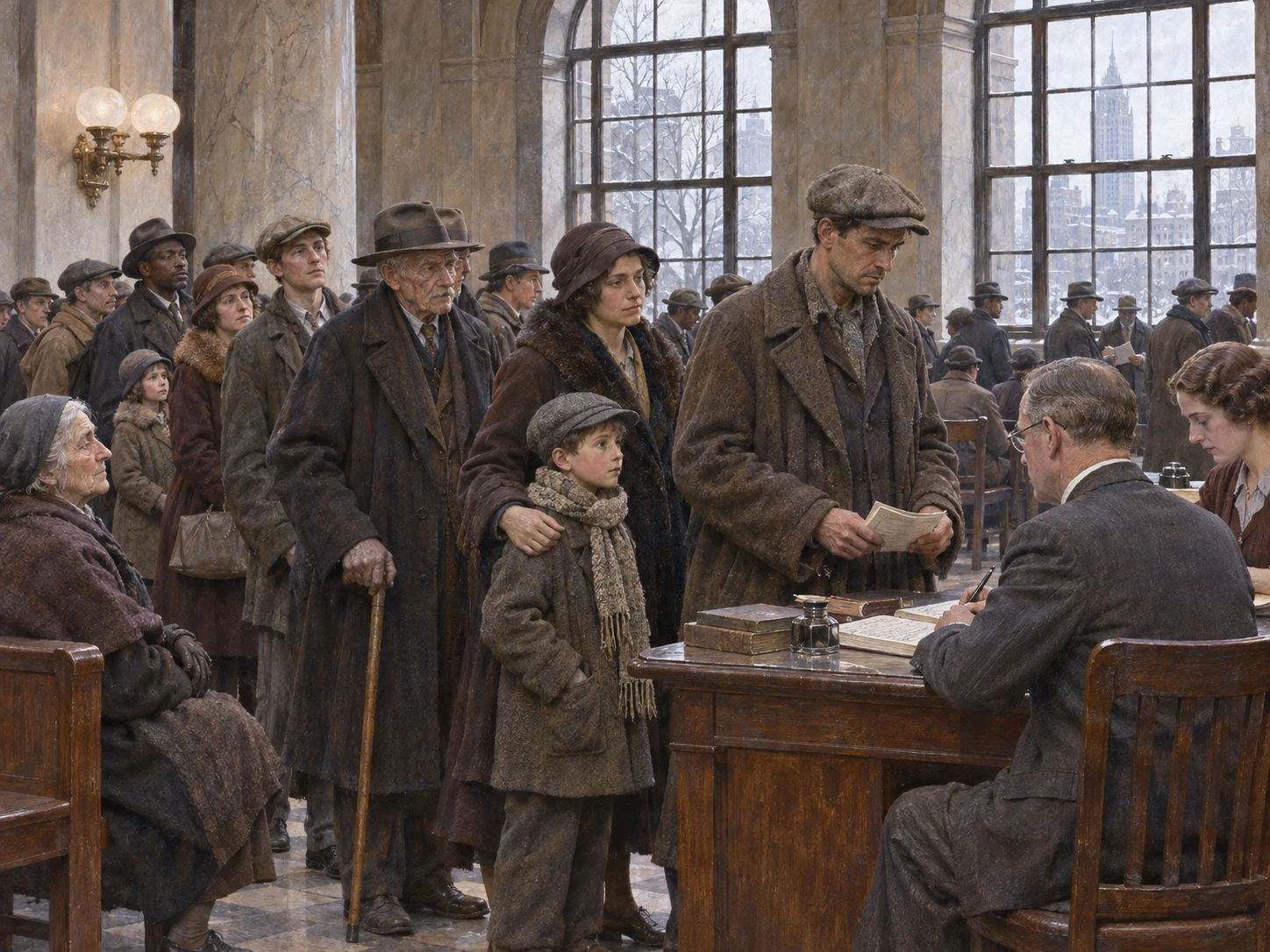
During the Great Depression, unemployed New Yorkers waited to register at public employment offices. A Library of Congress photograph records people gathered at a New York employment bureau. A job did not necessarily exist at the front of the line. Registration—name, work history and skills—was an entry point into the system that might match applicants with vacancies. Those whose incomes had stopped were required to spend time on an administrative process with no guaranteed result.
This was different from a hiring line outside a single factory. It was a place where institutions counted and classified people who had fallen out of the labour market. Registration made someone legible as unemployed while also creating the possibility of a later referral. The photograph cannot tell us what happened to each person, so an eventual job should not be invented for them. What it establishes is that losing work did not produce empty time. It produced another obligation to wait, this time for the record and eligibility needed to search through an official channel. Unemployment meant leaving one workplace and, often, joining another queue.
Employment offices needed to classify applicants by trade, experience and skill before matching them with employers' requirements. Everyone in line could appear under the same label—unemployed—yet the desk separated the crowd into individual work histories. Waiting was the stage before a mass of people became distinct administrative records.