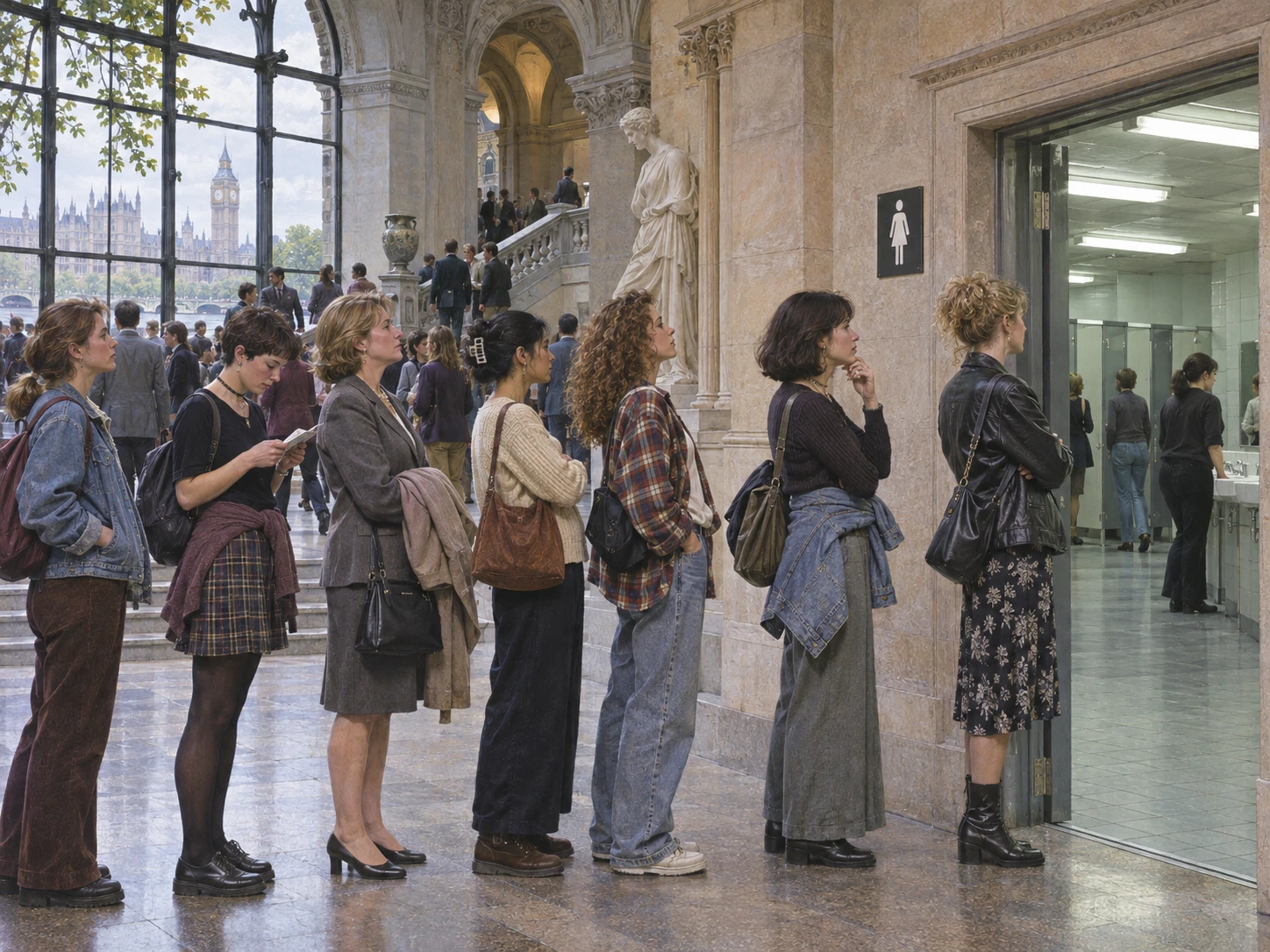
In December 1999, a bar called Pop in London’s Soho district drew attention for a decidedly unusual fixture: Lady P, a urinal designed for women. The problem it was meant to address was not glamorous. It was the familiar wait outside the ladies’ toilet.
Reporting in The Observer that month traced designer Marian Loth’s idea to a friend who had grown so tired of queuing at a jazz festival that she used a men’s urinal instead. The makers argued that their device could be used much faster than a conventional toilet. Yet faster plumbing was not automatically a complete answer to a problem experienced by actual people.
Women interviewed at the bar disagreed about the invention. Some welcomed the possibility of a shorter wait. Others worried about the position required, what would happen to their clothes, and whether they would have sufficient privacy. The bar discussed adding a curtain. An invention meant to shorten a queue still had to make its users comfortable enough to try it.
There is a distinction worth keeping. The contemporary report documents a widely recognised problem—queues for women’s toilets—and a specific attempt to reduce them. It does not establish a headcount or a measured queue outside this particular Soho bar on opening night. Those details should not be invented merely to make a more vivid scene.
A line for a concert or a new phone can advertise desire. A line for a toilet advertises something else: the consequences of decisions about floor space, fixture numbers and whose needs the designers had in mind. In London in 1999, a small, everyday wait became substantial enough to inspire a new piece of equipment—and an argument over whether convenience was really convenient.
A female urinal introduced in a London bar in 1999 was promoted as up to six times faster than a conventional toilet. Its designer traced the idea to a friend frustrated by a festival queue. Changing the fixture offered a solution other than asking the people waiting to hurry.