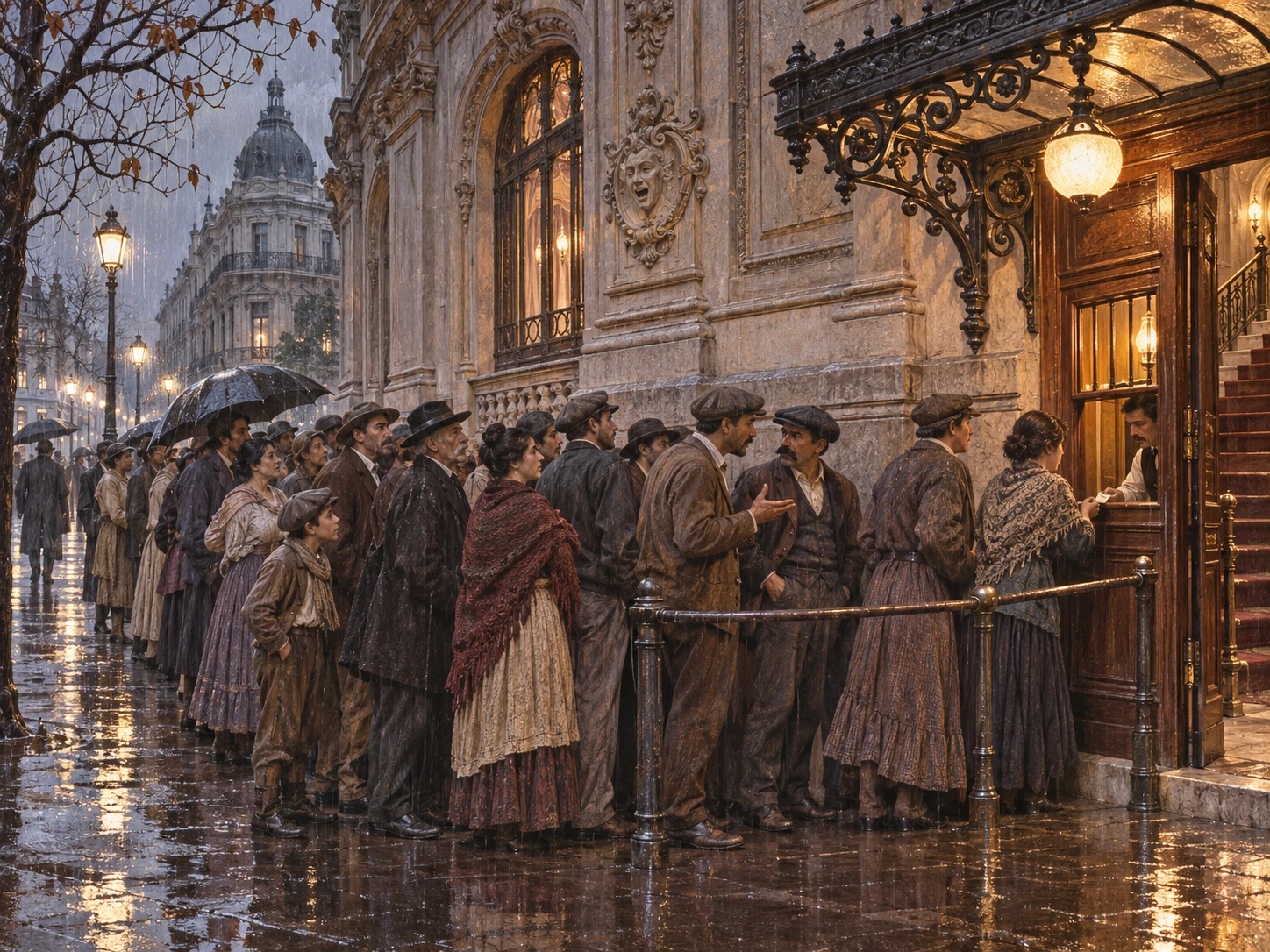
People attending the same performance do not necessarily enter on equal terms. A candidate about inexpensive standing tickets in Buenos Aires raises a question about the relationship between ticket price and time spent waiting. Did cheaper admission demand a longer wait, or was it sold differently? Price lists and box-office records must answer that question. Theater history includes not only what happened onstage but how audiences got inside.
Standing room may be cheaper, but it also asks spectators to remain on their feet. Price alone does not measure accessibility. With evidence of ticket sales, the story of a performance can begin outside the auditorium.
Standing room may make theater cheaper, but it also demands the ability to remain on one’s feet. For Buenos Aires, inexpensive admission must not be equated automatically with a long queue. When tickets went on sale, how many were available, and where they were purchased are the questions that can reveal the audience’s history outside the auditorium.